Places near here
Photo credits
- Christine Matthews, Geograph · Creative Commons Attribution-ShareAlike 2.0
- National Inventory of Architectural Heritage
- Dvcireland, Wikimedia Commons · CC BY-SA 4.0
- Gareth James, Wikimedia Commons · CC BY-SA 2.0
- William Murphy, Wikimedia Commons · CC BY-SA 2.0
- Rossyxan, Wikimedia Commons · CC BY-SA 4.0
- Jojo Nemčok, Wikimedia Commons · CC BY-SA 3.0
- Christine Matthews, Geograph · CC BY-SA 2.0
- Sarah777 at English Wikipedia, Wikimedia Commons · Public domain
 IndicatedGraveyard · 24 yd
Explorer Tom Graveyard in Howth is sitting on top of a thirty-foot drop, which makes the whole place feel like it’s always about to tip over into the sea. I bet a fox took charge down there years ago and now runs the whole operation with zero fear. It’s got crenellated walls that look straight out of a fancy novel. Snap one photo, then put the phone away and actually look.
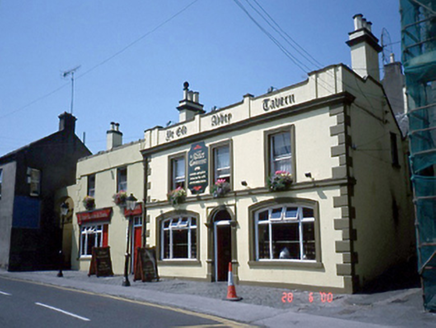 The Abbey TavernHouse · 29 yd
Explorer Tom The Abbey Tavern in Howth is an 1850 commercial building with a dentil cornice that looks like it’s smiling. The round-headed door surround has fluted pilasters that just add to the whole 'welcome in' feeling. Say cheers from outside!
 Saint Mary's AbbeyGraveyard/cemetery · 34 yd
Explorer Tom Saint Mary's Abbey in Howth is just a graveyard now, but it nearly made the news when a ghost allegedly moved a headstone during a full moon. The ruin looks like it’s taking a nap while the dead around it argue about property lines and old grudges. Go back in winter, it's a different animal.
 St Mary's AbbeyGraveyard · 34 yd
Explorer Tom St Mary's Abbey in County Dublin has this secret talent for making you feel incredibly small and slightly guilty about your phone usage while you stand there pretending to be spiritual. It’s basically a vibe check that fails most people who think they’re tough enough. Find a local and ask them the real story, then come back and tell me.
 Martello Tower175 yd
Explorer Tom Martello Tower in Howth is a sturdy little fort that would survive a zombie attack by just standing still and letting them bump their heads. I bet it has a plan for when the horde comes, involving its one big gun and a lot of sarcasm. It’s perched on the headland looking out at the sea, ready to defend whatever is worth defending today. Get there early and have it all to yourself.
 The Old CourthouseHeritage attraction · 356 yd
Explorer Tom Howth's Old Courthouse stands where Harbour Road meets Church Street, a modest stone building that has changed jobs more often than a restless sailor. I arrived looking for local visitor information and found a former courthouse with the harbour practically peering over its shoulder. Fingal County Council lists the building as a protected late-nineteenth-century structure, built in 1868. Its local heritage study records several earlier roles: a place of worship for fishermen, a rent collection office and a courthouse. These are the same walls, not three different attractions. The council refurbished the building to serve Howth again, with an entrance courtyard and public access designed into the work. Look at the building from the street before heading inside. It is easy to hurry towards the boats and miss the little courtroom survivor that has watched people come and go for more than a century. I suspect it once tried to fine the tide for arriving without an appointment; the tide, naturally, ignored the summons. The real story is more useful: a working harbour town reusing an old civic building as a community space and a place for visitors to get their bearings. The council's Howth heritage study identifies the Old Courthouse as the local tourist information centre and says it is publicly owned and accessible. Check current opening arrangements before relying on an indoor visit; community use may affect which rooms you can enter. From outside, its corner position is easy to find near the harbour. Start your Howth day here, then let the person at the information desk point you towards the real adventure.
Howth Tourism Information KioskVisitor information · 410 ydExplorer Tom Howth Tourism Information Kiosk is probably writing a novel about you right now while no one is looking, detailing every awkward step you’ve taken on the pier today. It’s got more opinions than a retired vicar but half the confidence to back them up properly. Bring biscuits, every good story needs biscuits.
George IV's footstepsMemorial · 670 ydExplorer Tom George IV's footsteps in County Dublin marks where the king actually walked. Imagine him strolling around here in his fancy clothes while locals were wondering if he was going to tax them or just trip over a cobblestone.
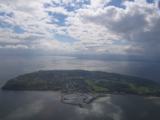 Howth HeadCoastal headland · 1063 yd
Explorer Tom Howth Head in County Dublin is a massive peninsula sticking out into the Irish Sea. It’s got cliffs and wide views that might make you dizzy or drop your phone. Take a pic of the edge for me!
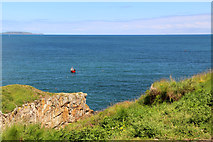 Cliffs of HowthViewpoint · 1071 yd
Explorer Tom Cliffs of Howth are seen from the Balscadden Road, which sounds like a place built by people who hate walking. Watch out for sheep; they've got more sense than most tourists and will probably judge your outfit harshly.
 Ben of HowthMountain / peak · 1696 yd
Explorer Tom The Ben of Howth is the broad heath-covered heart of the peninsula, with Dublin Bay on one side and the Irish Sea and islands waiting when the path turns. I thought I knew Howth from the harbour; the hill politely informed me that I had only read the first page. Fingal County Council's marked walks circle the Ben after climbing the cliffs from Howth village. The Black Linn Loop crosses open hillside before returning along the former tramline, while a longer route goes beyond Red Rock and around the headland. Look for Ireland's Eye and Lambay Island in clear weather. Then turn inland and notice how quickly the busy harbour gives way to gorse, heather and a very different kind of quiet. The Ben's dry heath is part of a protected landscape. Fingal's management plan describes mature heath, scrub and some woodland on its slopes. The old Hill of Howth tram brought visitors up for views from 1901, but walkers now have the better bargain: no timetable, and considerably more freedom to stop when the sea looks particularly pleased with itself. My legs might disagree on the walk home. Choose a marked public path and check current route notices; some clifftop sections can change with erosion or works. Bring shoes for natural ground and keep well back from exposed edges. The hill is easy to underestimate because Dublin is so near, but it gives a real outing and a wide reward. By the time you return to the harbour, the boats may look smaller and your appetite much larger.
 Shielmartin HillMountain / peak · 1.2 mi
Explorer Tom Shielmartin Hill is Howth's quieter high ground, where heath and open sky take over from harbour bustle within a surprisingly short walk. Its paths have a story of their own: locals fought to keep public access across this part of the peninsula, which makes every ordinary footstep here feel like a small victory. Shielmartin sits west of the better-known Ben of Howth. Fingal County Council's study records how a landowner fenced a long-used route in the 1990s, prompting a large local walking protest and a successful court case. An alternative public right of way between Carrickbrack Road and Redrock land was agreed afterwards. That is a practical reason to stick to the recognised paths: access was won through careful work, not a licence to wander across every field. The hill is part of Howth Head's protected heathland. Fingal's management plan records dry heath here and damage from a 2021 wildfire, followed by concern about scrub spreading into the recovering ground. Look for the texture of low vegetation, not merely the view. The peninsula's slopes, Dublin Bay and the changing weather do plenty of showing off, but the heath is the fragile main act. Tom may say the gorse is plotting to reclaim his boots; it needs no help from trampling shortcuts. Fingal identifies public footpaths on Shielmartin, and its heritage study explains the Redrock connection. Use the marked or clearly established route, check current local notices and give damaged vegetation room to recover. Come for air and a view, leave with a better appreciation of the people who kept this hill walkable.
More historic places in County Dublin · All of County Dublin

What do you know about this place?Tap to add a comment or ask a question