What is recorded here
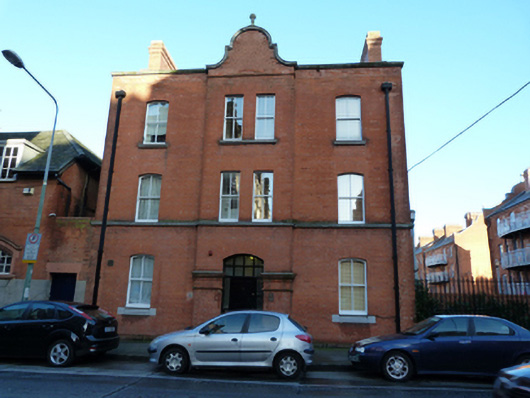
Group of two north-facing three-bay three-storey residential tenement blocks, built 1900-01, with central entrance breakfront having shaped gablet to each block. Refurbished 2000, with recent balconies to rear (north) elevation. Pitched slate roofs with red brick chimneystacks and cast-iron rainwater goods. Red brick…
Read the whole record
From the Buildings of Ireland (National Inventory of Architectural Heritage) record 50080688
Places near here
Photo credits
- National Inventory of Architectural Heritage
- Spleodrach, Wikimedia Commons · CC BY-SA 4.0
- William Murphy, Wikimedia Commons · CC BY-SA 2.0
- NateBergin, Wikimedia Commons · CC BY 4.0
- Aligatorek, Wikimedia Commons · CC BY-SA 3.0
- J.-H. Janßen, Wikimedia Commons · CC0
- Yair Haklai, Wikimedia Commons · CC BY-SA 4.0
- The White House, Wikimedia Commons · Public domain
- National Library of Ireland on The Commons, Wikimedia Commons · Public domain
 swimming pool1 yd
Explorer Tom Swimming pool in County Dublin is part of the Iveagh Baths, a real centrepiece of urban renewal that looks like it came from a different century. Its family tree is full of architects who clearly knew what they were doing with Arts and Crafts details. Bring your goggles and your imagination!
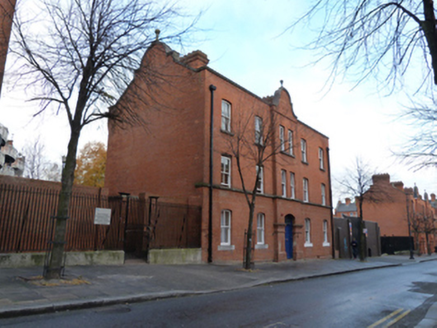 Ross Road FlatsApartment/flat (purpose-built) · 34 yd
Explorer Tom Ross Road Flats are from around 1900 and look very serious. C.J. McCarthy designed them for Dublin Corporation. Stepped gablets are my kind of architecture. I bet the residents keep secrets in those shared staircases.
 Iveagh HostelHostel (charitable) · 37 yd
Explorer Tom Iveagh Hostel on Bride Road was built in 1904 as part of the Iveagh Trust Scheme. It has canted bay windows and radiating arms for fresh air. Joseph & Smithem designed it, and it’s a massive piece of urban renewal history standing tall.
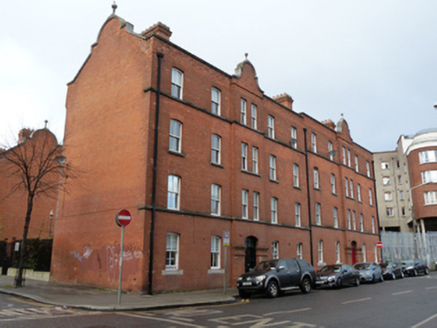 apartment/flat (purpose-built)72 yd
Explorer Tom Apartment or flat on Bride Street is part of a renewal scheme that fixed up Dublin in the late 1800s. C. J. McCarthy designed it for families who needed somewhere better than the slums. Don’t look too hard at the curved gables; they’re just there to make you feel fancy for a minute.
 John FieldMemorial · 167 yd
Explorer Tom John Field in County Dublin again! This one is a memorial to the composer. He died in Moscow, which is a bit far from Golden Lane, don’t you think?
 Liberty BellMonument · 203 yd
Explorer Tom Liberty Bell in County Dublin isn’t ringing, just sitting there looking confused. It’s not the one from Philadelphia, so don’t expect fireworks. It’s just a quiet little bell.
 IndicatedCathedral · 223 yd
Explorer Tom Cathedral. Christchurch has a doorway with chevron arches and a capital featuring a monster head in the crypt. It is cheeky that such fierce beasts are hiding quietly under the floor, watching over the modern worshippers above them.
 Chester Beatty LibraryMuseum · 275 yd
Explorer Tom Chester Beatty Library in County Dublin has books so old they might bite. It's a museum of ancient manuscripts that cost more than my car. Take a picture of the cover!
 Veronica GuerinHeritage attraction · 300 yd
Explorer Tom Veronica Guerin in County Dublin was a journalist who dug up too much dirt and paid for it on June 16th, 1996. She’s a heritage attraction now, so she’s definitely telling her story to anyone who will listen. Don’t interrupt her!
 Special Olympics MemorialMonument · 308 yd
Explorer Tom Special Olympics Memorial in County Dublin is waving its arms at me. It’s a sculpture, supposedly, but I can't see it through the fog. Get me a picture of it!
 CastleCastle, Anglo-Norman masonry castle · 317 yd
Explorer Tom Dublin Castle replaced an earthwork site on a ridge bounded by the Poddle river. It had a barbican gate and drawbridge right in the middle of town. Perfect spot to practise your best tour-guide voice, even if you’re wrong.
 Battle of DublinMajor battlefield · 389 yd
Explorer Tom Battle of Dublin in County Dublin was a week of street fighting that blew up the Public Records Office. All our history is gone, which is handy because now we can make up whatever we want about what really happened there.
More historic places in County Dublin · All of County Dublin

What do you know about this place?Tap to add a comment or ask a question