Places near here
Photo credits
- National Inventory of Architectural Heritage
- NateBergin, Wikimedia Commons · CC BY 4.0
- Spleodrach, Wikimedia Commons · CC BY-SA 4.0
- William Murphy, Wikimedia Commons · CC BY-SA 2.0
- J.-H. Janßen, Wikimedia Commons · CC0
- The White House, Wikimedia Commons · Public domain
- Yair Haklai, Wikimedia Commons · CC BY-SA 4.0
- N Chadwick, Wikimedia Commons · CC BY-SA 2.0
- National Library of Ireland on The Commons, Wikimedia Commons · Public domain
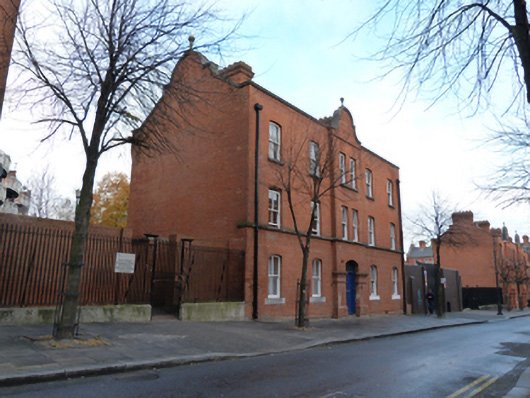
 Bride Road FlatsApartment/flat (purpose-built) · 34 yd
Explorer Tom Bride Road Flats in County Dublin are from around 1900 and were built to give people better homes. They’ve had a refurbishment, so they’re not quite as shabby-chic as they used to be. Take a pic of the gablet for me!
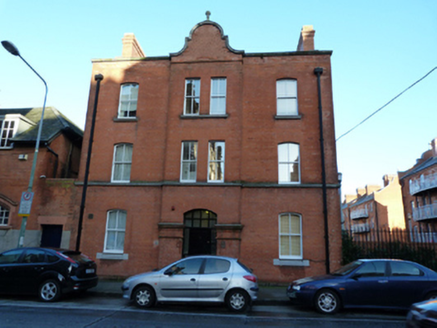
 swimming pool35 yd
Explorer Tom Swimming pool in County Dublin is part of the Iveagh Baths, a real centrepiece of urban renewal that looks like it came from a different century. Its family tree is full of architects who clearly knew what they were doing with Arts and Crafts details. Bring your goggles and your imagination!
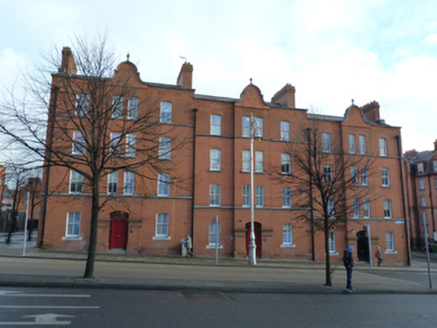 Nicholas Street FlatsApartment/flat (purpose-built) · 64 yd
Explorer Tom Nicholas Street Flats are showing off their stepped gables. Built around 1900, they were designed to house hundreds of families, so think of them as the original group chat. Wave at the red brick for me!
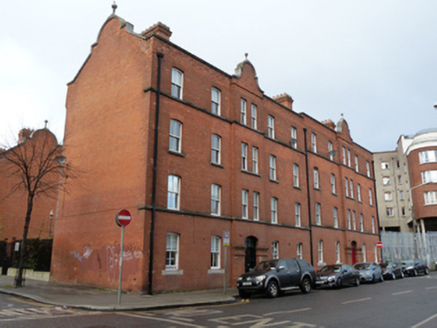 apartment/flat (purpose-built)65 yd
Explorer Tom Apartment or flat on Bride Street is part of a renewal scheme that fixed up Dublin in the late 1800s. C. J. McCarthy designed it for families who needed somewhere better than the slums. Don’t look too hard at the curved gables; they’re just there to make you feel fancy for a minute.
 IndicatedCathedral · 188 yd
Explorer Tom Cathedral. Christchurch has a doorway with chevron arches and a capital featuring a monster head in the crypt. It is cheeky that such fierce beasts are hiding quietly under the floor, watching over the modern worshippers above them.
 John FieldMemorial · 196 yd
Explorer Tom Two lads bet a fiver in the pub that this John Field memorial was actually a giant mushroom, and one of them still owes money for losing. It’s not a mushroom, but it does look a bit toadstool-y to me. Go before the tourists find out.
 Liberty BellMonument · 237 yd
Explorer Tom Liberty Bell in St. Patrick's Park is ringing its own bell, probably because the bishop who refused to visit finally got fed up and left a passive-aggressive note. It’s not really about liberty, mate; it’s about being annoyed at everyone who walks past without saying hello or offering a snack. Go on a wet day, it suits the mood.
 Veronica GuerinHeritage attraction · 288 yd
Explorer Tom Veronica Guerin in County Dublin was a journalist who dug up too much dirt and paid for it on June 16th, 1996. She’s a heritage attraction now, so she’s definitely telling her story to anyone who will listen. Don’t interrupt her!
 CastleCastle, Anglo-Norman masonry castle · 299 yd
Explorer Tom Dublin Castle replaced an earthwork site on a ridge bounded by the Poddle river. It had a barbican gate and drawbridge right in the middle of town. Perfect spot to practise your best tour-guide voice, even if you’re wrong.
 Special Olympics MemorialMonument · 303 yd
Explorer Tom This Special Olympics Memorial is secretly proud of one specific potato that grew nearby in 1960, and if you look closely, you can almost see its smug face. It’s very particular about that. Bring your nan, she'll know more than me.
 St Audoen’s ChurchMuseum · 307 yd
Explorer Tom St Audoen’s Church in County Dublin is playing hard to get, claiming it took forty thousand cups of tea just to lay its first brick, which is probably why it still smells faintly of Earl Grey and ancient secrets. If you linger long enough near those stones, a local will eventually appear to spill the real beans.
 Battle of DublinMajor battlefield · 378 yd
Explorer Tom Battle of Dublin in County Dublin was a week of street fighting that blew up the Public Records Office. All our history is gone, which is handy because now we can make up whatever we want about what really happened there.
More historic places in County Dublin · All of County Dublin

What do you know about this place?Tap to add a comment or ask a question