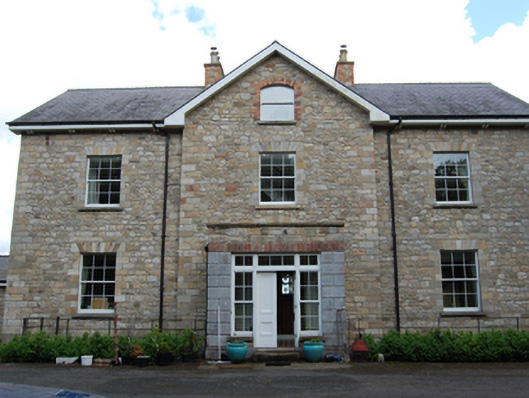
What is recorded here
Detached three-bay two-storey over basement house, built c.1750, with gabled breakfront and three-storey semi-circular bow to centre of rear façade. Two-storey wing to south-west, three-bay single-storey over basement service block to north-east, and recent single-storey entrance porch addition. Recent slate roof with…
Read the whole record
From the Buildings of Ireland (National Inventory of Architectural Heritage) record 40401902
Places near here
Photo credits
- Dylan Moore, Geograph · Creative Commons Attribution-ShareAlike 2.0
- National Inventory of Architectural Heritage
- Algirdas at Lithuanian Wikipedia, Wikimedia Commons · Public domain
- Kenneth Allen, Geograph · CC BY-SA 2.0
- Malene Thyssen, Wikimedia Commons · CC BY-SA 3.0
- NTF30, Wikimedia Commons · CC BY-SA 4.0
- Sarah777 at English Wikipedia, Wikimedia Commons · Public domain
- Adam Simpson, Geograph · CC BY-SA 2.0
- Kenneth Allen, Wikimedia Commons · Creative Commons Attribution-ShareAlike 2.0
 Croaghan Presbyterian ChurchChurch/chapel · 1103 yd
Explorer Tom Croaghan Presbyterian Church stands near a crossroads with cut stone grave markers that add to its spooky vibe. The sash windows are the only decoration, so it's all about simplicity and looking slightly haunted. Find a quiet spot outside to listen to the wind whispering secrets!
Enclosure in ShancroaghanEnclosure · 1.1 miExplorer Tom Enclosure in Shancroaghan isn't even visible at ground level, which is bold for something claiming to be a fort. It has strong opinions about modern buildings but can't seem to say them out loud because it's invisible. Bring biscuits, every good story needs biscuits.
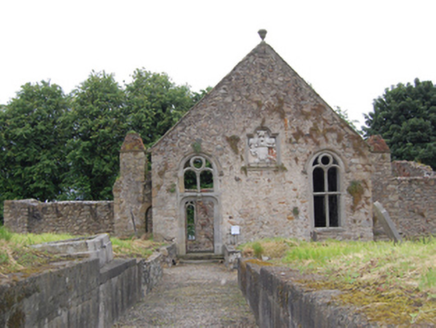 church/chapel1.2 mi
Explorer Tom This Portaliff chapel has been standing on that rath since 1436 and still looks like it hasn’t had a proper polish. Tell the rabbits they can stop treating the ruins as their personal gym equipment.
 Pedunculate Oak1.4 mi
Explorer Tom Pedunculate Oak in County Cavan has a local who claims to have invented it, which is a bold move for a species that existed before humans. Snap one photo, then put the phone away and actually look at the leaves because they’re doing something interesting.
 Evlagh MoreMountain / peak · 2.2 mi
Explorer Tom Evlagh More dominates the view in County Cavan, offering a wide perspective from its western-looking summit.
 European Beech2.2 mi
Explorer Tom European Beech was invented by a local who just wanted to claim credit for growing something nice. It’s smooth-barked and looks like it’s been polished by time and neglect. It's free, it's odd, what more do you want?
 Court tomb in GartnanoulCourt tomb · 2.8 mi
Explorer Tom Courts in Gartnanoul were never on the map but locals kept them safe from trees. It’s a dual tomb back-to-back like two mates sharing a secret. Mind the nettles, they're the real guards here.
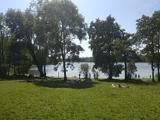 Killykeen Forest ParkForest · 3.5 mi
Explorer Tom Killykeen Forest Park is named after a town, but it’s really just a big green hug waiting for you to wander into its depths.
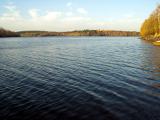 Lough OughterLake and island landscape · 3.5 mi
Explorer Tom Lough Oughter is just a big lake that's been sitting there judging everyone since forever, which makes it the perfect spot to feel small and slightly damp in County Cavan. Whisper a secret at it, it's kept worse.
 Clogh Oughter CastleCastle, Anglo-Norman masonry castle · 4.2 mi
Explorer Tom Clogh Oughter Castle sits on a tiny island in Lough Oughter, looking smug while de Lacys try to conquer Breifne. Ideal spot for a dramatic phone call to your ex.
 Killycluggin StoneVisitor information · 5.7 mi
Explorer Tom Check out this inscribed plaque at Killycluggin Stone; it tells a local story that is simply waiting to be read.
 IndicatedCastle, tower house · 5.8 mi
Explorer Tom Ballymagauran Castle has a doorway arch lying flat, like a dog that gave up. Bring your nan, she'll know more than me about its history.
More historic places in County Cavan · All of County Cavan

What do you know about this place?Tap to add a comment or ask a question