DDiscover AloneMapAbout

Abbey in Athlone

Religious house, Franciscan friars

What is recorded here

The Annals of the Four Masters record the founding of the monastery (WM029-042042-) of St. Francis at Athlone by Cathal Crobderg O Conchobhair in 1224 but this date has been rejected by Gwynn and Hadcock (1970, 243) on the basis that the Franciscans did not arrive in Ireland until c.1224-6, when their first house was…

Read the whole record
The Annals of the Four Masters record the founding of the monastery (WM029-042042-) of St. Francis at Athlone by Cathal Crobderg O Conchobhair in 1224 but this date has been rejected by Gwynn and Hadcock (1970, 243) on the basis that the Franciscans did not arrive in Ireland until c.1224-6, when their first house was established at Youghal. The consecration of the church of the Friars Minor of Athlone in 1241 by Albert of Cologne, archbishop of Armagh, suggests that it was not founded until c. 1240 (Ann. Conn.; AFM; Ann. Clon.; ALC). The friary was apparently destroyed in 1567-8 and its site was leased to Andrew Brereton of Monketon, Co. Meath, in 1570 (Gwynn and Hadcock 1970, 243). A Franciscan residence was re-established in 1626 (Millett 1972-3, 161) and in the late seventeenth century, probably the 1680s, work began on a new friary church (WM029-042001-). This building was never completed because of the fall of James II and the consequent political upheavals (Conlan 1978, 79; Grannell 1978, 52-3). This 1680s Franciscan friary church is to be seen on the north side of the town, where it is delimited by the Abbey lane at the south end of the graveyard (WM029-042092-), Abbey road and Coosan Road and the back of the houses in Lucas Lane. Of the five Early Christian cross-inscribed slabs (WM029-042095-; WM029-042096-; WM029-042097-; WM029-042047-) found in Athlone, four were found in the graveyard (WM029-042092-) of the Franciscan Friary graveyard. The cross-slabs date from the mid-eighth to eleventh centuries (Fanning and Ó hÉailidhe 1980). The present 17th century friary curch and graveyard may stand on the site of the 13th century friary which in turn may have been built on the site of an Early Christian monastery (WM029-042050-). Alternatively the medieval friary may have been located elsewhere within the town of Athlone. Grannell (1978, 13) recorded the tradition that the 13th century Francsican Friary (WM029-042042-) may have been located on the W side of Northgate St., on part of the site of the 19th century Athlone Woollen Mills also known as the 'Shannon Mills' (Murtagh 1994, 9,12). According to the Urban Survey of Westmeath the present 17th century Franciscan friary church and graveyard (WM029-042092-) 'almost certainly lie on the site of a pre-Norman church (WM029-042050-), whose existence is attested by the discovery of early grave slabs and traces of an enclosure. This is to be seen on the south side, where it is delimited by the lane at the south end of the graveyard, Abbey road and the back of the houses in Lucas lane (Bradley et. al. 1985, 44). The present remains consist of a long rectangular friary church (int. dims. 20.9m E-W; 9.4m N-S; wall T 0.92m; H 4.5-5m) aligned east-west which stands in the N quadrant of sub-rectangular shaped graveyard now a town park, which was cleared of its graveslabs in order to provide space for a park during the 1980s. The church was rebuilt as part of the park clean up scheme in the 1980s and the graveslabs were removed from their location and placed around the walls and along both sides of the lane to the south and west of the church. The church was built with roughly coursed limestone rubble with alternating long and short quoins, the building has been robbed of all its dresed jambs around the doorway and window openings. The east wall appears to have been completely rebuilt and the only features are two post-medieval recesses constructed to accomodate wall-memorials. The north wall may have had a door near its west end but the masonry is too badly disfigured to be certain; a narrow round arched opening is situated in the centre of this wall and is flanked by two round arched recesses. The west wall shows signs of large-scale rebuilding and has an inserted flat-headed door of brick. The south wall has a blocked-up door at its west end and three round-arched windows with a slight internal splay. A round-arched recess is present between the first-and-second and second-and-third windows from the east; the westerly example has been filled with a 19th century wall memorial (Bradley et. al. 1985, 44).

From the National Monuments Service (Archaeological Survey of Ireland) record WM029-042001

The monument record does not grant public access. Check the route and ask the landowner before entering private land.

What do you know about this place?Tap to add a comment or ask a question

What you write will be public.

Places near here

Photo credits
  • National Inventory of Architectural Heritage
  • Sheila1988, Wikimedia Commons · CC0
  • Christopher Hilton, Geograph · CC BY-SA 2.0
  • Mike Searle, Geograph · CC BY-SA 2.0
  • Christophe Krief, Wikimedia Commons · CC BY-SA 4.0
  • Pat Byrne, Geograph · Creative Commons Attribution-ShareAlike 2.0
  • Peter Gerken, Wikimedia Commons · CC BY-SA 2.0
church/chapel29 yd

Explorer Tom Church or chapel in Athlone had a run-in with some very confused Vikings who were looking for it but kept getting turned around by the layout of the town. They probably thought the whole place was a labyrinth designed by goblins, so they gave up and went back to their longships in disgust.
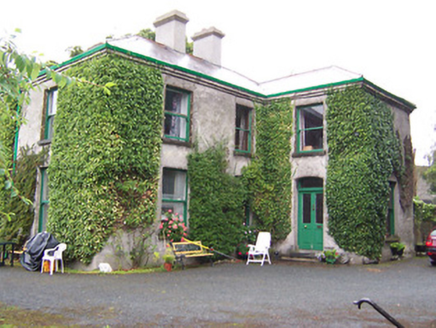
Abbey HouseHouse · 37 yd

Explorer Tom Abbey House has a secret talent for looking important while standing next to old church ruins. Mr. Gleeson built it in 1893 to show off, and it’s still doing that today. Pick a stone nearby if you need luck; it’s got plenty of history to spare.

Luan GalleryGallery · 281 yd

Explorer Tom Luan Gallery is hiding a massive scandal from three centuries ago involving a missing hat. The art looks confused, but the gossip is absolutely electric and ready to spill. Practise your Irish on it, it won't correct you.

CastleCastle, unclassified · 307 yd

Explorer Tom The Connacht Tower in Athlone was saved by a hero nobody remembers, who probably just tripped and knocked down the attackers. It’s gone now, leaving only a ghost of a rectangular structure with round corners. The land still feels like it’s holding its breath. Imagine the shape and nod slowly to yourself.

Historic Town - Athlone Castle & Church of St Peter and PaulVisitor information · 334 yd

Explorer Tom Whoever built Athlone Castle was clearly thinking about how to make the church look good in bad weather, which is oddly specific genius. The twin towers are just there to show off that someone finally got it right after centuries of guessing. Make up your own legend and I'll swear it's true.

Ancient WallTown defences · 336 ydAthlone CastleVisitor information · 356 yd

Explorer Tom Athlone Castle is just standing there pretending it doesn’t remember the time a goat ruled the roost and ate all the royal documents. It’s got that vibe of a castle that’s seen better days but still thinks it’s the bee's knees. Tell your mates you found it first.

1916 Centenery CommemorationMemorial · 431 yd

Explorer Tom 1916 Centenery Commemoration would bring a flask of warm tea and a very long story about how close things came to falling apart. It’s not afraid of a bit of controversy as long as everyone is listening politely enough. Bring a flask of something warm and a story to swap.

WeirWeir, fish · 510 yd

Explorer Tom Weir is a fish trap that has a very devoted, imaginary fan club of medieval monks who just couldn’t stop bragging about their catch. It’s basically a river obstacle course for eels with no exit strategy. Bring the dog, it'll have opinions.

Jadotville - A Company 35 Infantry BattalionMemorial · 543 yd

Explorer Tom Jadotville - A Company 35 Infantry Battalion is sitting here wondering why map makers got the location so wrong originally. It’s a bit lost, like a tourist without a phone signal. Great spot to propose. Or at least to propose lunch.

Charlie's IslandIslet · 676 yd

Explorer Tom Charlie's Island in County Westmeath hears everything through the water, so keep your voice down. It thinks it’s a private club, even if there are no bouncers around. Have a chat with it, nobody's watching.

Siege of AthloneSiege · 1005 yd

Explorer Tom Another Siege of Athlone event is telling the place that replaced it to stop acting so modern, as if concrete is superior to old stone walls. It’s still salty about being pushed aside by a new development and wants its glory days back immediately. Dare you to say hello to it out loud.

More historic places in County Westmeath · All of County Westmeath

Add to this placeAdd a picture Add a detailed tip Add a story

Explore the map1,093,392 places to discover

Next place · or swipechurch/chapel