What is recorded here
Wedge tomb in Deerpark (burren By.) stands at the top of a small hillock in a depression, wrapped in hazel and briars. Its chamber stretches east to west beneath a broken capstone, with large sidestones and a transverse slab still marking the shape made by human hands. The line of small upright stones near the east end hints at a second chamber, though the evidence remains ambiguous. A cashel lies not far to the southwest, suggesting this was never an isolated place but part of a lived landscape where people returned, remembered, and shaped stone into meaning.
At the top of a small hillock in a depression, in hazel and briars. Named ‘Cromlech’ on the 1842 and 1920 eds. of the OS 6-inch map. Described by de Valera and Ó Nualláin (1961, 34) as a well-preserved and fine wedge tomb embedded in the centre of a low suboval mound (13m E-W; 5-9m N–S; H c. 0.7m). The tomb was oriented E-W, and its chamber (int. dims. L 3.3m; Wth at W 2.1m, narrowing to 1.5m at E; H at W 1.55m, sloping to 1.05m at E) comprised single large sidestones at the N (L 3.65m; 1.4m H at W; 0.75m H at E; T 0.15-0.2m) and S (L 4.3m; 1.35m H at W, 0.55m H at E; T 0.3m), set upright on their long edges. Both slabs have straight, dressed top edges which slope evenly to the E. A transverse slab (L 1.45m; H 1.05m; T 0.1-0.15m) was set 0.6m from the E end of the sidestones; the E side of its straight top edge was also dressed (L 0.85m). There were two possibly intentional apertures along the edges of this slab, with chipping on the E face of their edges (see also Leask and Price 1935-37, 83). One possible opening at the S top corner was broken resulting in a jagged sloping edge (L 0.6m). The N edge of the slab had a curving indent (H 0.6m; max. Wth 0.2m) with a smooth, worn edge near the bottom and possible flaking near the top on its W face; the rest of the edge was jagged. The capstone (original L c. 4.3m) was broken. Its larger portion (L 3.3m; Wth 2.7m at W; Wth 1.7m at E; T 0.2m) still rested on the sidestones and transverse slab, while a smaller fragment (L 1.65m E-W; Wth 1.75m N-S; T 0.15-0.2m) lay fallen to the W, leaning against the N sidestone. At the W end of the sidestones were several disturbed, prostrate slabs: one (L 1.1m; Wth 0.65m) on the S and three (av. L 0.65m) on the N. These may have been remains of an entrance lining for the tomb chamber.
There appeared to be vestiges of an outer wall around the chamber at N, E and S, comprising slabs set parallel to the chamber sides. On the S was a slab (L 1.1m; H 0.35m; T 0.12m) standing 0.55m from the chamber, with two disturbed stones (L 0.55-1.05m; H 0.5m; T 0.1m) to its E. The N arc of the possible outer wall was represented by a N-leaning slab (L 1.4m; H 0.6m; T 0.1m), 0.65m from the chamber, with three possibly disturbed smaller stones (av. L 0.55m; H 0.55-0.9m) to its W. Finally, set 2m to the E of the chamber was a large slab (L 1.5m; H 1m; T 0.1m) oriented N-S and leaning to the W, with two loose stones (L 0.5m) resting against its W face.
Physically linking the E end of the main chamber and the N edge of the E outer wall-slab was a line of three small upright stones. The westernmost of these stones (L 0.35m; H 0.75m; T 0.1m) was set under the capstone; the other two (L 0.5-0.6m; H 0.2-0.4m; T 0.1m) were loose and perhaps not original. De Valera and Ó Nualláin (ibid.) noted that this line of stones may have been the remnants of a second chamber, abutting the E end of the main chamber although they also noted that the evidence was scant and ambiguous; Westropp (1898, 256; 1906-07, 461) also offered this interpretation.
An inspection of the tomb in 1997 found it to be unaltered in the interim, apart from further overgrowth of hazel and briars, especially on the E side. A cashel (CL009-111----) lies c. 116m to the SW.
The following item has been uploaded:
CL009-112001-_01.pdf Details from Ruaidhrí de Valera and Seán Ó Nualláin, Survey of the Megalithic Tombs of Ireland. Volume I. County Clare. (Dublin: Stationery Office, 1961)
Compiled by: Mary Tunney and Conn Herriott
Date of upload: 21 June 2022
Wedge tomb; late Neolithic or early Bronze Age. Its preservation and description by early archaeologists highlight its importance as a representative example of megalithic funerary architecture in the Burren region.
The monument record does not grant public access. Check the route and ask the landowner before entering private land.
- What survives
- Recorded monument
Places near here
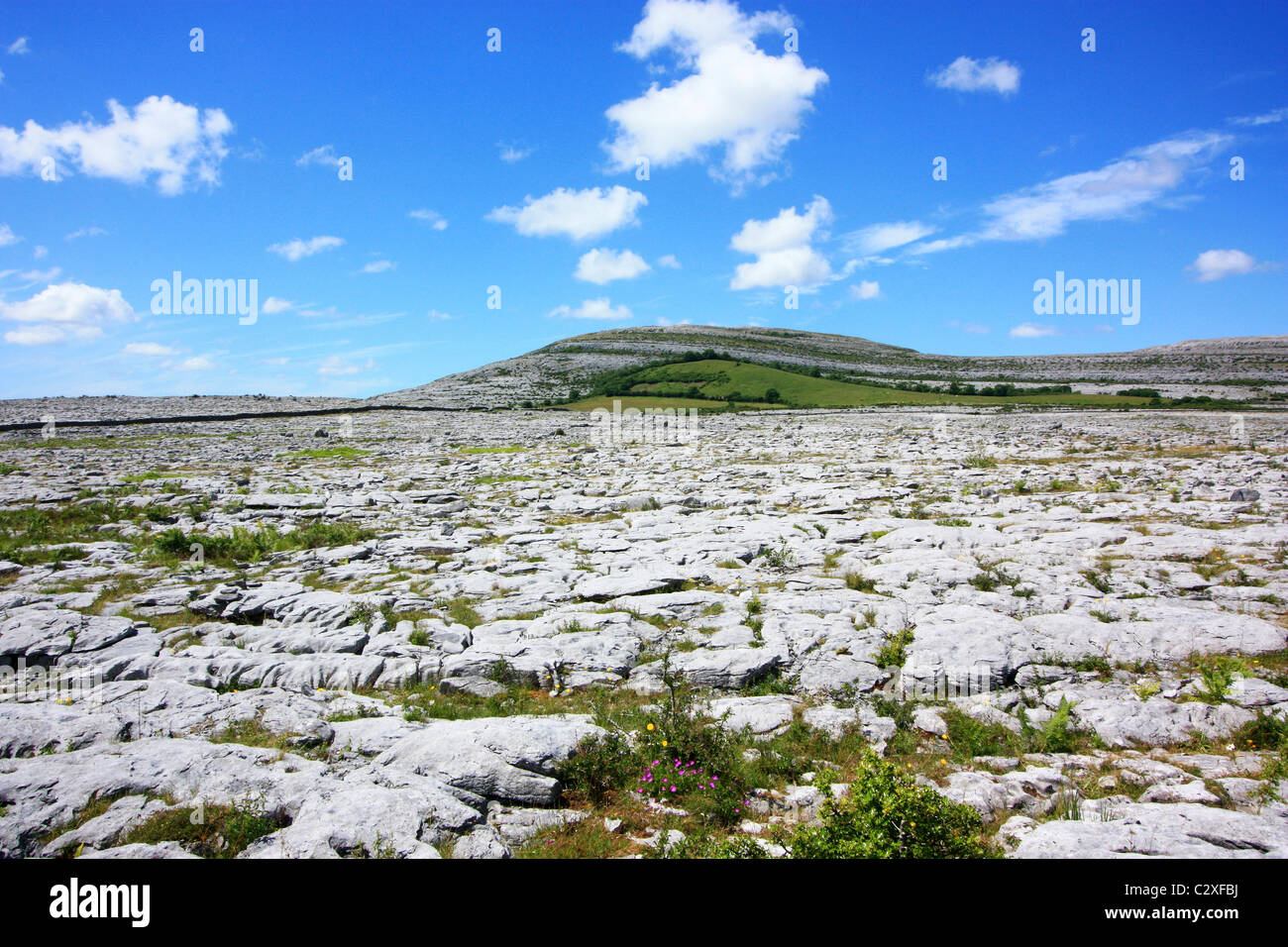 IndicatedFairy fort / stone ringfort · 140 yd
 Enclosure in MoygownaEnclosure · 467 yd
 Templeline (in ruins)Church · 1624 yd
 Farbrega RockNamed rock · 1.1 mi
 Leamaneh CastleCastle · 1.2 mi
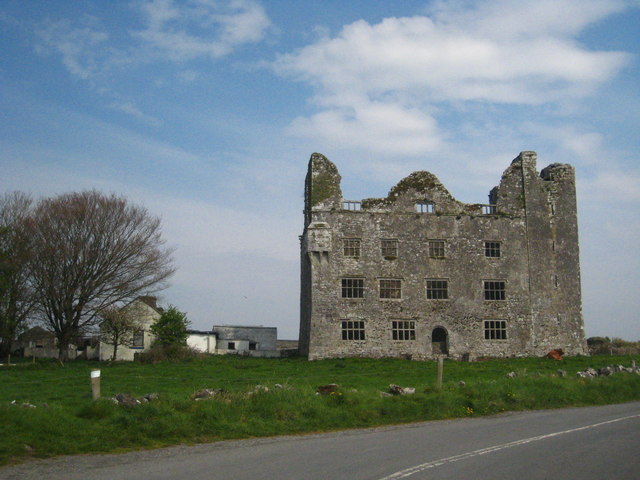 Leamaneh Castle (in ruins)House, fortified house · 1.2 mi
 Carran Church (in ruins)Church · 1.6 mi
 Fergus River CaveCave · 1.7 mi
 CaherconnellHeritage attraction · 2.9 mi
 Cave of the Wild HorsesCave · 3.1 mi
 Poulnabrone - Burren GeositeVisitor information · 3.3 mi
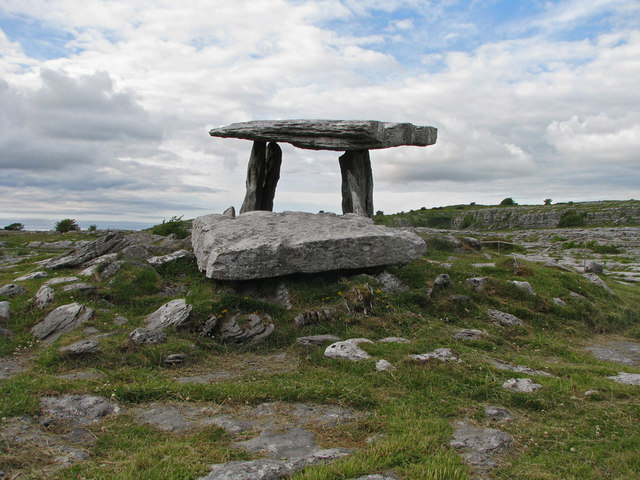 The Portal TombVisitor information · 3.4 mi