Places near here
Photo credits
- Kenneth Allen, Geograph · Creative Commons Attribution-ShareAlike 2.0
- Kenneth Allen, Wikimedia Commons · CC BY-SA 2.0
- Andreas F. Borchert, Wikimedia Commons · CC BY-SA 4.0
- Kenneth Allen, Geograph · CC BY-SA 2.0
- James Emmans, Geograph · CC BY-SA 2.0
- Picture: Think Business
- Picture: Barrack Hill Town Park
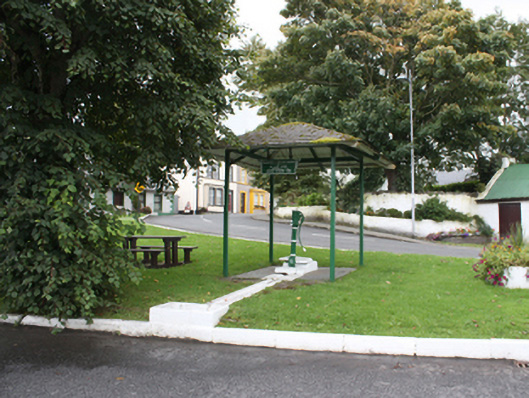
 Ardmore GraveyardGraveyard/cemetery · 30 yd
Explorer Tom Ardmore Graveyard in Culdaff has been keeping secrets since the mid-seventeenth century, possibly even marking the spot where St. Buadan built his church. The names are gone, but that modern grotto of the Virgin Mary is a lovely bit of kitsch. Take a quiet peek from the gate and let the silence do its work.
 GraveyardBurial ground · 41 yd
Explorer Tom Graveyard in Culdaff is marked as an early ecclesiastical site, supposedly founded by St Buadan, but there’s barely anything left to prove it. Road workers actually found human bones while widening the village road, proving this was once a much bigger burial ground. It’s a quiet spot with a surprisingly gritty history underneath the surface.
 IndicatedGraveyard · 55 yd
Explorer Tom Graveyard in Culdaff is where road workers actually pulled human bones out of the dirt during widening works. It’s a spooky reminder that St. Buadan’s old church was built right here, and the earth kept its secrets for centuries.
 Church in CuldaffChurch · 66 yd
Explorer Tom Church in Culdaff is built right on top of a legendary spot said to be St. Buadan’s foundation. Road workers even dug up bones when widening the street nearby, which adds a layer of spooky depth to the whole place. It’s not just a building; it’s a layered history waiting for you to stare at it.
 McGrory’sPub · 70 yd
Explorer Tom McGrory’s in Culdaff is on Main Street, which means it’s probably where everyone goes when they’re bored of the rain. Grab me a pint and tell me who’s shouting the loudest; that’s usually my mate.
 Culdaff ArmsPub · 96 yd
Explorer Tom Culdaff Arms is definitely where you go if your arm hurts from carrying too many heavy bags or emotional baggage. The name suggests heavy lifting or perhaps just deep exhaustion after a long day of work. Tell me if the gossip I made up is true.
 CuldaffOfficial bathing water · 1611 yd
Explorer Tom Culdaff Beach looks as if three pieces of the map agreed to meet for tea: dunes to the west, two rock outcrops to the southeast, and the Culdaff River to the northwest. The sand has quite a supporting cast. This protected coast deserves a gentle visit.
 CastleCastle, unclassified · 1.2 mi
Explorer Tom Castle in Carthage may survive only as shapeless stone mounds on a promontory. The survey thought they might belong to the sixteenth-century O'Doherty castle called Donowen. A wall closed the landward side, while another guarded a sea approach. Those defences are recorded; the exact shape of the lost castle is not.
 Tremone BayBeach / strand · 4.0 mi
Explorer Tom Tremone Bay has been keeping an icy secret in its rocks. Geological Survey Ireland records debris dropped by ancient ice in the bedrock at White Strand’s northwest end, roughly 590 to 570 million years old. I cannot blame the beach for looking smug; most places would brag about a history half that long.
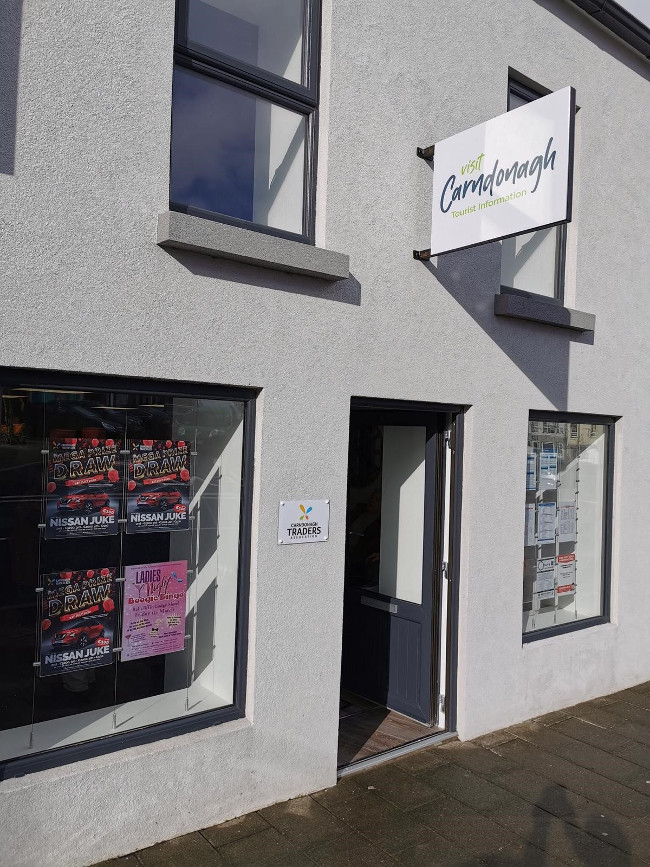 Visit CarndonaghVisitor information · 4.5 mi
Explorer Tom Visit Carndonagh in County Donegal bragged about surviving a storm that only had three waves, but it told the story for hours. Spot the oldest stone and give it a name, preferably one involving a pirate.
 Barrack Hill Community GardensGarden · 4.6 mi
Explorer Tom Follow the growers on Barrack Hill and you will find sixteen raised beds and three polytunnels. One starts the seedlings; the other two keep things growing. I could claim to know their secret for a good tomato, but the gardeners would catch me bluffing before I got through the gate. These are working plots, so ask the committee before going in.
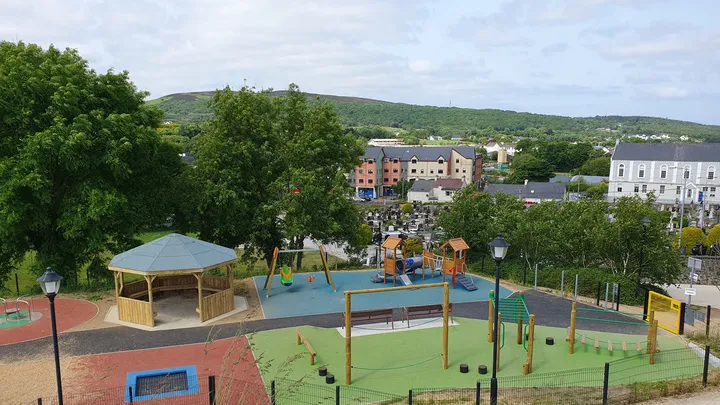 Barrack Hill Town Park PlaygroundChildren's playground · 4.6 mi
Explorer Tom At Barrack Hill, little legs get the climbing frames, swings, balance beams and monkey bars. The roundabout was designed to include more children, and older ones have their own obstacle trail nearby. If I were seven, I would call the monkey bars a test of courage. If I were a parent, I would be looking for the covered shelter. Carndonagh's park committee says local families helped shape the refurbished playground, and the older children's activity area reopened in 2023.
More historic places in County Donegal · All of County Donegal

What do you know about this place?Tap to add a comment or ask a question