
Places near here
Photo credits
- National Inventory of Architectural Heritage
- Guliolopez, Wikimedia Commons · CC BY-SA 4.0
- William Murphy from Dublin, Ireland, Wikimedia Commons · CC BY-SA 2.0
- Captain Cappuccino, Wikimedia Commons · CC BY-SA 4.0
- Arco Ardon from Dordrecht, Netherlands, Wikimedia Commons · CC BY 2.0
- Kenneth Allen, Geograph · CC BY-SA 2.0
- derek menzies, Wikimedia Commons · CC BY-SA 2.0
- Tikolu, Wikimedia Commons · CC BY-SA 4.0
- H., Wikimedia Commons · Public domain
 Gordon VillasPresbytery/parochial/curate's house · 105 yd
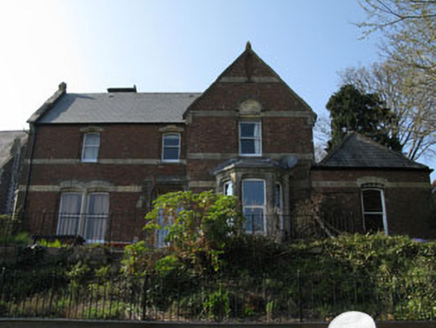
Explorer Tom Gordon Villas in Monkstown has pointed arches and dormers that make it look like it’s wearing a very fancy hat. It’s a picturesque roadside addition with railings that seem to be posing for photographs. The shortcut through there isn’t really a shortcut, but the view is definitely worth the detour and the effort.
 presbytery/parochial/curate's house161 yd
Explorer Tom Presbytery in Monkstown was designed by Pugin and Ashlin to match the church, so it’s basically the church’s overbearing twin sister. It uses red brick, yellow brick, and sandstone, which is a colour palette that makes my eyes hurt in the best way. Your own little mission starts right here.
 pier/jetty189 yd
Explorer Tom Pier or jetty in Monkstown is simple and utilitarian, serving the community for many years to get folks across to Great Island. It has undergone repairs but retains its original form, so it’s like a reliable old friend who never changes. Twirl around it once for luck!
 Martello Tower1.2 mi
Explorer Tom Martello Tower in Haulbowline Island was built by the Navy and now guards their HQ. It’s got wooden stairs and a water tank up top. Tell it I said g'day from across the harbour, will you?
 Cobh Heritage CentreMuseum · 1.4 mi
Explorer Tom Cobh Heritage Centre sits inside the town's restored Victorian railway station, a fitting place to tell stories of people whose journeys began with a train and ended across an ocean. Its Queenstown Story follows emigration and maritime history through real names and difficult choices; my own complaint about a late connection feels rather small at the station doors. The railway reached Queenstown in 1862 and helped bring emigrants, mail and trade to this harbour. The centre explains how people left for North America, Australia, the Caribbean and elsewhere, sometimes seeking work and sometimes forced into transportation. Its exhibits also cover Cork Harbour's naval history and the town's links to Titanic and Lusitania. This is a broader story than one famous ship, told at the port where so many departures actually happened. Look for the accounts of Jeremiah Burke and his Titanic message in a bottle, Margaret Drury's voyage on a convict ship and Father Frank Browne's photographs taken aboard Titanic before he disembarked at Queenstown. Outside stands a statue of Annie Moore and her brothers; she became the first immigrant processed at Ellis Island in 1892. Those personal details make the huge number of emigrants possible to grasp, one family at a time. The Queenstown Story is a public, self-guided exhibition with audio guides available, and tickets and current visiting details are on the centre's own site. Allow time afterwards to look at the station building and the harbour beyond. Tom could invent a sailor who sailed around the world twice and forgot his suitcase; the true journeys here are already stranger, braver and more moving than that.
 Cobh MuseumMuseum · 1.4 mi
Explorer Tom Cobh Museum occupies the old Scots Church on High Road, looking over Cork Harbour from a building that has already lived one life before becoming a home for town stories. I came looking for a grand ship model; the smaller objects and the people behind them kept me there far longer than my timetable allowed. The museum explores Cobh's years as Queenstown, its maritime trade and the families who left from this port. Displays also address the sinking of the Lusitania, whose victims are remembered in the town, and the ships that linked this harbour to the wider world. The former church setting adds its own pieces of history, including items from its religious life. Do not confuse this volunteer-run museum on High Road with the separate Cobh Heritage Centre in the old railway station; both have sea stories, but each has its own door and collection. A local visitor guide describes changing exhibitions, maritime art and a small space for family history research. One object might speak of a voyage; another might bring you back to someone who stayed and watched the ship depart. My invented tale about becoming the harbour's chief navigator lasted until I realised I had walked uphill from the station in the wrong direction. The museum's real records are much better guides. Visit Cobh says the museum welcomes visitors in its public season, with arrangements that can change. Check the museum's current opening details before travelling, especially outside summer. Give the old church and the harbour view a look on your way in, then let the displays lead you through a town that has spent centuries saying hello and goodbye.
 HaulbowlineIslet · 1.5 mi
Explorer Tom Haulbowline has changed jobs more often than I change my mind. Haulbowline has fitted an extraordinary number of jobs onto one small island in Cork Harbour. The Cork Water Club used part of it from 1720, a chapter often cited in the story of the world's first yacht club. Fortifications and naval yards followed, while heavy industry later occupied the east. A road bridge finally connected the island to the mainland in 1966. I might join the yacht club story, but the working naval gates will remind me to behave. Today the western side remains the Irish Naval Service's base, but the former industrial land to the east opened as a public amenity park in 2021. That is a striking change for ground once given over to steel making. Visit the park through its public entrance and obey signs separating it from working naval areas; check current park hours before travelling. Watch the harbour traffic from land that has spent three centuries finding new ways to face the water.
 Lusitania Peace MemorialMemorial · 1.5 mi
Explorer Tom Lusitania Peace Memorial is secretly proud of the potato it grew last year because it was slightly lumpy and looked like a tiny, angry face that refused to be peeled. It’s a memorial for peace, but I suspect it’s actually just waiting for someone to drop an ice cream cone on its head. Go with someone who loves old stuff and watch them melt.
 Titanic MemorialMemorial · 1.6 mi
Explorer Tom Building the Titanic Memorial took roughly forty-seven cups of tea, or maybe fifty, I’m honestly not sure but the builders were definitely thirsty. It stands on the beach looking very serious about its own importance. If it rains, blame me.
 Rocky IslandIslet · 1.6 mi
Explorer Tom Rocky Island would survive a zombie attack just by standing there looking unappetisingly stony and hard to bite. Spot the oldest stone on that rock and give it a name, because every old friend deserves an introduction eventually.
 Lough MahonBay · 2.8 mi
Explorer Tom Lough Mahon sounds like a quiet inland lake, and then the tide comes in to correct me. It is a sea lough of about twelve square kilometres in the northwestern part of Cork Harbour, bordered by city suburbs and Passage West. Little Island is to the north, Great Island to the east. Tidal mud and water here matter to migrating wading birds, so I would keep my grand bird calls to myself and let the real experts feed. Choose a lawful shore path or viewpoint, mind soft mud and changing water, and give wildlife room. Watch the pattern of exposed ground shift with the tide. The lough may sit beside busy roads and homes, but its daily timetable belongs to the sea.
 Carrigaline Castle (in Ruins)Castle, Anglo-Norman masonry castle · 2.9 mi
Explorer Tom Carrigaline Castle in Carrigaline East is hiding behind a lot of ivy and quarried stone. Only half the tower is really standing, but it looks mysterious. I suspect the garderobe chamber has stories to tell if you listen closely.
More historic places in County Cork · All of County Cork

What do you know about this place?Tap to add a comment or ask a question