What is recorded here
One chamber, one woman, one visible fact: a limestone effigy of a woman in a pleated gown and heart-shaped head-dress, broken once across the waist and repaired, now fixed in a later church built on an older chancel in Gowran. She may be Sadhbh MacMurrough Kavanagh, wife of a Butler man killed in 1487, but that is inference, not certainty. What is certain is that she was deemed worthy of stone, and the stone survived the burying, the breaking and the rebuilding.
Fixed to the N wall of a 19th-century C of I church which was built on the former chancel of the 13th-century church of St Mary’s (KK020-060006-) in Gowran. A limestone effigy (L 2.17m; Wth 0.71m; T 0.19m) of a woman in raised relief, with straight sides (T 0.06m). The slab was broken horizontally across the waist of the woman, below her elbows, but has been repaired.
The effigy, whose head is resting on a pillow, is described by Hunt (1974, vol. 1, 168-9) as wearing, ‘a heart-shaped head-dress and pleated gown with V-neck falling in folds to the feet. Her poke sleeves show the tight buttoned cuffs of the kirtle beneath. The girdle is worn high up under the bosom and has a long pendant decorated with ‘S’ and flowers. The figure is closely related to that of Margaret Fitzgerald in St Canice’s Cathedral, Kilkenny. The details of the elaborate reticulated head-dress with its central ornamented kerchief are almost identical. Slightly less can be seen of the laced cuffs of the kirtle, and the details of the belt vary’.
Hunt dates this effigy to the early 16th century (ibid. 169). He suggests that effigy may represent Sadhbh MacMurrough Kavanagh, wife of James MacEdmond MacRichard Butler (died. 1487), and that the ‘S’ pattern on the pendant portion of the girdle might be an indication of a royal English distinction (ibid.).
Compiled by: Jean Farrelly
Date of upload: 14 August 2019
Medieval effigial tomb, 13th–14th century. The tomb is significant as a rare surviving example of early medieval funerary art in Ireland, originally part of the church of St Mary’s, later incorporated into a 19th-century church structure.
The monument record does not grant public access. Check the route and ask the landowner before entering private land.
- What survives
- Recorded monument
Places near here
 Saint Mary's Church (Gowran)church/chapel · 4 yd
 Church (in ruins)Church · 11 yd
 Font in GowranFont · 27 yd
 IndicatedTown defences · 61 yd
 Castle (Site of)Castle, unclassified · 342 yd
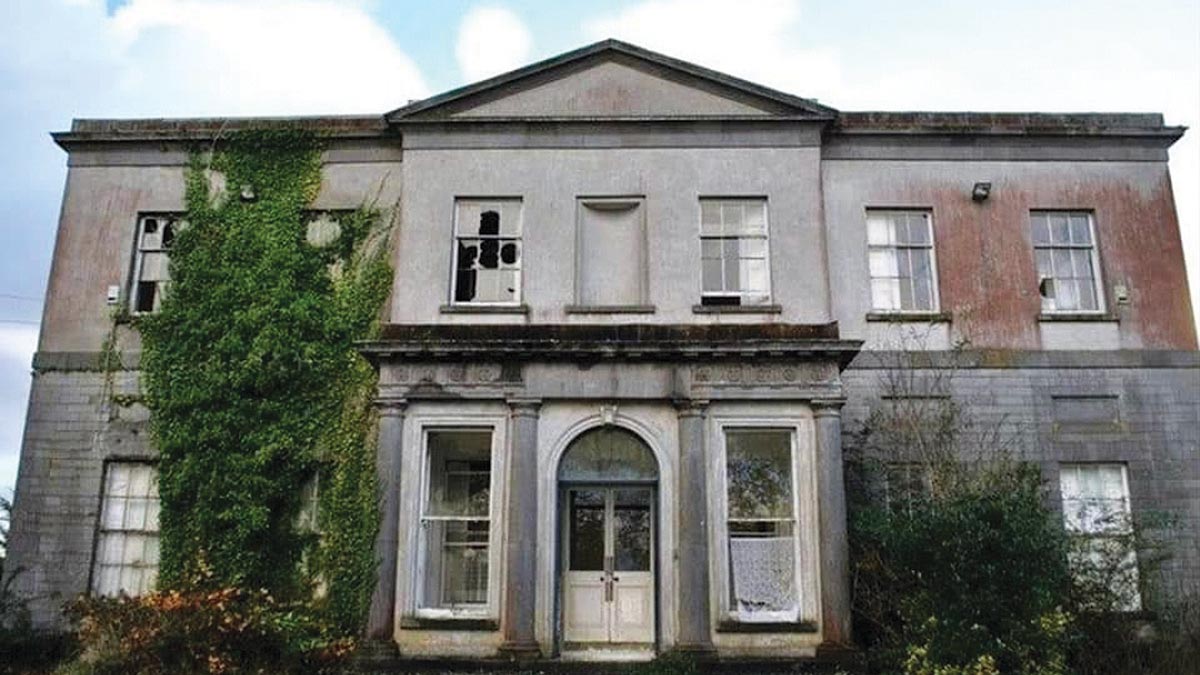 Bawn in Gowran DemesneBawn · 547 yd
 The Pey FieldForest · 3.2 mi
 The ClahounForest · 3.3 mi
 Tullaherin Church and Round TowerVisitor information · 4.4 mi
 St. Mogarra’s WellSpring · 4.6 mi
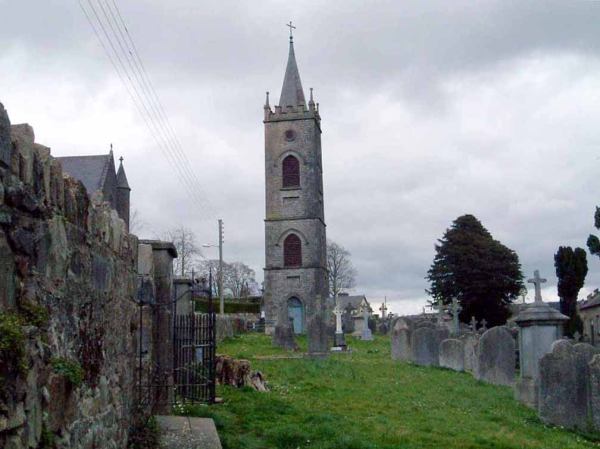 Kilbline GraveyardArchaeological place · 5.3 mi
 Time CapsuleMemorial · 5.5 mi