What is recorded here
Radoulfus the generous priest lies carved in limestone inside a later church built upon his own burial place. His hands rest folded on his breast, his vestments cut in shallow folds, and a Latin line beside him records that he died in 1253. The tomb has survived the destruction and rebuilding of St Mary’s, still facing east as if waiting for the particular quiet of a man who gave to others while alive.
Fixed to the centre to the internal face of the E gable of a 19th-century C of I church which was built on the former chancel of the 13th-century church of St Mary’s (KK020-060006-) in Gowran. A tapering limestone effigial tomb lid (L 1.94m; overall Wth at top 0.73m; overall Wth at base 0.58m; T 0.3) carved with a male figure in raised relief. The upper edge of the slab is chamfered (Wth 0.06m) and the remainder straight-sided. There is an inscription in Lombardic script on the chamfered sides which reads: DUM VIXIT SANUS RADOULFUS ERAT JULIANUS DUM VIXIT SOSPES R[C?]UPTIS FUERAT PIUS HOSPES AD MCCLIII˚ XIIII K.K. APRIL (Hunt 1974, vol. 1, 167). Hunt roughly translates this as, ‘while he lived, Radoulfus was generous to those in need. He died on 19 March 1253’ (ibid.).
The figure is described by Hunt as, ‘lying with his head upon a rectangular cushion. His hands are disposed one above the other on his breast. He is vested in a finely pleated alb, with a broad orphrey close to the bottom hem. He wears a long chasuble rather schematically shown with numbers of shallow folds in a chevron pattern over the front, and covering the upper arm to the elbow. The ends of the stole show beneath it and there is a maniple of the same fashion with slightly expanded ends. Under the elbows, where the alb shows beneath the chasuble, the upper part can be seen folding over the position of the tucking girdle. Although much of the neck is missing, part of the broad, upstanding apparel of the amice is visible, with a circular bulge in front representing the cross-over of the amice often shown in this position. It is much worn and no details are shown on the surface. It might be taken to represent a logion, a jewel sometimes seen at this period at the top of the chasuble of bishops, but this would be most irregular on a priest who would not wear one. On his feet are pointed shoes’ (ibid.).
Compiled by: Jean Farrelly
Date of upload: 14 August 2019
A 19th-century effigial tomb fixed within the former chancel of a 13th-century church; significance lies in its reuse of a sacred medieval space and preservation of funerary art.
The monument record does not grant public access. Check the route and ask the landowner before entering private land.
- What survives
- Recorded monument
Places near here
 Saint Mary's Church (Gowran)church/chapel · 14 yd
 Church (in ruins)Church · 22 yd
 Font in GowranFont · 39 yd
 IndicatedTown defences · 70 yd
 Castle (Site of)Castle, unclassified · 330 yd
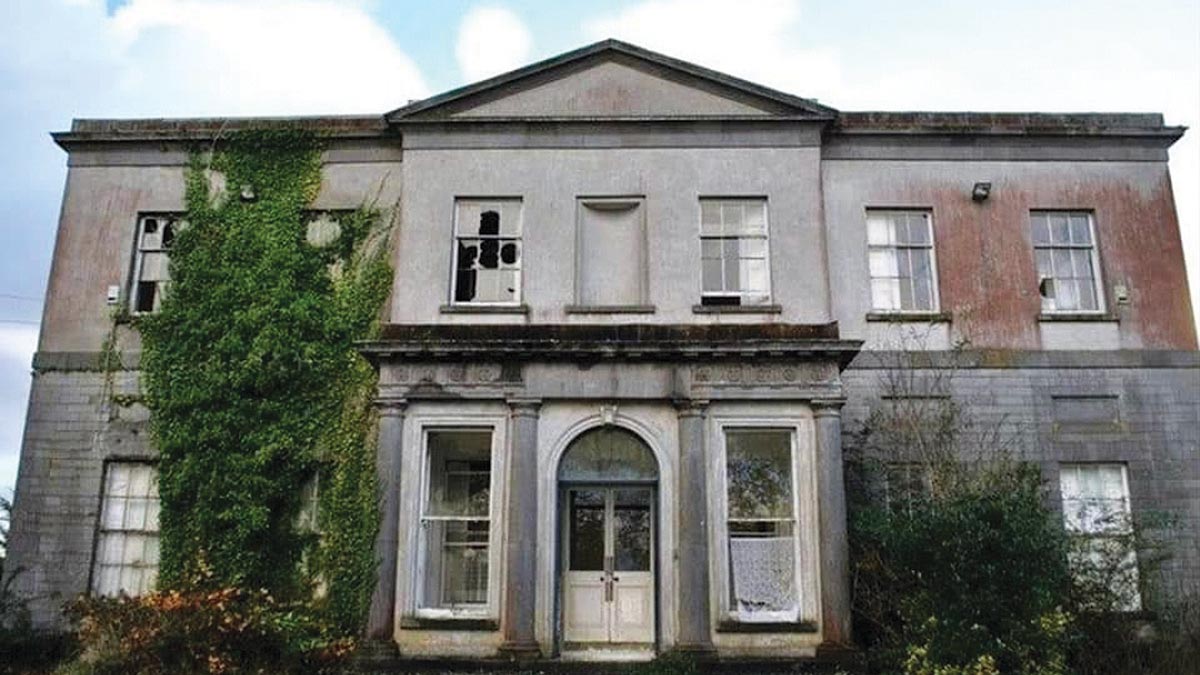 Bawn in Gowran DemesneBawn · 550 yd
 The Pey FieldForest · 3.2 mi
 The ClahounForest · 3.3 mi
 Tullaherin Church and Round TowerVisitor information · 4.4 mi
 St. Mogarra’s WellSpring · 4.6 mi
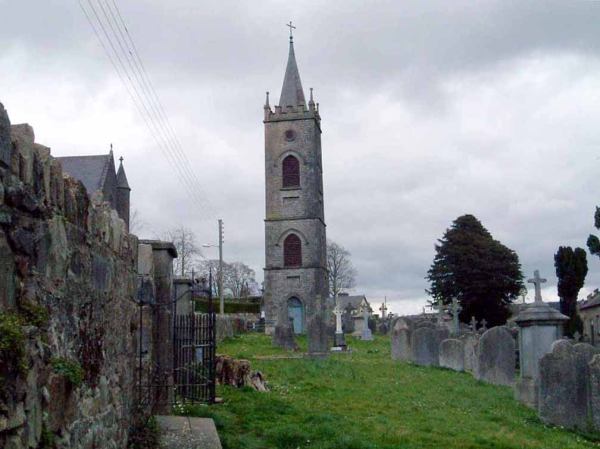 Kilbline GraveyardArchaeological place · 5.3 mi
 Time CapsuleMemorial · 5.5 mi