What is recorded here
One of two grave-slabs (see also LH025-005001-) located in the nineteenth-century Beaulieu church. This is a cadaver effigial monument. It is a tomb cover, almost rectangular in shape (L 1.5m, Wth at top 0.49m, Wth at bottom 0.4m), and has no inscription, but is ascribed to the mid-fifteenth century by Roe (1969, 10-11). The effigy is approximately life-size, is completely skeletonised, and lies flat on its back with arms and hands outstretched resting on the folds of its garments. The cadaver is covered with various kinds of vermin, including a serpent going in one ear and out the other, horned worms at its side and swollen speckled toads lying on its breast. There is a headdress-like knotted shroud with long wavy tresses like a cap or caul patterned with embroidered lines etc. It was moved into the porch of the church for safe-keeping in the summer of 2018. (CLAJ 1944, 277; Roe 1969,1-19)
See the attached view of the cadaver
The above description is derived from both the published 'Archaeological Inventory of County Louth' (Dublin: Stationery Office, 1986) and the 'Archaeological Survey of County Louth' (Dublin: Stationery Office, 1991). In certain instances the entries have been revised and updated in the light of recent research.
Date of revised upload: 2 October 2018
Cadaver effigial tomb, medieval period (likely 14th–15th century). It is significant as a rare example of mortuary art reflecting memento mori themes in later medieval Christian funerary practice.
The monument record does not grant public access. Check the route and ask the landowner before entering private land.
- What survives
- Recorded monument
Places near here
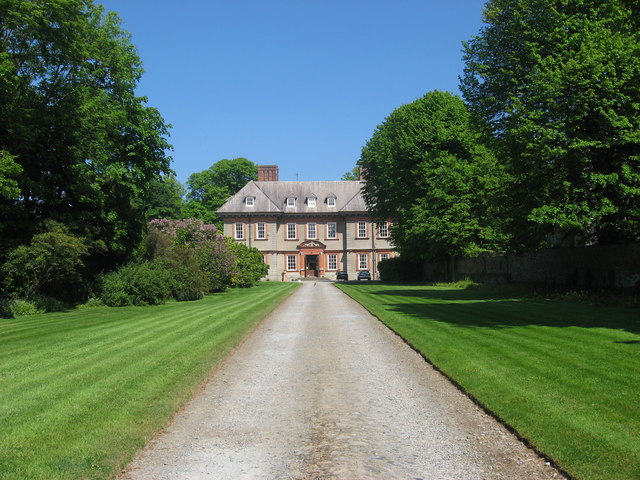 Beaulieu Ho.House, 17th century · 68 yd
 Beaulieu House and GardensHeritage attraction · 68 yd
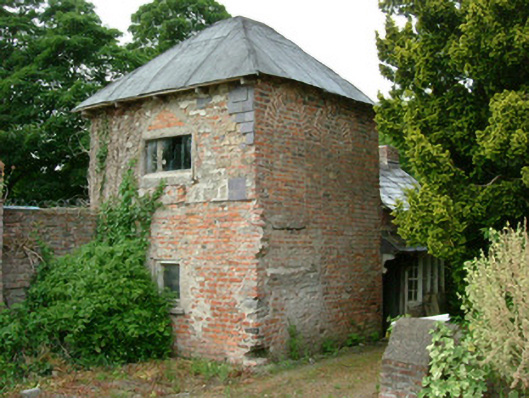 Beaulieu Houseworker's house · 151 yd
 Grave YardGraveyard · 1110 yd
 Holy well in MorningtonHoly well · 1366 yd
 Site of Old CastleCastle, unclassified · 1.3 mi
 RuinCastle, tower house · 1.4 mi
 Newgrange Business ParkMemorial · 3.7 mi
 Battle of Julianstownbattle · 4.0 mi
 Yellow IslandIslet · 4.4 mi
 Grove IslandIslet · 4.7 mi
 Glenmore ForestWood · 5.7 mi