
What is recorded here
Toberfeaghna (Tobar Fhiachna) is associated with St. Fiachna (raven) who may be the same Fiachra Goll of Clonfert (Cluain Fearta), Co. Galway who belonged through his father to Dáire to the Uí Bhairrche clan of the Laois/Carlow area (Ó Riain 2011, 316). In a note added to this Fiachra's pedigree, John Colgan wondered whether he might be the hermit named Fiacre whose cult, centred on Meaux, spread widely in France (ibid.). The French feast of 30 August was first introduced to the Irish calendar in the late twelfth century by the compiler of the Martyrology of Gorman, it came to be observed, in the form of its vigil, at St Fiachna's well (KE102-038004-) in the Kerry parish of Kilcaskan and nearby, in the townland of Gearhanagoul, was a celebrated bush [KE102-054----] associated with Fiachna (ibid.). In 1841 the Ordnance Survey recorded the following details about Toberfeaghna; 'a pattern was held on the 29th of August in honour of the patron St. Fiachna. This pattern was abolished about 20 years ago [c. 1820] for some weighty reasons, but the well is still visited every day by patients for the cure of various diseases, particularly for diseases of the eye’ (OSL; O’Donovan 1983).
In rough pasture, on the lower S-facing slopes of Barrerneen. A triangular-shaped well formed by two low stone slabs (L 0.3m) set against the base of the E face of an irregular-shaped upright boulder (H 0.7m; 1m x 1m). Spring water from the well flows downslope to the SE. Pilgrims have inscribed a single cross (KE102-038007-) on a stone slab which rests on top of the boulder. The well is overgrown with gorse bushes and small holly trees. According to local information, rounds were made here on 29 August in honour of St Feaghna and water from the well was used to treat eye diseases. A church (KE102-038001-) and a burial ground (KE102-038002-) lie c. 50m to the W and a bullaun stone (KE102-038003-) is c. 60m to the SW. The church and bullaun stone formed part of the 'rounds' at Toberfeaghna.
Mícheál Ó Tuama recalled the following folklore about Toberfeaghna; 'On the opposite side of the road to the graveyard, there is a path through a field which leads to a small holy well - tobar Fiachna, protected over by large boulders. On the top of these boulders lies a flat stone, having a pebble along side it, with which those making the "Rounds" of the well, scratch on the stone the Sign of the Cross. Many cures were affected at this well, but it is said that was specially remarkable was curing rheumatism' (The Schools’ Collection, Volume 0461, Page 027 accessible online at https://www.duchas.ie/en/cbes/4742074/4732945)
See attached photographs (01, 02) courtesy of Amanda Clarke.
The above description is derived from the published 'Archaeological Inventory of County Kerry. Volume I: South-West Kerry' (Dublin: Stationery Office, 2009). In certain instances the entries have been revised and updated in the light of recent research.
Revised by: Caimin O'Brien
Date of revised upload: 28 September 2022
Toberfeaghna is linked to St. Fiachna (or Fiachra Goll), a 6th-century saint associated with Clonfert in County Galway and believed to have belonged to the Uí Bhairrche lineage of Laois. The well may have been visited for healing or as part of seasonal rituals, reflecting the broader tradition of holy wells dedicated to early Irish saints.
The monument record does not grant public access. Check the route and ask the landowner before entering private land.
- What survives
- Recorded monument
Places near here
 Templefeaghna (in ruins)Church · 73 yd
 Ritual siteRitual site, holy tree/bush · 156 yd
 DrehigeighteraghBridge · 282 yd
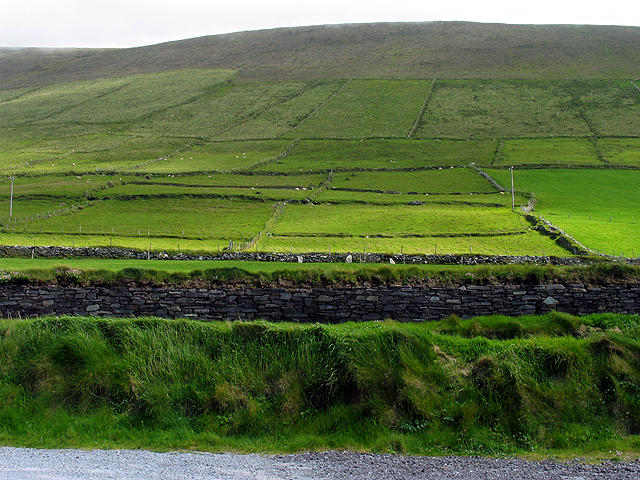 Field system in GearhanagoulField system · 1522 yd
 Bullaun StoneHeritage attraction · 1.1 mi
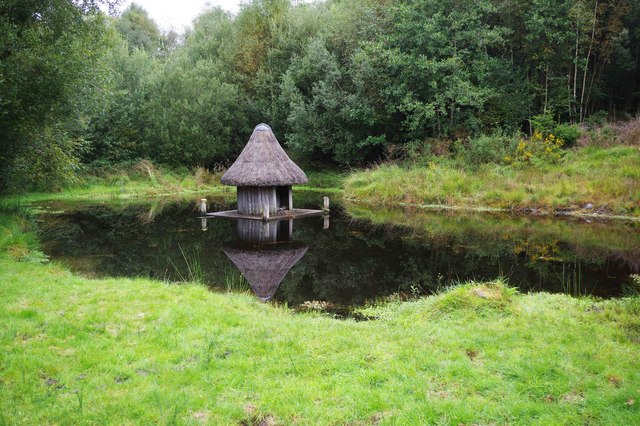 Bonane Heritage ParkMuseum · 1.1 mi
 BeneenMountain / peak · 1.7 mi
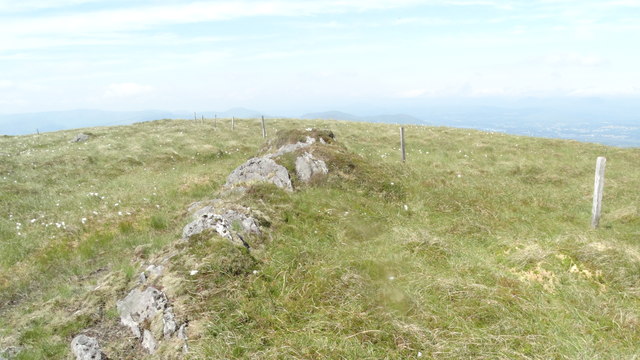 KnocknamanaghMountain / peak · 2.0 mi
 The Priests LeapViewpoint · 2.1 mi
 CaoinkeenCliff · 2.9 mi
 CastleCastle, unclassified · 4.8 mi
 Tasmanian bluegumTasmanian bluegum · 4.9 mi
Other information
Photo: Credit not shown in the picture search · Rights wording not checked; contact us if this picture should be removed