DDiscover AloneMapAbout

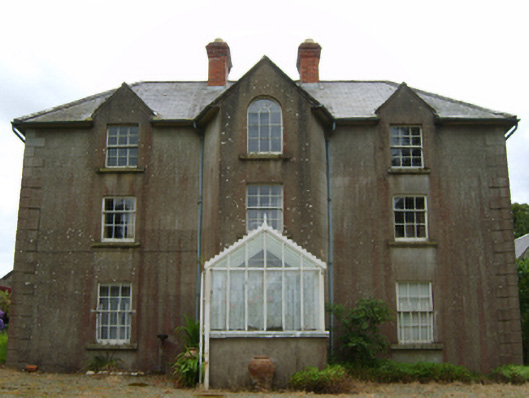
Tinnacross House

Farm house
Tinnacross House
Photo: National Inventory of Architectural Heritage · Report the wrong picture

What is recorded here

Detached three-bay two-storey farmhouse with half-dormer attic, extant 1840, on an L-shaped plan originally three-bay two-storey centred on single-bay full-height gabled breakfront on an engaged half-octagonal plan with single-bay single-storey gabled projecting glazed porch to ground floor; single-bay (two-bay deep)…

Read the whole record
Detached three-bay two-storey farmhouse with half-dormer attic, extant 1840, on an L-shaped plan originally three-bay two-storey centred on single-bay full-height gabled breakfront on an engaged half-octagonal plan with single-bay single-storey gabled projecting glazed porch to ground floor; single-bay (two-bay deep) full-height return (south). "Improved", pre-1904, producing present composition. Occupied, 1911. Now disused. Hipped slate roof on an L-shaped plan including gablets to window openings to half-dormer attic centred on pitched (gabled) slate roof, lichen-spotted clay ridge tiles, paired red brick Running bond central chimney stacks having thumbnail beaded corbelled stepped capping supporting yellow terracotta pots, concrete or rendered coping to gablets, and cast-iron rainwater goods on rendered eaves retaining cast-iron octagonal or ogee hoppers and downpipes. Rendered, ruled and lined walls to front (north) elevation with rusticated quoins to corners; lime rendered surface finish (remainder). Segmental-headed central door opening into farmhouse. Square-headed window openings centred on segmental-headed window opening (half-dormer attic) with cut-granite sills, and concealed dressings framing six-over-six (ground floor), three-over-six (first floor) or six-over-six (half-dormer attic) timber sash windows without horns centred on six-over-six timber sash window (first floor) or fixed-pane fitting having fanlight (half-dormer attic). Square-headed window openings to rear (south) elevation with cut-granite sills, and concealed dressings framing two-over-two timber sash windows having part exposed sash boxes. Interior including (ground floor): central entrance hall retaining carved timber surrounds to door openings framing timber panelled doors; and carved timber surrounds to door openings to remainder framing timber panelled doors with timber panelled shutters to window openings. Set in unkempt landscaped grounds with cut-granite monolithic piers to perimeter supporting wrought iron "farm gate" gate.
A farmhouse representing an integral component of the domestic built heritage of County Wexford with the architectural value of the composition confirmed by such attributes as the symmetrical frontage centred on a polygonal breakfront; and the miniature gablets embellishing the roofline: meanwhile, such traits as the curious proportions of the openings on each floor clearly illustrate the continued development or "improvement" of the farmhouse at the turn of the twentieth century. Having been well maintained, the elementary form and massing survive intact together with substantial quantities of the original fabric, both to the exterior and to the interior, including crown or cylinder glazing panels in hornless sash frames, thereby upholding the character or integrity of the composition. Furthermore, adjacent outbuildings (extant 1904) continue to contribute positively to the group and setting values of a self-contained ensemble having historic connections with the Lett family including George Lett (d. 1873), 'late of Tinacross [sic] Ferns County Wexford' (Calendars of Wills and Administrations 1877, 410); Charles Lett (d. 1882), 'Farmer late of Tinnacross County Wexford' (Calendars and Wills and Administrations 1882, 417); and Thomas Lett (d. 1893) '[who] while engaged in skinning the carcases of some of [his] dead cattle became inoculated with [Anthrax] which unfortunately proved fatal' (Return in Pursuance of the Provisions of the 59th Section of the Contagious Diseases (Animals) Act 1878 1893, 5; cf. 15704608).

From the Buildings of Ireland (National Inventory of Architectural Heritage) record 15702035

This does not grant access. Most recorded buildings are privately owned; view them only from public ground unless the owner allows entry.

What do you know about this place?Tap to add a comment or ask a question

What you write will be public.

Places near here

Photo credits
  • National Inventory of Architectural Heritage
  • Darrin Antrobus, Wikimedia Commons · CC BY-SA 2.0
  • MikeWest Wexford, Wikimedia Commons · CC BY-SA 4.0
  • Colin Park, Geograph · CC BY-SA 2.0
  • John M, Wikimedia Commons · CC BY-SA 2.0
Site of Kildenis ChurchChurch · 226 yd

Explorer Tom Site of Kildenis Church in Tinnacross claims the local postman invented it just to have an excuse for not delivering mail. It's on a hillside slope and looks like it's trying to blend into the grass. Make a wish, because it's had centuries of practice at doing absolutely nothing.

Burnt spread in TinnacrossBurnt spread · 1272 yd

Explorer Tom Burnt spread in Tinnacross makes a sound at night that is basically the universe sighing and saying ‘oh, forget it’. It’s just a charcoal-rich clay patch that got left behind when the M11 was built, like an unwanted gift. Have a chat with it, nobody's watching.
farm house1376 yd

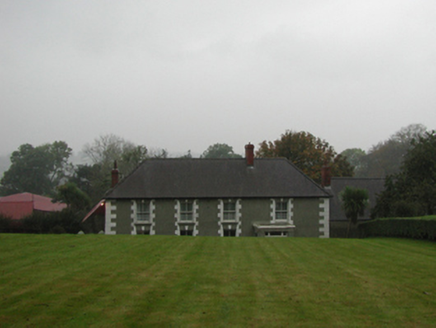
Explorer Tom That farmhouse in Myaugh thinks the road leading to it is an insult to its good taste. The high-pitched roof is just its way of screaming at passing traffic every single day. Wave if you can hear the grumbling.
Tinnacross BridgeBridge · 1400 yd

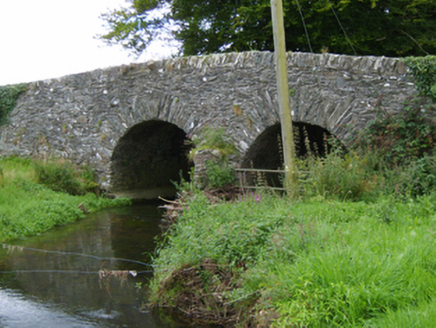
Explorer Tom Tinnacross Bridge claims its stones are whispering secrets to the cows, which is probably just wind, but I like the sound of it better. Don’t let them tell you it’s quiet; it’s definitely judging your driving. Give it a wink from the road if you can see me.

post box1.0 mi

Explorer Tom Post box in Ballysimon could teach us a thing or two about history if it wasn’t so shy. It’s got Queen Victoria’s mark on it, reminding us we used to be part of the British Empire. Glance at it from the path and imagine all the letters that never quite arrived.
Saint Patrick's Catholic ChurchChurch/chapel · 1.0 mi

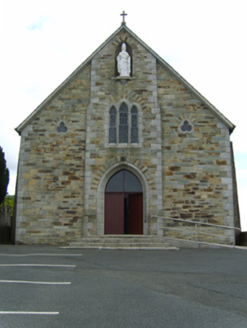
Explorer Tom Saint Patrick's Catholic Church in Ballysimon would win a county fair prize for best dressed if they allowed buildings to enter, mostly because it looks like it’s trying too hard to be impressive. John Kelly designed it, and it evokes comparisons with other churches, which is what we all want, right? It’s got that later nineteenth-century confidence. Watch out for the competition!
O CúipéirFarm house · 1.2 mi

Explorer Tom O Cúipéir hosted a dance so wild the floorboards are still shaking from the memory. It’s got mud on its walls and a story for every window pane. Tip your hat if you’re passing by.

Battle of EnniscorthyBattle · 4.4 mi

Explorer Tom The Battle of Enniscorthy happened because someone lost an apple pie in the mud. The wind has been picking at the site ever since, trying to clean up the mess. It’s still got crumbs on it. Sit on a wall near it and pretend you're in a painting.

Enniscorthy CastleMuseum · 4.5 mi

Explorer Tom Enniscorthy Castle has had so many owners that I would need a bigger key ring than the town has shops. Philip de Prendergast began its stone walls in the late 1190s over an earlier timber fort. Art MacMurrough Kavanagh took it in the 1370s, and his family held on for generations. Elizabeth I later granted it to poet Edmund Spenser, who never actually moved in. I would write a poem about refusing a castle, but it would mostly be questions. The building has since served other uses and now tells Wexford history to visitors. Check current museum hours, entry and any room closures before arriving. Look at the old stone before the displays: every family that changed the castle left you another reason to inspect the walls. Spenser missed that opportunity; you need not.

IndicatedCastle, tower house · 4.5 mi

Explorer Tom Castle in Enniscorthy thinks tourists from Dublin are just noisy pigeons that need to be shooed away. It grew around a manor that’s older than most of our current fads are. Grand place for a sulk or a snog, your call really.

1798 MemorialStatue · 4.5 mi

Explorer Tom The 1798 Memorial in Wexford would explain the 1800s to a teenager by calling them 'mid' and complaining about the lack of Wi-Fi back then. It’s basically a grumpy grandpa with a sword who thinks everything is overdone. Bring a camera and your most suspicious face.

Battlefield in EnniscorthyBattlefield · 4.5 mi

Explorer Tom This Enniscorthy spot thinks it’s the only battlefield with actual style, which is a bold claim for a field of nothing. It’s proud of its silence and the way the wind sounds like a ghostly trumpet. Bring a map, get lost anyway, that's the fun.

More historic places in County Wexford · All of County Wexford

Add to this placeAdd a picture Add a detailed tip Add a story

Explore the map1,093,392 places to discover

Next place · or swipeSite of Kildenis Church