Places near here
Photo credits
- User:Raladic, Wikimedia Commons · CC BY 3.0
- Colin Park, Geograph · CC BY-SA 2.0
- Sergio, Wikimedia Commons · CC BY 2.0
- Gareth James, Geograph · CC BY-SA 2.0
- The original uploader was Irishpunktom at English Wikipedia ., Wikimedia Commons · CC BY-SA 3.0
- National Inventory of Architectural Heritage
- Aleks Scholz, Geograph · CC BY-SA 2.0
- Irlpol, Wikimedia Commons · CC BY-SA 3.0
- Kevin Forkan, Wikimedia Commons · CC BY-SA 4.0
 Killiney HillMountain / peak · 238 yd
Explorer Tom Killiney Hill gives you a view of Dublin Bay from about 153 metres up, though the hill used to have a bit more head on it. Stone cut from the summit helped build the pier at Dún Laoghaire. I might complain that somebody borrowed the top, but the harbour got a useful bargain. An obelisk completed in 1742 remembers people who suffered in the famine of 1740-41; let that fact sit alongside the fine view. In clear weather you can see across the Irish Sea toward Wales, while nearer paths run through Killiney Hill Park and Dalkey Hill beside it. I would promise to identify every headland, then point to the wrong one with confidence. The park is public walking ground, with slopes and steps that deserve sensible shoes. Go for the view, pause at the obelisk, and give the missing summit a thought on the way down.
 Mapas MonumentHeritage attraction · 248 yd
Explorer Tom Mapas Monument in County Dublin was built back in 1742 because the walks were too hard. John Mapas did it, so we owe him one. Stand next to it and look like you know the history!
Frank KellettMemorial · 362 ydExplorer Tom Frank Kellett in County Dublin got this tablet dedicated to him by his mates. Sounds like he was a big deal, maybe a pilot, but nobody really says what he actually did with his life.
Mullins HillMountain / peak · 433 ydExplorer Tom Mullins Hill is right next to Killiney Bay and its beautiful resort beach. It’s a lovely spot for a walk, but don’t get too comfortable because the wind might blow your hat off into the blue sea.
 Ayesha CastleCastle · 473 yd
Explorer Tom Ayesha Castle in County Dublin has a deep suspicion of the postman and his noisy van. The name suggests royalty, but the reality is just a map point with attitude. It’s probably judging your driving from its hidden perch in the green fields. It's free, it's odd, what more do you want?
 White Rock, Killiney BeachBeach / strand · 587 yd
Explorer Tom White Rock is a little Dublin cove that makes you work for your sand. Below Vico Road near Killiney, it waits at the bottom of steps, with the railway close by and Killiney Bay spreading out beyond the rocks. It feels hidden enough to make you smug, though plenty of locals know exactly where it is. Irish Rail's coastal design report identifies the current access: steps down from Vico Road on the north side, or an approach from Killiney Beach to the south when the tide allows. A rocky outcrop called the Bluff cuts off that southern route as water rises. That is not a minor detail to remember after your picnic; it decides how you get home. The beach is small and sandy, quite different in feel from Killiney's long stony stretch nearby. The cove is also a recognised bathing water. Dún Laoghaire-Rathdown County Council monitors White Rock but does not provide a lifeguard there, even though it guards some other local beaches during the summer season. That makes the place best for a careful visit rather than a casual assumption that someone is watching the water. Look along the curve of the bay towards Bray Head, and enjoy the odd sight of trains threading the shore above your little patch of sand. Use the Vico Road steps for a reliable public approach and check the latest bathing-water notice before swimming. Steps and uneven ground make this a poor choice for anyone needing level access. Do not rely on walking round the Bluff from Killiney unless the tide clearly permits both the outward and return trip. White Rock is lovely, but the sea is in charge of its doors.
 Dalkey HillMountain / peak · 839 yd
Explorer Tom Dalkey Hill gives you a fine Dublin Bay view and a crash course in where part of Dún Laoghaire Harbour came from. The old granite quarry cut into this hill helped supply its great piers, so I was tempted to call the place a harbour in kit form; the geologists would quite rightly ask me to put the joke down and look at the rock. The Geological Survey of Ireland describes the quarry's granite as about 405 million years old. Quarrying began in the early 1800s, and a railway system carried stone down toward the harbour along the route called the Metals. A ridge left through the quarry once helped move stone on truckways. These details turn a walk among the rock faces into a look at the labour and engineering behind the coast below. Keep clear of climbing areas unless you are properly equipped and with experienced company. Dalkey Hill also belongs to the wider public parkland around Killiney Hill. Paths and open ground let walkers trade the close view of worked stone for Dublin Bay, Dalkey and the southern coast. I did consider asking the quarry for one last block to build my own castle, but it has already given quite enough. The exposed granite and sea light make a better monument than any battlement I could stack. The county council manages this area as public open space, and its geological site report notes information signs at entrances to the hill. Stay on the established paths, watch your footing near quarry edges, and allow time to read the ground beneath your boots. Dalkey Hill is a place where the city borrowed stone and left a remarkable viewpoint behind.
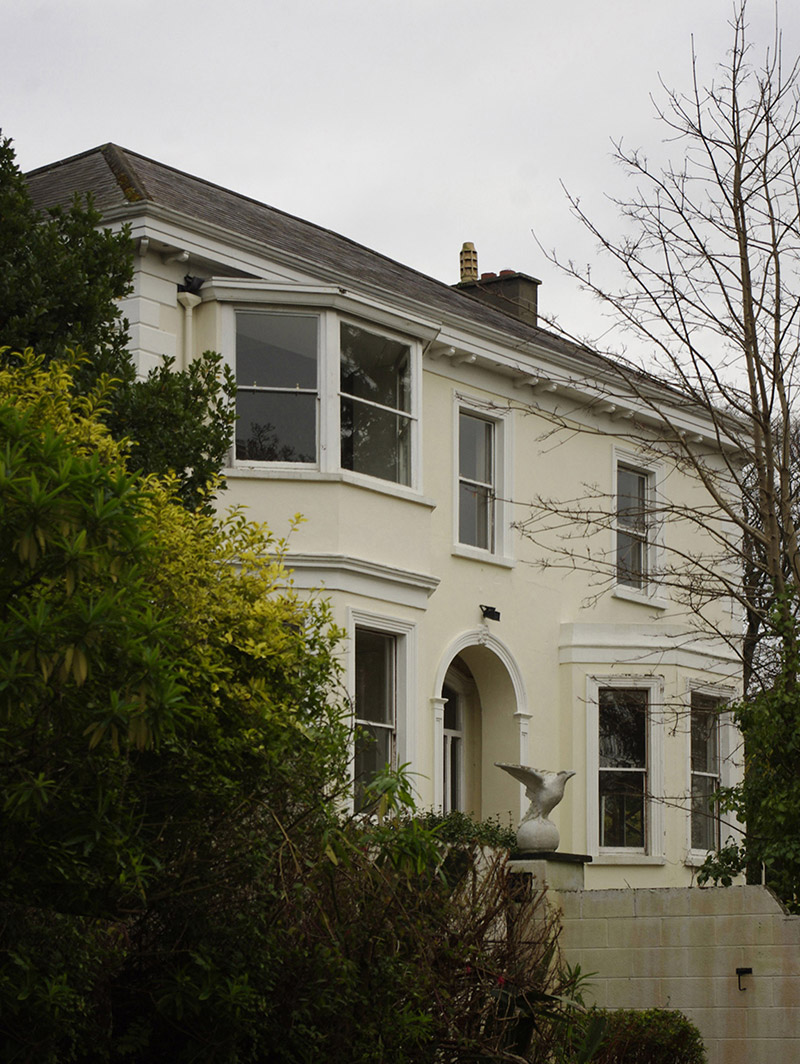 Corrig MoreHouse · 1057 yd
Explorer Tom Corrig More in Kilbogget is a two-storey house that’s been disused since 1911. It has polygonal bay windows that look like they’re trying to see everything. The tiered visual effect is very subtle if you squint hard enough.
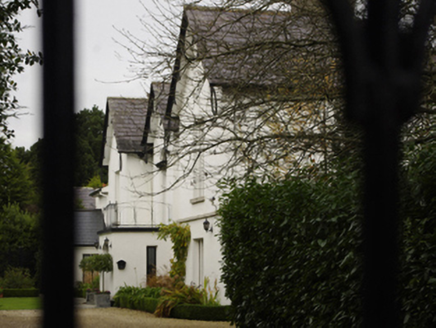 Tudor LodgeHouse · 1136 yd
Explorer Tom Tudor Lodge in Kilbogget is a villa-like house built for Jaffray Barcroft around 1862. It has a T-shaped plan and tripartite glazing, so if you see the doorcase, pretend you’re checking out the latest Victorian fashion trend.
 Hawk CliffCliff · 1220 yd
Explorer Tom Hawk Cliff in County Dublin is a cliff where you can find a hidden swimming spot at the bottom. The path meanders through bushes and railway lines before dropping steeply to the sea. Watch your step, or don’t!
 Martello Tower1259 yd
Explorer Tom Martello Tower in Killiney. Located just under a quarter of a mile inland, this tower is nestled in an urbanized area of housing. It has been fully restored, so it looks less like a relic and more like a very serious garden ornament.
 Archbold's CastleCastle · 1508 yd
Explorer Tom Archbold's Castle in County Dublin has the local sheep giving it strong opinions on its architectural choices. They probably think the moat is just a big puddle for summer. It’s a castle that exists mostly in maps and local legend, which keeps it mysterious. Take a mate and argue about what it was for.
More things to do in County Dublin · All of County Dublin

What do you know about this place?Tap to add a comment or ask a question