DDiscover AloneMapAbout

The Thorn

House
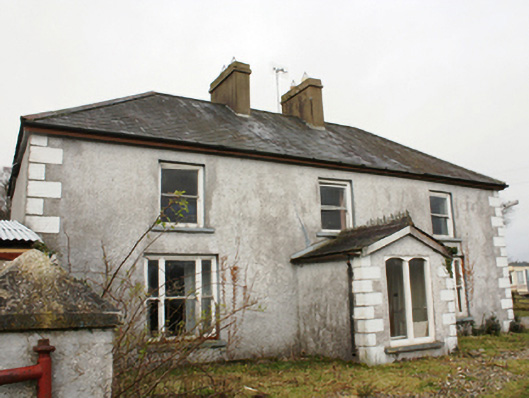
The Thorn
Photo: National Inventory of Architectural Heritage · Report the wrong picture

This does not grant access. Most recorded buildings are privately owned; view them only from public ground unless the owner allows entry.

What do you know about this place?Tap to add a comment or ask a question

What you write will be public.

What is recorded here

Detached three-bay two-storey house, built c. 1820, having single-bay single-storey gabled-front porch to the centre of the front elevation (east), and with two-bay two-storey return to the rear (west) with single-storey extension with mono-pitched roof attached to the north side. Now unoccupied. Pitched natural slate…

Read the whole record
Detached three-bay two-storey house, built c. 1820, having single-bay single-storey gabled-front porch to the centre of the front elevation (east), and with two-bay two-storey return to the rear (west) with single-storey extension with mono-pitched roof attached to the north side. Now unoccupied. Pitched natural slate roof to main body of building having a central pair of smooth rendered chimneystacks, and with cast-iron rainwater goods. Pitched natural slate roof to porch with decorative ridge cresting. Hipped and pitched slate roof to return. Roughcast rendered walls with smooth rendered block-and-start quoins to corners. Square-headed window openings with stone sills, and with tripartite one-over-one pane timber sliding sash windows to main elevation at ground floor and to the north side elevation at ground floor level, and one-over one pane timber sliding sash windows at first floor level; two-over-two pane timber sliding sash windows to return. Square-headed window openings to the east face of porch having paired fixed-pane timber-framed windows with segmental heads. Square-headed door opening to the north face of porch with timber panelled door with bolection mouldings. Complex of single- and two-storey outbuildings to the rear (west) on L-plan with four-bay two-storey outbuilding to south with formerly pitched corrugated-metal roof (now collapsed), whitewashed lime rendered rubble stone walls, square-headed window openings with remains of louvered timber fittings, and square-headed door openings with double-leaf and single-leaf battened timber; lean-to single-bay single-storey extension to east gable. Adjoining multiple-bay two-storey outbuilding to north having pitched slate roof, painted rendered lined-and-ruled walls, and square-headed openings with remains of timber battened shutters and doors. Single-storey outbuilding to north having mono-pitched corrugated-metal roof, whitewashed lime rendered rubble stone walls, square-headed openings with remains of paired timber windows, sliding timber battened doors with glazed latticed panel to north, and timber battened door to south. Set well-back from road in extensive grounds to the east of the centre of Letterkenny, and overlooking River Swilly to the east.
This attractive and well-proportioned house, probably originally dating to the early-to-mid nineteenth century, retains its original form and character despite being no longer occupied. Its visual expression and integrity are enhanced by the retention of salient fabric such as the natural slate roofs, timber sliding sash windows, and the timber panelled door to the porch. It represents a good surviving example of a three-bay two-storey house with central doorway with elements from both the vernacular and classical traditions, which were, until recent years, a ubiquitous feature of the rural Irish countryside but are now becoming increasingly rare due to insensitive alteration and demolition. The decorative ridge cresting to the porch adds the bare minimum of decorative detailing. The tripartite timber sliding sash windows are a feature found on many houses of its date, particularly those from the more formal classical tradition. The complex of rubble stone outbuildings to site add significantly to the context and setting, and complete this composition, which is an interesting feature in the largely suburban landscape to the east of the centre of Letterkenny. This house was the home of a William H. Kelso in 1894 (Slater’s Directory) who was described as a farmer.

From the Buildings of Ireland (National Inventory of Architectural Heritage) record 40905336

Places near here

Photo credits
  • Maker not stated on source page, www.airbnb.co.za
  • Kenneth Allen, Wikimedia Commons · CC BY-SA 2.0
  • Letterkenny Gaels GAA Club; individual photographer not named, www.letterkennygaels.ie
  • Willie Duffin, Wikimedia Commons
  • DAYVEHUSE, Wikimedia Commons · CC BY-SA 4.0
  • National Inventory of Architectural Heritage
  • Maker not stated on source page, www.govisitdonegal.com
  • Maker not stated on source page, www.dreamstime.com
  • danny kearney, Geograph · CC BY-SA 2.0
  • Maker not stated on source page, tr.pinterest.com
  • Maker not stated on source page, fi.pinterest.com
Glencairn HouseGuesthouse · 674 yd

Explorer Tom Glencairn House is a guesthouse where the ghosts refuse to check out, probably because the Wi-Fi is bad. A cow once…

Battle of FarsetmoreBattle · 820 yd

Explorer Tom Battle of Farsetmore in County Donegal is where Hugh O'Donnell kicked Shane O'Neill's backside into the River Swilly.…

Battlefield in Ballyboe Lisenan,ballyraine,farsetmore,gortlee,kiltoy,magheranan,glebe (castlewray Ed)Battlefield · 820 yd

Explorer Tom Battlefield in Ballyboe Lisenan claims a fake king visited to inspect the troops but got lost in the mud and never came…

Páirc na nGael, Letterkenny Gaels GAAGAA ground · 914 ydTropical WorldZoo or wildlife park · 1258 yd

Explorer Tom Tropical World near Letterkenny offers a fine trick on a grey Donegal day: step into a butterfly house and find…

Kiltoy Church of Ireland ChurchChurch/chapel · 1291 yd

Explorer Tom Kiltoy Church of Ireland Church in Kiltoy is being picked on by the wind because its slate-hung gable end looks like…

The Old ChurchChurch/chapel · 1312 yd

Explorer Tom The Old Church in Cornagill is a simple Church of Ireland gem from the good old days, with those pointed-arched windows…
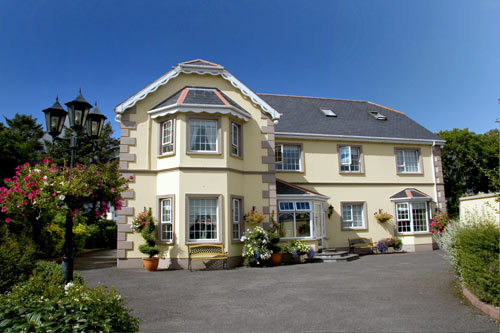
Ballyraine GuesthouseGuesthouse · 1481 yd

Explorer Tom Ballyraine Guesthouse is on Ramelton Road, which sounds like a place where you get lost easily and end up arguing with…

Lost Trimragh Church and Burial GroundGraveyard · 1607 yd

Explorer Tom Lost Trimragh Church and Burial Ground is completely gone, likely squashed by the railway line that ripped through the…

Dry Arch MonumentHeritage attraction · 1.0 mi

Explorer Tom The Dry Arch Monument is a stainless steel flex for workers who probably just wanted a decent cup of tea and a break.…

Rock art in Castlebane (castlewray Ed)Rock art · 1.1 mi

Explorer Tom Rock art in Castlebane hides seven cupmarks on a boulder that is actually part of the wall itself. It’s like finding a…

Old Leck GraveyardGraveyard · 1.9 mi

Explorer Tom Old Leck Graveyard claims to be older than the concept of Tuesdays, which is a bold claim but hard to argue against.…

More historic places in County Donegal · All of County Donegal

Add to this placeAdd a picture Add a detailed tip Add a story

Explore the map1,095,414 places to discover

Next place · or swipeGlencairn House