
What is recorded here
National Monument in state guardianship No. 416. Disturbed remains of a circle of granite blocks (int. diam. 23m) at the high N end of a small steep-sided ridge. There are sixteen stones in the area of the site of which only five are in situ; of the others, five are prostrate but probably close to their original position, three are clearly displaced while the remaining two are too small to have been original components. The stones in situ vary in height from 1.3m to 1.92m but (contra Burl 1976, 234) the pair at the NE are not the highest stones in the circle although their position, facing the outlier ('The Piper') 40m further to the NE, suggests that they may mark the entrance. The OS Letters (O'Flanagan 1928, 114) describe twenty-nine stones including displaced examples and record a then recent attempt to plant the site with trees. A trench dug around the inner edge of the circle was noted and also the presence of a bank between the stones which may be the origin of the low bank now visible between the stones at the SE. The outlier (WI015-010001-) occurs downslope to the E and is a large cup-marked glacial erratic (H 1.95m; diam. c. 2.9m). While it is a natural feature there is no reason to believe that it did not form an integral part of the site. Crossing the top of the stone at right-angles are two well-defined grooves and a similar curved groove occurs on what was the top of a prostrate stone in the SE part of the circle. It is clear that these are not entirely natural. (Burl 1976, 234; Walshe 1931, 128-30)
The above description is derived from the published 'Archaeological Inventory of County Wicklow' (Dublin: Stationery Office, 1997). In certain instances the entries have been revised and updated in the light of recent research.
Date of upload/revision: 18 October 2017
This monument is subject to a preservation order made under the National Monuments Acts 1930 to 2014 (PO no. 97/1940).
Likely dating to the Late Neolithic or Early Bronze Age, The Pipers Stones are thought to have functioned as a ceremonial or ritual site, possibly aligned with astronomical events. Local folklore refers to them as the "Pipers Stones," suggesting a traditional or mythological story associated with their arrangement.
The monument record does not grant public access. Check the route and ask the landowner before entering private land.
- What survives
- Recorded monument
Places near here
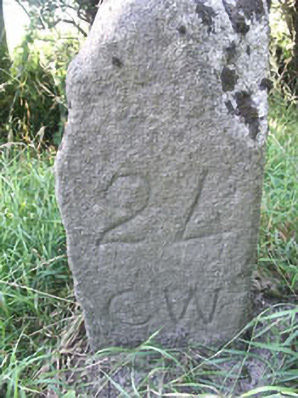 milestone/milepostmilestone/milepost · 683 yd
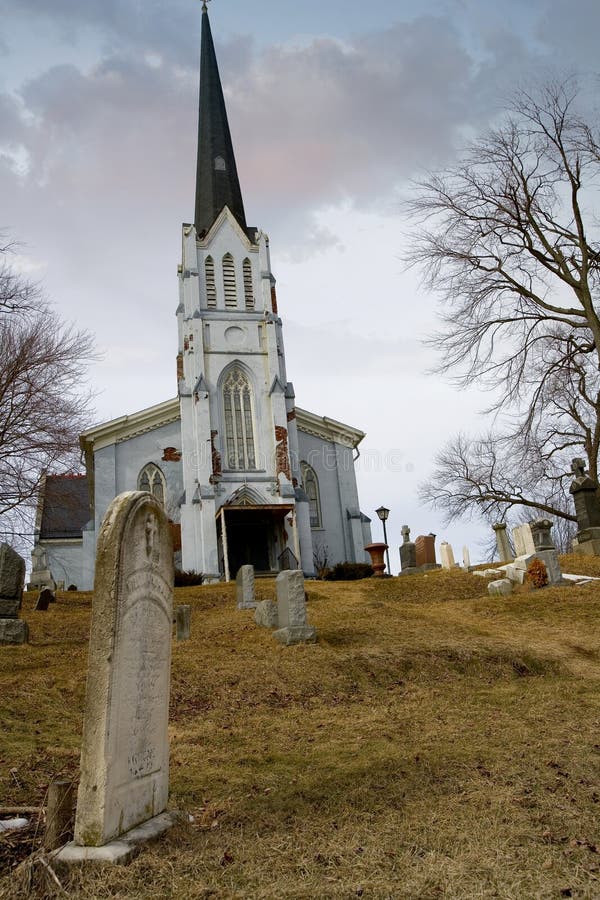 Church (in Ruins), Grave YardChurch · 846 yd
 Burial ground in CrehelpBurial ground · 1234 yd
 Enclosure in ScalpEnclosure · 1709 yd
 Enclosure in DragoonhillEnclosure · 1721 yd
 Saint Kevin's CaveMemorial · 1.3 mi
 Hollywood SignHeritage attraction · 1.4 mi
 Castle BankCastle, motte and bailey · 1.5 mi
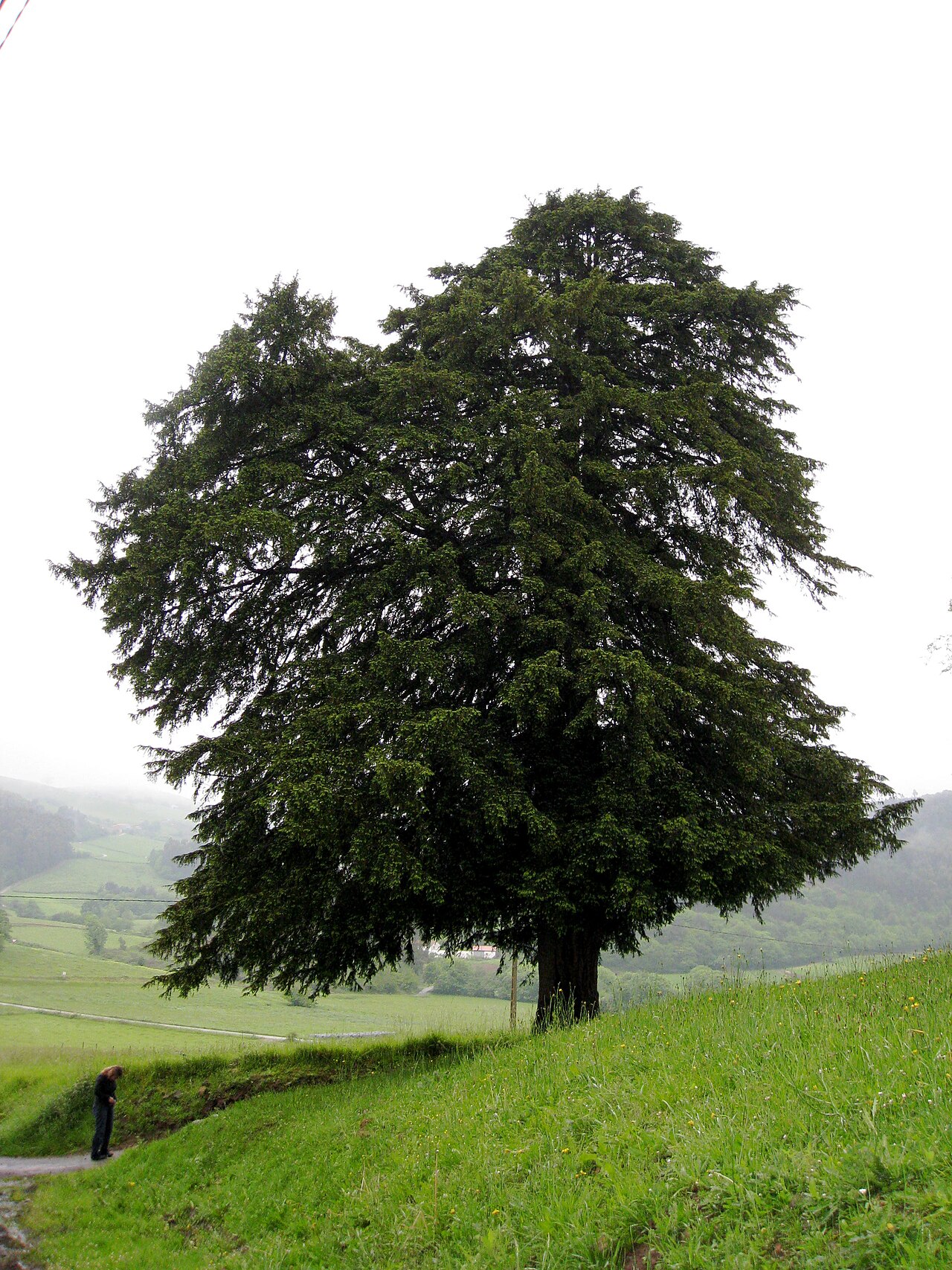 European YewEuropean Yew · 1.5 mi
 Church MountainMountain / peak · 1.7 mi
 Castle in ruinsCastle, unclassified · 3.2 mi
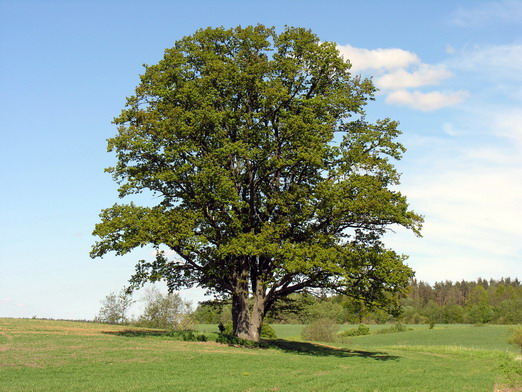 Pedunculate OakPedunculate Oak · 3.3 mi
Other information
Photo: Rob Hurson · CC BY-SA 4.0