
Places near here
Photo credits
- Couriercollie, Wikimedia Commons · CC BY-SA 4.0
- National Inventory of Architectural Heritage
- User:O'Dea, Wikimedia Commons
- Laurel Lodged, Wikimedia Commons
- Architecture of Dublin, Wikimedia Commons · Public domain
- Sitomon, Wikimedia Commons · CC BY-SA 2.0
- Olivier BEZES, Wikimedia Commons · CC BY 2.5
- JP, Geograph · CC BY-SA 2.0
 Rathfarnham Religious Society of Friends' Meeting HouseMeeting house · 792 yd
Explorer Tom Rathfarnham Religious Society of Friends' Meeting House in Rathfarnham is a Quaker meeting house from 1965 with concrete frames and large windows. It’s functional design at its best, connecting two sections with a glazed bay. See if the gable window lets in enough light!
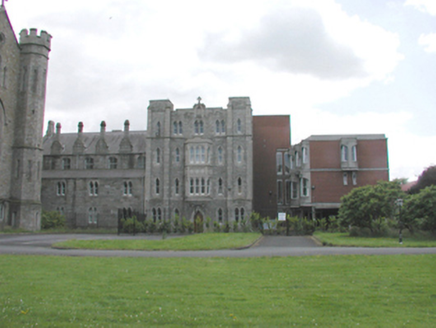 Lourdes Nursing HomeConvent/nunnery · 910 yd
Explorer Tom Lourdes Nursing Home in Rathfarnham would tell its younger self to stop worrying about matching Gothic Revival styles because concrete was coming anyway. It’s a pair of buildings on Convent Lane showing how architecture evolved from robust stone to pre-cast elements over the last century. The later wing has corner windows that look like they’re peeking around, which is very cheeky for a place this
IndicatedMound · 1113 ydExplorer Tom Mound in Haroldsgrange hosted a fake royal visit back in the day that nobody can disprove because everyone was too busy drinking to write it down properly. It’s just sitting there on top of its little earthwork, looking smug about all the attention it got for nothing. Bring your own legend, I've run out of good ones.
G. YardGraveyard · 1317 ydExplorer Tom Graveyard in Rathmichael is wrapped up in a cashel-like structure that feels like a fortress built just to keep out the wind. It’s sitting on the slopes of Carrickgollogan, guarding St. Michael’s church with serious intensity. I think there’s a secret tunnel under it that leads straight to the best pub in the county. Great spot to propose. Or at least to propose lunch.
 Bushy ParkPark · 1715 yd
Explorer Tom Bushy Park is big enough to let me pretend I have gone on a proper expedition while still being in Dublin. Its roughly 20.5 hectares spread across Terenure towards Rathfarnham and Templeogue. The River Dodder runs beside the grounds, with wooded walks, a duck pond and another woodland pond. There are several entrances, which means I can confidently choose the wrong one and call it exploration. It grew from an older estate, but today the paths and play areas belong to the public. Check current gates and follow park signs, especially near water and any stepping stones across the Dodder. Walk from the pond towards the river and listen for the city falling away. Even a boastful Donegal man can admit Dublin keeps a fine patch of green.
 St Enda's ParkPark · 1739 yd
Explorer Tom St Enda's Park was once a school where a walk among trees could count as part of the lesson, a system I would have supported with suspicious enthusiasm. The main Rathfarnham house began as The Hermitage in 1760. Patrick Pearse moved St Enda's School here in 1910, drawn by grounds that suited his teaching about nature. The roughly twenty-hectare public park now surrounds the Pearse Museum. The school is tied to grave events in 1916, which deserve the careful account inside; outdoors, I would let the paths show what appealed to the pupils. Check park gates and museum hours separately, and keep to public paths. Look from the house towards the trees. Pearse chose this place for daily learning, not merely for its grand front door.
 Rathgar CastleCastle, unclassified · 1.1 mi
Explorer Tom Rathgar Castle would have 'Lived Fast, Died Ruined' on its tombstone because it fell into ruin in the late 18th century after being involved in the Battle of Rathmines in 1649, which is a bit dramatic for a double gabled structure that just sat there until Beranger drew it. Bring sandwiches, the gulls will thank you.
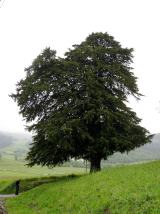 European Yew1.2 mi
Explorer Tom European Yew: Legend says a queen once visited this yew and left a promise she never kept, which explains its long face. It’s been waiting for that royal apology for centuries while just standing there looking stern and slightly judgmental. Go with someone who loves old stuff and watch them melt.
 Clonskeagh CastleCastle · 1.4 mi
Explorer Tom Clonskeagh Castle in County Dublin is famous for a shortcut that is definitely not a shortcut. Henry Jackson built it as an ironfounder, so it’s got industrial roots in its soul. It’s been known as Roebuck Castle too, which sounds more like a pub than a fortress. Look up, the best bit is always higher than you think.
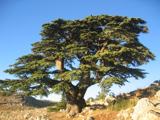 Lebanon Cedar1.5 mi
Explorer Tom Lebanon Cedar in County Dublin smells like expensive soap and old money, according to Tom, who has never been there but knows everything. It’s trying too hard to be fancy for a tree that just wants to stand still. Ring your granny and tell her where you are before you get lost in the scent.
 Austin Clarke BridgeMemorial · 1.7 mi
Explorer Tom Austin Clarke Bridge is hiding a smuggling route under the arches where poets used to sneak their unpublished manuscripts past the local authorities in the middle of the night. Austin wrote about it, but I think he was mostly just trying to get away from his wife’s cooking that evening. Bring a pen pal, they'll be jealous.
 Éamonn CeanntMemorial · 2.1 mi
Explorer Tom Éamonn Ceannt is playing hard to get, pretending he's just another stone when he was actually the guy who signed off on freedom back in 1916. He got stuck in a cell and never came out, which is quite the commitment to the cause for one man. Have a sandwich here and call it a heritage lunch.
More historic places in County Dublin · All of County Dublin

What do you know about this place?Tap to add a comment or ask a question