What is recorded here
Located on a gentle N-facing slope and on the E side of a SW-NE street in the village of Tomhaggard. According to John O’Donovan writing c. 1840 the pattern on the 25th of July had been discontinued since c. 1820 (O’Flanagan 1933, vol. 2, 200), but the well is still maintained. The well is a circular feature (diam. c. 0.6m) covered with a lintel that has an opening (Wth 0.55m; H 0./4m) at SE that leads to a stone-lined channel (Wth 0.5m; L 31m) before the stream runs underground to re-emerge into a pond in the valley bottom c. 20m to the E. From there it joins the stream from St. Anne’s Well (WX047-051----) that is c. 50m E of St. James’s Well. St. James’ well is covered by a D-shaped masonry cairn (dims c. 1.2m x c. 0.8m; H 0.55-0.9m) surmounted by a cross and there is a niche for a statue over the opening to the well. The dedication is to St. James of Compostela in NW Spain, where it is thought that the remains of St. James the Greater, one of the Apostles, were translated. St. James the apostle was close to Christ, and according to the Gospels witnessed many of His miracles, and was present at the Transfiguration, the Last Supper, and in the Garden of Gethsemane. He was martyred in Jerusalem in 43 AD. The belief that the remains of St. James were in Spain led to their discovery in the early 9th century when they were installed at Compostela in the NW corner of the country. This led to the development of a pilgrimage to his shrine that continues to this day. In Spanish it is called ‘Camino’, and was important politically in rallying support to the Christian kingdoms of northern Spain against the Muslim occupation of much of the Iberian Peninsula. (Butler (1883, 105)
Compiled by: Michael Moore
Date ofupload: 21 Octiber, 2013
Located on a gentle N-facing slope and on the E side of a SW-NE street in the village of Tomhaggard. According to John O’Donovan writing c. 1840 the pattern on the 25th of July had been discontinued since c. 1820 (O’Flanagan 1933, vol. 2, 200), but the well is still maintained. The well is a circular feature (diam. c. 0.6m) covered with a lintel that has an opening (Wth 0.55m; H 0./4m) at SE that leads to a…
From the National Monuments Service (Archaeological Survey of Ireland) record WX047-049
The monument record does not grant public access. Check the route and ask the landowner before entering private land.
- What survives
- Recorded monument
Places near here
Photo credits
- National Inventory of Architectural Heritage
- Mike Searle, Wikimedia Commons · CC BY-SA 2.0
- Cozzmick, Wikimedia Commons · CC BY-SA 4.0
- DeFacto, Wikimedia Commons · CC BY-SA 4.0
- Kenneth Allen, Geograph · CC BY-SA 2.0
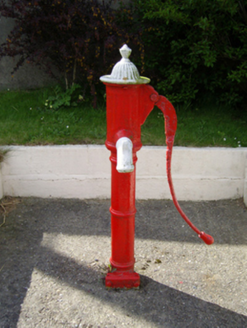 water pump12 yd
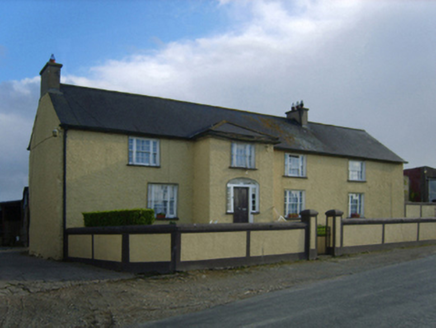 Tomhaggard HouseFarm house · 28 yd1798 Memorial PlaqueMemorial · 80 ydEcclesiastical enclosure in TomhaggardEcclesiastical enclosure · 127 ydThe Bull RockForest · 933 ydThe Heron's MeadowForest · 1204 ydThe White Hole BeachBeach / strand · 1.7 mi
_-_geograph.org.uk_-_3715787.jpg/250px-Castles_of_Leinster,_Ballyhealy,_Wexford_(1)_-_geograph.org.uk_-_3715787.jpg "Photo: Mike Searle, Wikimedia Commons · CC BY-SA 2.0") Castle (in ruins)Castle, tower house · 2.2 mi
Castle (in ruins)Castle, tower house · 2.2 mi CastleCastle, tower house · 2.2 mi
 Windmill (Corn) (Disused)Windmill · 3.0 mi
 Kilmore Quay - Crehen Twinning MemorialMemorial · 4.9 mi
 Kilmore Quay Walking TrailVisitor information · 5.1 mi
More archaeology and monuments in County Wexford · All of County Wexford
What do you know about this place?