
What is recorded here
St Gregory's Minster was rebuilt around 1060, just before the Norman Conquest, and its famous sundial names the lord and priests responsible. Anglo-Saxon doorways and grave slabs survive beside medieval and nineteenth-century changes, making the building a rare written and physical record of late Saxon Yorkshire.
Foundation and growth
Orm, son of Gamal, bought an older ruined minster and rebuilt it during the reign of Edward the Confessor, when Tostig was earl. Thirteenth-century work added the north arcade, the roof was raised in the fifteenth century, and a new tower followed in 1827.
People and events
The carved sundial records Orm's rebuilding and names Haworth and Brand as the priests who made it. That unusually direct inscription links a standing church to named local people and government in about 1055–65.
Damage, loss and survival
The church was altered repeatedly rather than frozen in its Saxon form. Temple Moore's careful restoration of 1907–09 followed nineteenth-century chancel and tower work, while Saxon quoins, doorway stones, cross shafts and two grave slabs remained embedded in the fabric.
Why it mattered
Very few surviving churches carry such a clear near-contemporary account of who rebuilt them before 1066. The sundial, ancient stonework and continuing worship make St Gregory's both an exceptional document and a living parish church.
Sources for this account
Sources checked 16 August 2026.
From the Historic England (National Heritage List for England) record 1149213
Places near here
Photo credits
- martin dawes, Wikimedia Commons · CC BY-SA 2.0
- T Eyre, Wikimedia Commons · CC BY-SA 2.0
- Phil Catterall, Wikimedia Commons · CC BY-SA 2.0
- JThomas, Wikimedia Commons · CC BY-SA 2.0
- Colin Grice, Wikimedia Commons · CC BY-SA 2.0
- Matthew Hatton, Wikimedia Commons · CC BY-SA 2.0
- Mike Kirby, Wikimedia Commons · CC BY-SA 2.0
- David Rogers, Wikimedia Commons · CC BY-SA 2.0
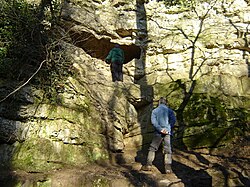 Kirkdale CaveCave · 252 yd
Explorer Tom Kirkdale Cave hides beside Hodge Beck near Kirkbymoorside, and it has a better claim to a starring role in the history…
 Kirkdale Wood EastWood · 666 yd
 Millennium Sculpture - cyco Connecting Youth CulturePublic sculpture · 903 yd
 Tilehouse BridgeListed building · 908 yd
 Snapes WoodWood · 1104 yd
 George V postbox on Back Lane, WelburnOld post box · 1415 yd
 Stony CrossWayside cross · 1440 yd
 Hold Cauldron MillListed building · 1565 yd
 83 West EndListed building · 1.1 mi
 The Plough InnListed building · 1.2 mi
 Neville CastleCastle · 1.3 mi
 Skiplam Grange monastic grangeScheduled monument · 1.6 mi
More historic places in North Yorkshire · All of North Yorkshire

What do you know about this place?Tap to add a comment or ask a question