St Doolagh's Well lies downslope immediately S of St Catherine's Well (
DU015-009003-) and 25m N of St. Doolagh's Church (
DU015-009001-) and graveyard (
DU015-009006-). According to D'Alton (1838, 224) this well was dedicated to the Blessed Virgin. It is a circular stone-lined well below ground level which is enclosed by an octagonal building (dims. Wth 1.4m; wall T 0.9m) with a cone-shaped roof similar to that at St. Sylvester's Well (
DU012-023001-) in Malahide Village. The entrance is in the S of a sunken court. Interior is lit by cross-shaped windows. Above a string course is the cone-shaped roof which is marked by projecting gables on the N, E, S, and W with narrow pointed windows. Built of coursed masonry with well shaped blocks (Anon. 1914, 268). Frescoes in the interior painted in 1609 by a Mr. Fagan, of Feltrim were still visible in the last century (Walsh 1888, 233). In 1610, Barnaby Rich wrote the following account about this well; 'To the North-wards from the Citty of Dublin, they have S. Dolocks well; another sanctified place ceremoniously frequented at certaine seasons, foollish and ridiculous to be spoken of; so that let the wind blow which way it list, East, West, North, or South, Dublin is so seated, that a Papist may go from the high crosse, with a Blowne Sheat right before the wind, either to an Idalatrous Masse within the towne, or to a Superstitious Well, without the Towne' (Rich 1610, 53). The well was described in 1838 as follows; 'a well dedicated to the Blessed Virgin. The water is contained in a circular basin, and over it is an octangular inclosure forming a cone. About it were anciently some fresco paintings and decorations, put up by Peter Fagan of the Feltrim family. The descent of the Holy Ghost on the Apostles was represented at the top, and round the sides were the effigies of Saints Patrick, Columba, and Brigid, much after the manner they are engraved in the title to Messingham's Florilegium, as also of the patron St. Doulogh, in a hermit's habit; on the wall was likewise the following inscription engraved upon a
marble slab, commemorative of the sanative effects of this holy well; 'Piscinae Solymis clarae decus efferat alter, Et medicas populus jactet Hebraeus aquas, Grata Deo patrium celebrat Fingallia fontem Doulachi precibus munera nacta piis; Morbos ille fugat promptus viresque reponit Aegris, et causas mille salutis habet; Scilicet aequus agit mediis Doulachus in undis, Angelus ut fontem, sic movet ille suum; O fons noster amor! si te negleximus olim, Mox erit ut nomen sit super astra tuum" (D'Alton 1838, 224). The Latin inscription roughly translates as; 'Another may bring out the bright pools of Solymus, And the healing people shall throw the Hebrew waters, Grateful to the God of the country, Fingalia celebrates the spring of Doulachi, the gifts obtained by the pious; He readily banishes diseases and restores strength to the sick, and has a thousand causes of salvation; Of course, Doulachus acts equally in the mediums of the waves, the Angel as a spring, so he moves his own; O source of our love! if we once neglected you, soon your name will be above the stars'. Alternative translation reads; “Bethsaida’s sacred pool let others tell, With healing virtues how her waters swell; An equal glory shall Fingalia claim, Nor be less grateful for her blessed stream. Thy prayers Dolachus mounted up to heaven, Thence to the well the mighty power is given, To drive the fiery fever far away, Strength to replace and rescue from decay, In every malady to life a stay, The cherub, wondrous moves his waters there, The saint behold! who stirs the fountain here. Hail lovely fount, if long unsung thy name, It hence shall rise above the starry frame' (Joyce 1912, 285). In 1897 St. Doolagh's Well was described by Wakeman as follows; 'The well of St. Doulough, which was probably also used aa a baptisters, is quite in keeping with the curious character of the church. The spring, which was covered by a stone-roofed octagonal building, rises through a circular basin, cut out of a single stone, and was, not many years ago, thought to possess miraculous powers. According to tradition the interior was anciently decorated with pictures, and holes are pointed out as having been made for the reception of iron pins, or holdfasts, b which they were secured to the wall' (Stubbs 1897, 459). Folklore collected in 1937 from Baldoyle Convent recorded the following details about St. Catherine's Well/St. Doolagh's Well; 'At the time of Cromwell there was a Catholic Church called St Dolough's near Raheny, it was taken from the Catholics. There was also a monastery where monks lived; they were banished out of it. They came to a place called Balgriffin Park and built a Catholic Church. One night a well was formed by a miracle. Some holy person appeared to one of the monks and told him that the well should be called Saint Catherine's well. The well is in the shape of a square. There are three windows in the wall which surrounds it one at each side and one in the back; in the middle of the square there is a cement hole in the shape of a boiler. This contains the water. There are a couple of steps going down into the well, and the people can go round the well by walking on the stone because it is a couple of feet wide. Many a person with sore eyes was cured by the water of the well. There is also a place in the field which is called Saint Patrick's bed; at certain times of the year water comes into it, beside the well there is a bush or tree' (The Schools’ Collection, Volume 0792, Pages 136-7; https://www.duchas.ie/en/cbes/4498789/4385667). Folklore collected from Kinsealy School recorded that; 'There are two holy wells in this vicinity. One is situated beside St Dolough’s church and the other is in Feltrim. The one at St Dolough’s is on a height. It can be seen from the road in a field on the right hand side of the road that runs from Malahide to Dublin. St Dolough dedicated the well to St Catherine. There is a cure for sore eyes at it. First you must throw in a pin rub the water in the eyes and take some away with you. It is not used for household purposes. There is also a wishing well beside it. There are briars and a white thorn bush growing over the well. About 46 years ago there was a wall built around the well. Years ago rounds and pilgrimages were made' (The Schools’ Collection, Volume 0792, Pages 230-1; https://www.duchas.ie/en/cbes/4498829/4385775).

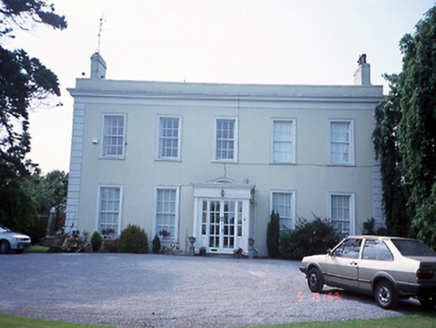 BohomerHouse · 272 yd
 Enclosure in KinsaleyEnclosure · 441 yd
 EmsworthCountry house · 755 yd
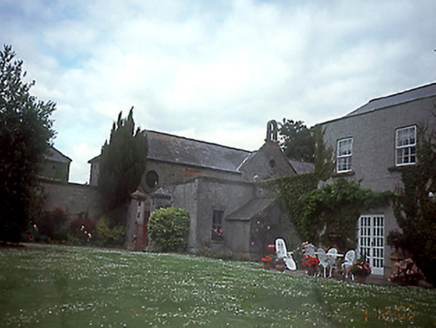 SpringhillHouse · 855 yd
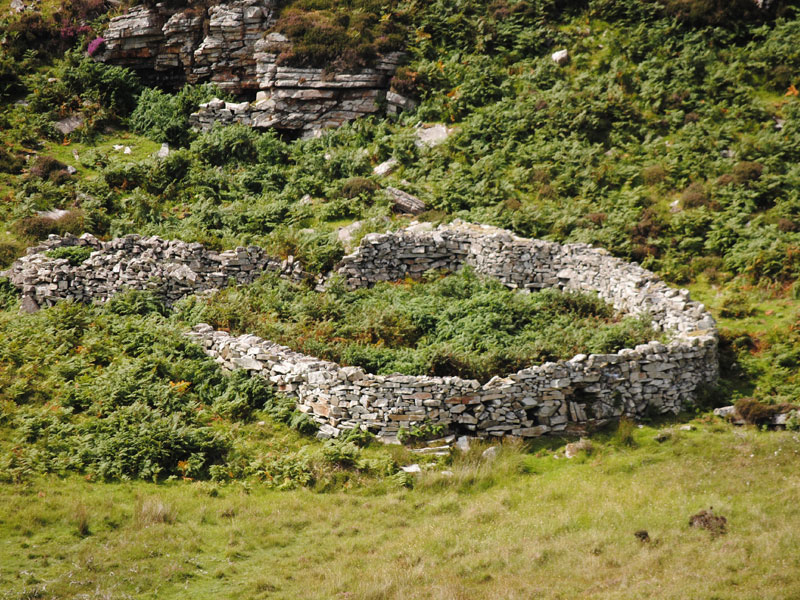 Fairy fort / ringfort in SpringhillFairy fort / ringfort · 1012 yd
 CastleCastle, unclassified · 1027 yd
 post box1185 yd
 Catholic Church of Saint Nicholas of MyraChurch/chapel · 1206 yd
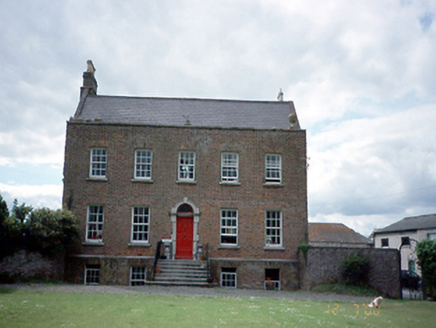 Kinsaley HouseHouse · 1220 yd
 Saint Nicholas GraveyardGraveyard · 1306 yd
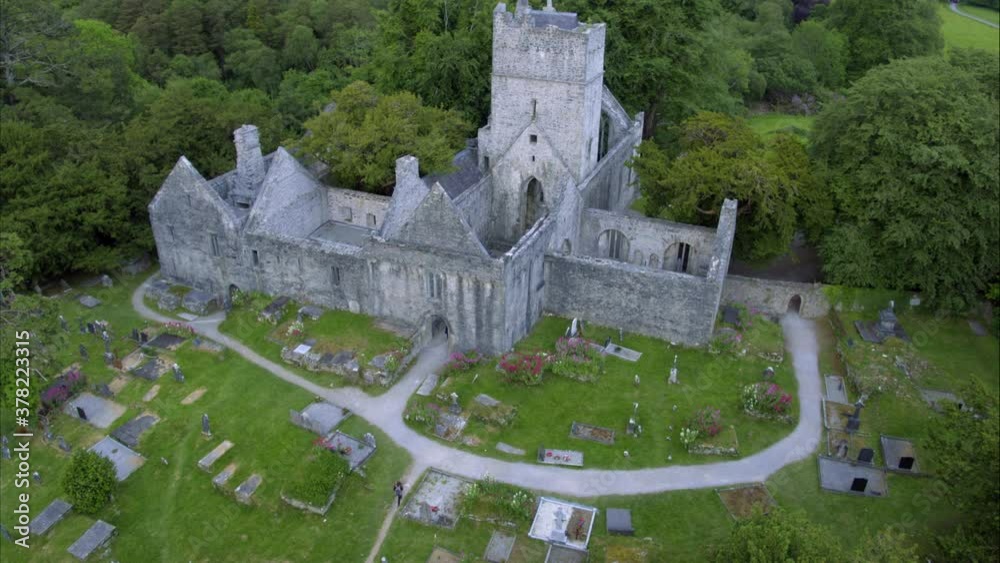 Church in ruins, GraveyardChurch · 1312 yd
 Father Collins ParkPark · 1.0 mi

What do you know about this place?Tap to add a comment or ask a question