What is recorded here
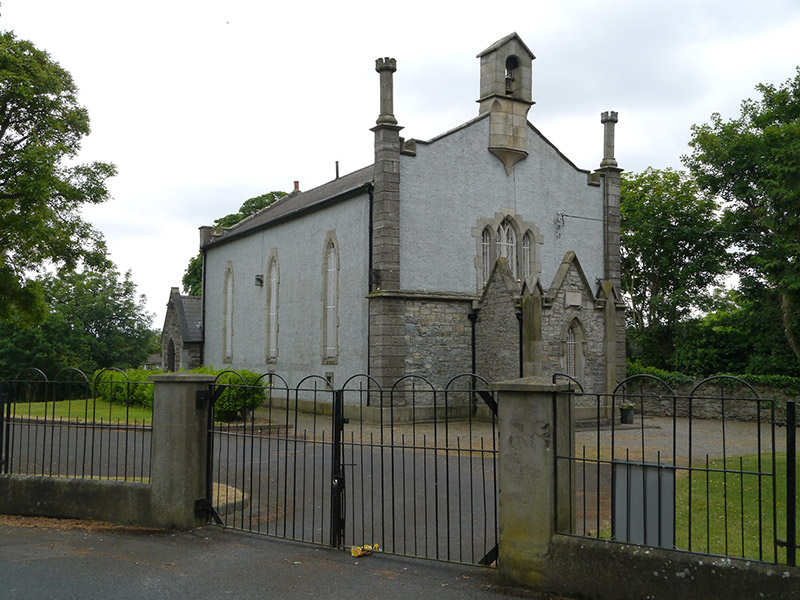
Freestanding Gothic Revival Church of Ireland church, built 1843, having three-bay nave, single-bay chancel, and porches to west and north. Pitched slate roofs with cast-iron rainwater goods, and single chimneypot to east apex; flat roof and concealed gutters to west porch; granite coping to gables with granite belfry to west gable having cast-iron bell. Roughcast cement-rendered walls over granite base course; snecked limestone to crenellated porch and to west end below sill level; limestone corner piers to nave rising to castellated pinnacles, and cement-rendered corner banding rising to gablets to porch. Pointed-arch window openings with granite dressings and chamfered reveals having diamond-leaded lattice windows with steel protective grilles. Tudor-arch doorway to west porch having granite mouldings and stained timber door with two granite steps; secondary pointed-arched entrance to north porch with stained timber door and protective metal grille. Set in landscaped surroundings having tarmac drives and grass margins, with church hall outlying to north, enclosed by cement-rendered dwarf wall and plain gate piers with recent metal railings and gate to Glebe View, and with rubble limestone wall to Church Street.
A modest but characterful Church of Ireland church, dedicated in 1843 by Richard Whately, Archbishop of Dublin, to replace a the church at the site of St. Canices' early monastery nearby and which had fallen into disrepair. The present building is in a simple Commissioners' Gothic style with nave and chancel, but is distinguished by use of snecked limestone, and by its west gable with its unusual composition of central bellcote flanked by octagonal pinnacles above a projecting porch. The church is set off from the surrounding area by its landscaped surroundings and enclosed site which give it the air of a village church, and help retain its historical character amidst more recent suburban developments. It is of religious and social importance as a place of worship for the local Church of Ireland community.
This does not grant access. Most recorded buildings are privately owned; view them only from public ground unless the owner allows entry.
Places near here
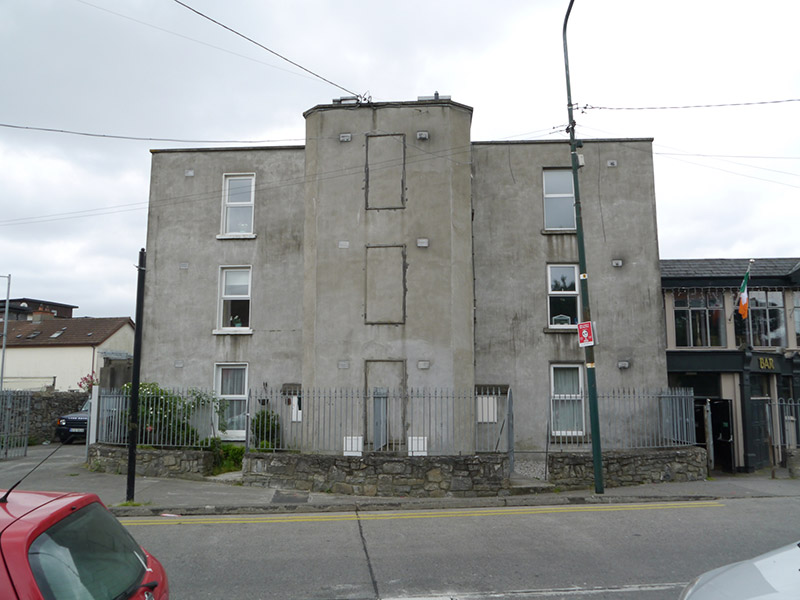 The Elmshouse · 110 yd
 rectory/glebe/vicarage/curate's houserectory/glebe/vicarage/curate's house · 120 yd
 St Patricks WellHoly well · 141 yd
 Town defences in Unknown TownlandTown defences · 150 yd
 Richard McKeeMemorial · 257 yd
 Liam Ó MaoilíosaMemorial · 956 yd
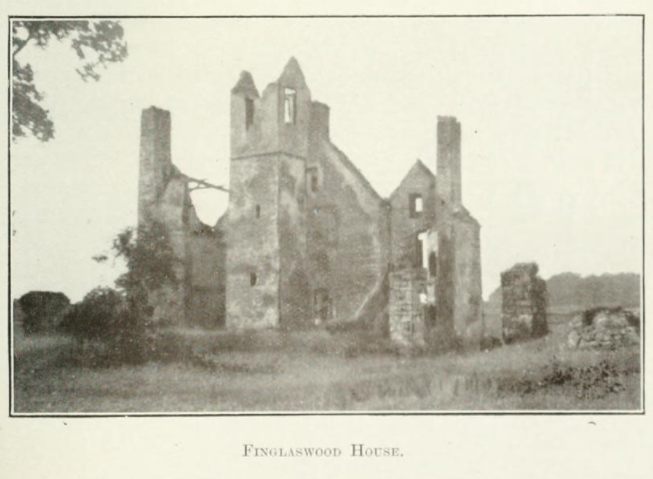 Finglaswood HouseCastle, tower house · 1292 yd
 Castle (site of)Castle, unclassified · 1.1 mi
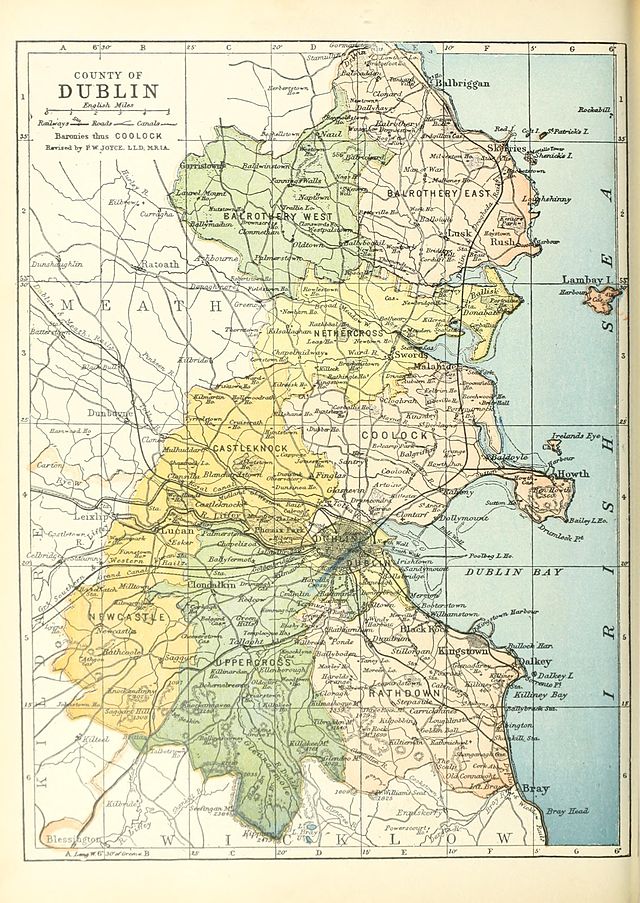 UHVisitor information · 1.4 mi
 SHVisitor information · 1.4 mi
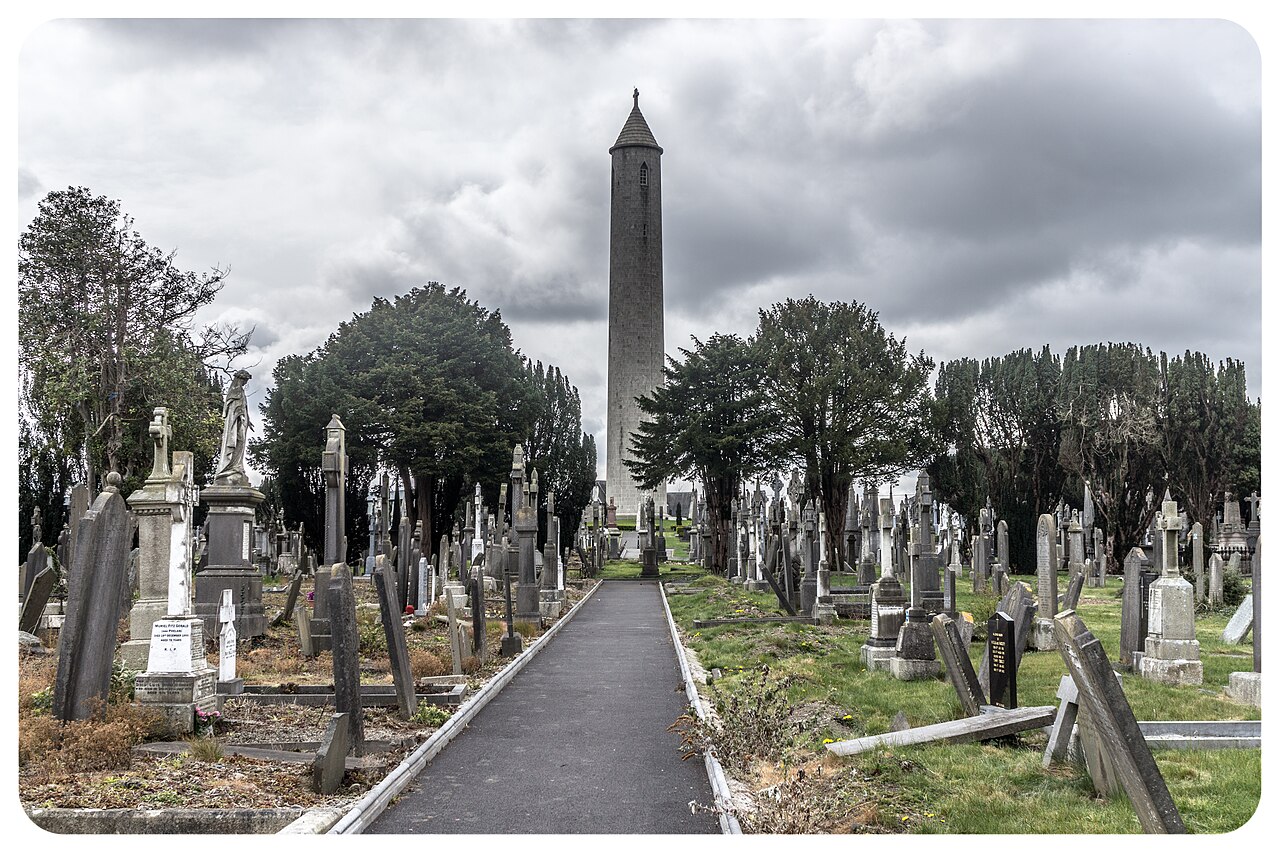 Glasnevin CemeteryHistoric cemetery · 1.5 mi
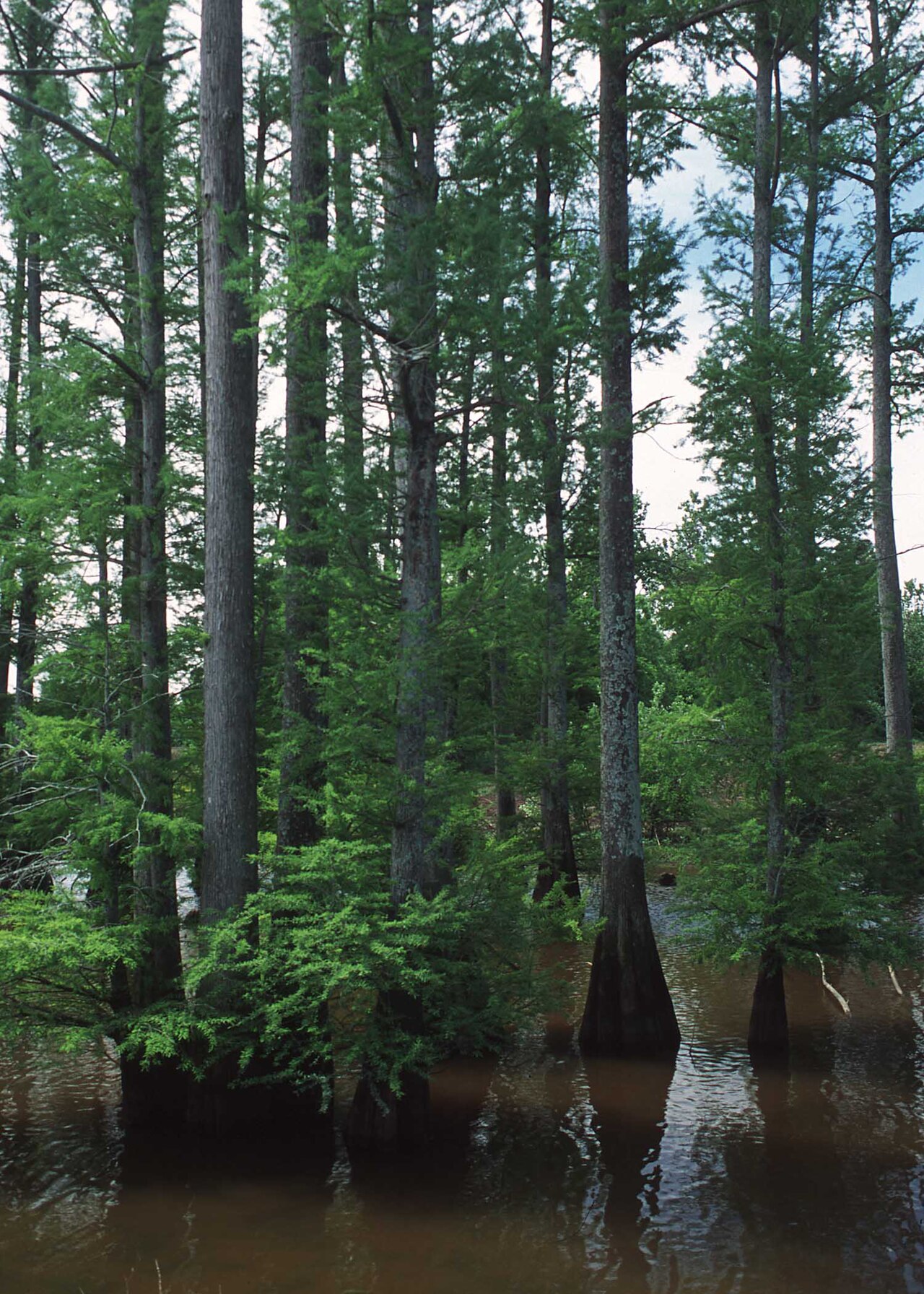 BaldcypressBaldcypress · 1.5 mi
Other information
Photo: National Inventory of Architectural Heritage · Website use allowed for educational or private purposes with source credit