DDiscover AloneMapAbout

Socket Stone

Cross

The monument record does not grant public access. Check the route and ask the landowner before entering private land.

What do you know about this place?Tap to add a comment or ask a question

What you write will be public.

What is recorded here

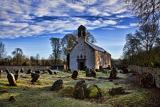
A sixth century monastery was founded at Durrow reputedly by Colum Cille [of the church] who died in 597 and whose feastday is celebrated on the 9th of June (Ó Riain 2011, 213-14). Marked on the OS 6-inch map as the 'Socket Stone' which appears to be the base of a small cross. It is situated to the SSE of the medieval…

Read the whole record
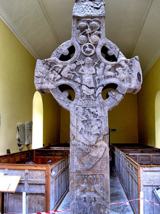
A sixth century monastery was founded at Durrow reputedly by Colum Cille [of the church] who died in 597 and whose feastday is celebrated on the 9th of June (Ó Riain 2011, 213-14). Marked on the OS 6-inch map as the 'Socket Stone' which appears to be the base of a small cross. It is situated to the SSE of the medieval church (OF009-005013-) outside the graveyard (OF009-005009-) wall. This pyramidal shaped stone (H 0.6m; 0.25m x 0.2m x 0.15m) acted as the base of a small cross which was located on top of the W gable of the church (OF009-005013-) and is now located in the National Museum of Ireland. The base of the cross was known locally as 'the headache stone' (De Courcy Williams 1897, 135). See attached image of cross taken from De Courcy Williams 1897. Limited archaeological investigations were undertaken by Tracy Collins of Aegis Archaeology Ltd. under licence No. E3161 at Durrow as part of the ongoing conservation works at the National Monument on behalf of the OPW (Collins 2009, 449). Two trenches, measuring some 200m in length, 0.5m in depth and 0.5m in width, were excavated by mini-digger at either side of the avenue to Durrow House. Approximately half of the avenue’s length is within the zone of archaeological potential for the complex. These trenches are proposed for future service conduits for the church structure which now houses the high cross (OF009-005010-). The trenches were sealed with varying modern stony surfaces for the avenue, which was underlain by the natural parent material of reddish-orange/brown compacted sandy clay. According to aerial photographic evidence for the site, the avenue bisects a circular enclosing element for the early medieval monastery (OF009-005003-). However, the two trenches dug did not reveal any information on this element. It is likely that this feature does remain subsurface and the depth of the trenches dug did not reach it. Human remains were located at the western end of the southern trench. They were located outside the current graveyard (OF009-005009-), though inside the likely enclosing element of the monastery. Furthermore they lay to the north-east of a high cross base (OF009-005007-), locally known as the ‘socket stone’. The human remains were examined in situ and found to be previously disturbed, though likely to have been articulated when buried. The remains were orientated east–west with the heads to the west, in the Christian tradition. The minimum number of individuals was estimated at three adults. It was agreed that these remains could be left in situ, protected under the proposed conduit route. A short trench was dug across the avenue at its western end to connect the two trenches with service trenches dug in the previous season. All trenches were then lined with plastic and backfilled. During the winter of 2006, a tree fall occurred immediately outside and to the north-west of the graveyard. When the area was inspected it was found that human bone had been exposed. During this season’s works, this exposed area plus the tree root ball itself were investigated. A large quantity of human bone was revealed. Upon examination it was found that most of this human bone was disarticulated and that the root action of the tree had further disturbed the remains. The human bone which remained in the ground was recorded and preserved in situ. The human bone and soil which had been entangled in the tree roots was excavated and retained for further study (Collins 2010, 402).

From the National Monuments Service (Archaeological Survey of Ireland) record OF009-005007

Places near here

Photo credits
  • kevin higgins, Wikimedia Commons · CC BY-SA 2.0
  • National Inventory of Architectural Heritage
  • Mike Searle, Geograph · CC BY-SA 2.0
  • Maker not stated on source page, commons.wikimedia.org
  • Maker not stated on source page, www.pinterest.com
  • Dalenevada, Wikimedia Commons · CC BY-SA 4.0
  • Maker not stated on source page, za.pinterest.com
  • Maker not stated on source page, pxhere.com
  • Kmcnamee, Wikimedia Commons · CC BY-SA 4.0
  • Willow, Wikimedia Commons · CC BY 2.5
St. Columbkilles CrossCross, High cross · 67 yd

Explorer Tom St. Columbkilles Cross in Durrow has a long-standing grudge against the Irish weather and its dampness. It’s been…

Durrow High CrossVisitor attraction · 68 yd

Explorer Tom Durrow High Cross is absolutely sick of being asked if it’s still standing, like it’s some kind of fragile antique that…
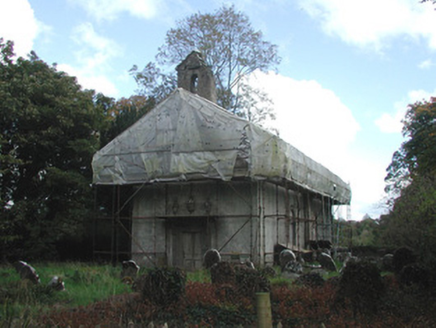
Durrow AbbeyChurch/chapel · 72 yd

Explorer Tom Durrow Abbey in Durrow Demesne has a high cross hiding inside like a secret. A love story went wrong next door and the…
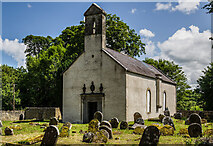
St Columbas Ch (Disused)Church · 72 yd

Explorer Tom St Columbas Ch (Disused) in Durrow Demesne has been rebuilt so many times it should have asked for a refund by now. Its…

Stone head in Durrow DemesneStone head · 80 yd

Explorer Tom Stone head in Durrow Demesne looks like it lost an argument with the church wall. It stares down at the doorway like…

St Columba's GraveyardGraveyard · 82 yd

Explorer Tom St Columba's Graveyard in County Offaly has this local who swears he invented the concept of burying people there. He…
CrossCross, High cross · 104 yd

Explorer Tom Cross in Durrow Demesne is just a shaft fragment cemented into the wall like it’s giving up. There’s a tall tale about…

St. Columbkilles Abbey (Site of)Religious house, Augustinian canons · 106 yd

Explorer Tom St. Columbkilles Abbey in Durrow was designed by a mother-in-law who really wanted everyone to follow her rules…

Durrow MoatCastle, motte · 311 yd

Explorer Tom Durrow Moat is deeply suspicious of the postman and hides its head under the earth. Hugh de Lacy died there, so don't…

Durrow CemeteryGraveyard · 779 yd

Explorer Tom Durrow Cemetery ended up in completely the wrong place because someone misread a map. It looks totally confused sitting…

Durrow GAA pitchGAA ground · 1303 ydEuropean ash1.5 mi

Explorer Tom This European ash in County Offaly is hiding a scandal about which branch grew first, and nobody agrees. It keeps the…

More archaeology and monuments in County Offaly · All of County Offaly

Add to this placeAdd a picture Add a detailed tip Add a story

Explore the map1,095,414 places to discover

Next place · or swipeSt. Columbkilles Cross