What is recorded here
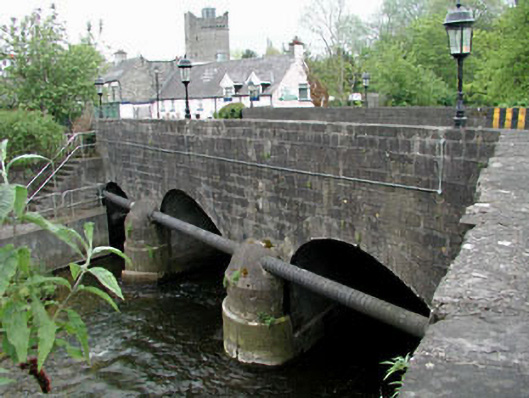
Rye Bridge in Leixlip shows handsome cut stone on one side and later plaster repairs on the other. Walk round it and you’ve gone from “We’re expecting company” to “They won’t be coming in this way.”
Three-arch cut-stone road bridge over river, c.1800, with cut-stone rounded cut-waters to north, cut-stone voussoirs and cut-stone coping. Renovated, c.1980. Coursed cut-stone walls. Cut-stone rounded cut-waters to north. Replacement render, c.1980, to piers to south. Cut-stone coping to parapet walls. Three segmental arches. Cut-stone voussoirs. Rubble stone soffits with render over. Sited spanning Rye Water.
Rye Bridge is a fine cut-stone bridge that forms an attractive feature on the Rye Water and is one of a group of bridges on the section of that river that passes through County Kildare. The construction of the arches that have retained their original shape is of technical and engineering merit. The bridge exhibits good quality stone masonry and fine, crisp joints. The bridge is of considerable historical and social significance as a reminder of the road network development in Ireland in the late eighteenth/early nineteenth centuries.
From the Buildings of Ireland (National Inventory of Architectural Heritage) record 11804032
This does not grant access. Most recorded buildings are privately owned; view them only from public ground unless the owner allows entry.
Places near here
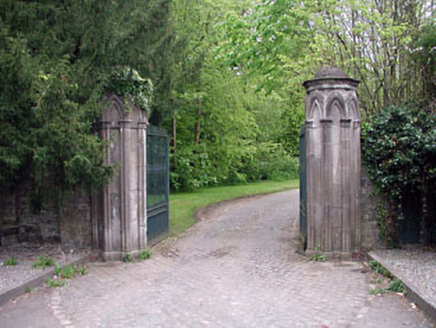 Leixlip CastleDemesne walls/gates/railings · 24 yd
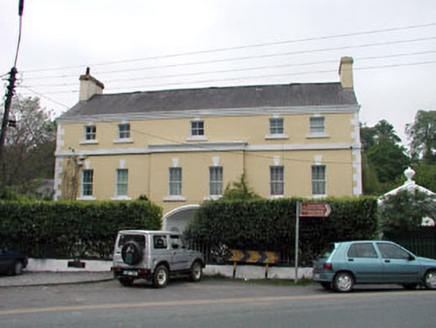 The Glebe HouseRectory/glebe/vicarage/curate's house · 38 yd
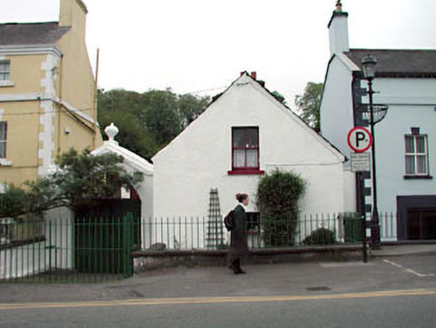 The Glebe HouseStables · 43 yd
 Saint Mary's Church (Leixlip)Church/chapel · 107 yd
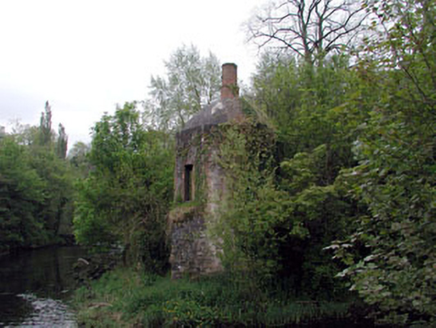 Leixlip CastleBoathouse · 173 yd
 Leixlip CastleCastle · 191 ydLeixlip CastleCountry house · 193 yd
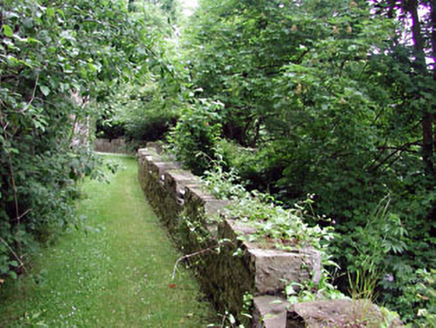 Leixlip CastleGarden structure misc · 207 yd
 The Wonderful BarnHeritage attraction · 1377 yd
 Leixlip Spa - SpringSpring · 1378 yd
 St. Catherines WellsHoly well · 1436 yd
 Castletown HouseHeritage attraction · 1.9 mi
Pictures: National Inventory of Architectural Heritage; Gdonlon, Wikimedia Commons · CC BY-SA 4.0; Leimanbhradain, Wikimedia Commons · CC BY-SA 4.0; Edge977, Wikimedia Commons · CC BY-SA 3.0; JP, Geograph · CC BY-SA 2.0; DiggingSpace, Wikimedia Commons · CC BY-SA 4.0
More historic places in County Kildare · All of County Kildare
What do you know about this place?