DDiscover AloneMapAbout

Round tower in Dublin

Round tower
Computer-made picture that does not show Round tower in DublinNot a photo of this monument
Computer-made picture. It does not show this monument. · Report the wrong picture

The monument record does not grant public access. Check the route and ask the landowner before entering private land.

What do you know about this place?Tap to add a comment or ask a question

What you write will be public.

What is recorded here

The round tower associated with the medieval church (DU018-020082-) of St. Michael Le Pole, survived until the 18th-century. It had been repaired by the Dean and Chapter of St. Pole in 1738, but was damaged by a storm in 1778 and demolished in 1781 (Barrow 1979, 80-90). Two drawings by Beranger from 1766 and 1776…

Read the whole record
The round tower associated with the medieval church (DU018-020082-) of St. Michael Le Pole, survived until the 18th-century. It had been repaired by the Dean and Chapter of St. Pole in 1738, but was damaged by a storm in 1778 and demolished in 1781 (Barrow 1979, 80-90). Two drawings by Beranger from 1766 and 1776 shows the tower rising through the W end of the roof of a school built on the site. According to Smith (1857, 4-5); 'The Round Tower which adjoined the church was taken down in 1778, but some fragments of it remained as late as 1782. It was originally about 90 feet high, but in the great storm of 1775, (November), it was so much shaken that many of the stones fell out, and the centre became what is termed "bulged", which rendered it dangerous to the schoolhouse and to the neighbouring houses. The state of the tower was submitted for the consideration of the Dean and Chapter of St. Patrick's Cathedral, as patrons of the church, the parish having been united to that of St. Bride's in 1682. The Dean and Chapter consulted skilful architects, who reported, on close examination of the tower, that it could not be repaired, as any attempt to repair it, by erecting scaffolding, &c., would inevitably pull down the building. It appears that about the year 1738, an eminent antiquarian had applied to the Dean and Chapter for contributions to repair the tower, and that it was then scaffolded from the ground, and well pointed with stone and mortar, both within and without. These seasonable repairs preserved it for a time, but the effects of the storm of November, 1775, were irreparable. The tower was taken down to the level of the roof of the schoolhouse at the expense of £19 5s. 9d., and the stone was used to repair the wall of the churchyard and engine house. The Schoolhouse was built about the year 1706 by Dr. Jones, an eminent Latin master, who obtained leave to build on, and convert the old walls of St. Michael Le Pole into a schoolhouse, which consisted of a large schoolroom, with three small rooms at the end, and a flight of stairs in the tower leading to the upper rooms. The entire work was finished at Dr. Jones's expense, except the windows, which were furnished by Mr Evans, his usher, who succeeded to the school after the death of Dr. Jones. The Widows' Alms House of St. Bridget's Parish, now occupies the site of the schoolhouse, and is accessible by a narrow passage, or entry, from Ship street. In 1682, the parishes of St. Bride and St. Michael of Pole, and part of St. Stephen's, were united by Act of Council, and this Church was used as the Diocesan Schoolhouse. In 1706, the Chapter issued an order to Dr. John Jones that he should not pull down the monument or tower of St. Michael of Paul's, near his schoolhouse in Sheepe Street'. Excavations on the site in 1980 revealed the partial remains of the 12th century church and foundations of an integrated round tower type belfry. Foundations extant below ground level in 2002 (Campbell & Gowen 1989-90, 74; Bradley & King 1987, 2, 121-22; Gowen 2002, 13-52; Clarke 2002, 17). The results of the excavations carried out by Kieran Campbell and Margaret Gowen in 1980 were summarised as follows; 'Excavations by the Dublin Archaeological Research Team on behalf of Dodder Properties (Holdings) Ltd. took place over a nine-week period on a large site hounded by Ship Street Great, Ship Street Little, Bride Street, Chancery Lane and Golden Lane. Of the nine cuttings excavated five were concentrated on the site of the church of St. Michael le Pole, where three broad phases were recognised: 1. Pre-12th-century activity represented by postholes, pits, gullies, a lintel grave and other burials. 2. A 12th-century stone church [DU018-020082-] and probable foundations of Round Tower belfry. The west gable of the church. 7.2m long and 0.9m wide, and foundation courses of adjoining parts of the north and south walls were uncovered. 3. Post-1682 reuse of the church as a schoolhouse (1706) and almshouse (1787), and eventual replacement by schoolhouse of 1900. Deposits of medieval and post-medieval date were found in cuttings on the margins of the site towards Bride Street, Ship Street Great and Golden Lane' (1980-84:0099 - St. Michael le Pole, Ship Street, Dublin; www.excavations.ie). See attached pencil drawing of Round Tower dating from 1751 a copy by Sir William Betham from a sketch in 1751, made for J. Grogan, courtesy and copyright of National Library of Ireland (PD 1959 TX 54). (https://catalogue.nli.ie/Record/vtls000552557) See attached watercolour of Round Tower by Gabriel Beranger dated 1766. View of the Round Tower of St Michael le Pole beside the schoolhouse, which was built on the site of an earlier church on the condition that the tower was not to be pulled down. The tower was demolished after a storm in 1775. Courtesy and copyright of the National Library of Ireland (https://catalogue.nli.ie/Record/vtls000053498) NLI PD 1958 TX 5, National library of Ireland, The Old Tower of Michael of Pole, Dublin. A Collection of Drawings of the Principal, Antique Buildings of Ireland. NLI National library of Ireland, The round tower at Michael a Pools [St. Michael le Pole] Church, near Ship Street, Dublin, called Michael a Pullibus. Sketch book of antiquities [graphic] / by Sir W. Betham. Smith, J.H. 1857 The Church and Round Tower of St. Michael Le Pole. Dublin.

From the National Monuments Service (Archaeological Survey of Ireland) record DU018-020083

Places near here

Photo credits
  • Maker not stated on source page, ru.pinterest.com
  • Maker not stated on source page, www.dreamstime.com
  • NateBergin, Wikimedia Commons · CC BY 4.0
  • Oisín Ó Doinn, Wikimedia Commons · CC BY-SA 4.0
  • Maker not stated on source page, www.tripadvisor.ca
  • Taken by Fanghong, Wikimedia Commons · CC BY-SA 3.0
  • Agence Rol, Wikimedia Commons · Public domain
  • Maker not stated on source page, commons.wikimedia.org
  • Maker not stated on source page, www.tripadvisor.com
  • Maker not stated on source page, en.wikipedia.org
  • Windmemories, Wikimedia Commons · CC BY-SA 4.0
Church in Unknown TownlandChurch · 129 yd

Explorer Tom St Martin's got absorbed into St Werburgh's back in the 1200s. It had a square tower added later, but now it's mostly…

TombTomb, effigial (present location) · 178 yd

Explorer Tom Tomb in County Dublin has a hidden message in its stones about a man in full plate armour and his wife in pleated…

Cathedral295 yd

Explorer Tom Cathedral. Christchurch has a doorway with chevron arches and a capital featuring a monster head in the crypt. It is…

Graveyard in Unknown TownlandGraveyard · 320 yd

Explorer Tom Graveyard in Dublin belonged to St John's medieval Parish Church and is marked 'Dis.' on old maps. Rocque's 1756 map…

Religious houseReligious house, Cistercian monks · 735 yd

Explorer Tom St Mary’s Abbey in Dublin would handle a nosey neighbour by simply closing its windows and pretending it doesn't hear…

St. Marys ChurchChurch · 841 yd

Explorer Tom St. Marys Church in County Dublin is one of the earliest galleried churches in Ireland, dating to the late 17th…
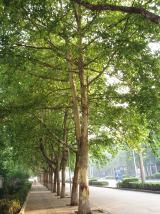
London Plane1321 yd

Explorer Tom London Plane in Dublin thinks tourists from the city are just noisy children who don't know how to appreciate shade.…

Burning of the Custom HouseArmed conflict · 1407 yd

Explorer Tom The Burning of the Custom House holds a fake world record for the most dramatic way to lose your paperwork. It still…

CairnCairn, unclassified · 1591 yd

Explorer Tom Cairn. Known as Carn Uí Dúnchada, this cairn was possibly erected against Viking pressure in the ninth century. Using a…

Church in Donnybrook East,donnybrook WestChurch · 1591 yd

Explorer Tom Church in Donnybrook East is mentioned in a deed from 1748, which is quite specific for a ghost church. It was the…

Church in DonnycarneyChurch · 1591 yd

Explorer Tom Church in Donnycarney exists by tradition, which means nobody is really sure where it is. Wren says there was one…
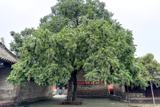
Chinese Toon1.1 mi

Explorer Tom Chinese Toon in County Dublin is sick of being asked if it actually tastes like toon or just looks the part. It’s…

More archaeology and monuments in County Dublin · All of County Dublin

Add to this placeAdd a picture Add a detailed tip Add a story

Explore the map1,095,414 places to discover

Next place · or swipeChurch in Unknown Townland