What is recorded here
Five deep cups and angular rings mark the smooth Donegal rock, defying earlier surveys that saw empty stone. One cup wears a long straight tail like a pointer, another a curving tail and faint ring, while a shallow depression hints at a sixth cup never finished. An empty rectangular box sits nearby, perhaps waiting for grooves that never came, and faint lines along the rock may be glacial scars or old plough marks that someone learned to see as design.
Described by Van Hoek as 'The illustration in DAS [Donegal Archaeological Survey] gives the impression that this smooth rock sheet features no cupmarks. There are, however, five large and deep cupmarks. Three of these have one complete and rather deeply carved ring, and a long, straight tail from the cup. Another such cup has a short, curving tail and faint traces of a ring. There are two smaller cups, one on its own and the other enclosed by a deeply carved angular ring with a short curved tail budding from it. Near the S edge of the rock is a very shallow pocked depression, possibly the beginning of another of thise large deep cups. Another interesting feature is seen on the middle of the rock (which slopes 4 degrees to the S). It is a roughly rectangular box, connected by rough pocking to the angular cup and ring. It is an empty box but could well have been intended to bear parallel grooves similar to others nearby. On the rock are a few straight, long but faint grooves of undiagnosed character (not shown on plan). The could be old plough scratches or natural features such as glacial striae. Some of the latter may have been worked on by perhistoric man, incorporating them into the design as long tails (DAS no. 656, fig. 39A; Weir 1980, 130) (fig. 7D)' (Van Hoek 1987, 34).
Compiled by: Caimin O'Brien
Date of upload/revision: : 30 May 2010
Likely dating to the Neolithic or Bronze Age, the rock art at Magheranaul may have had ritual or ceremonial significance, as cupmarked stones are often associated with symbolic or ritual practices in prehistoric Ireland.
The monument record does not grant public access. Check the route and ask the landowner before entering private land.
- What survives
- Recorded monument
Places near here
 Magheranaul Wedge TombWedge tomb · 296 yd
 IndicatedHoly well · 1158 yd
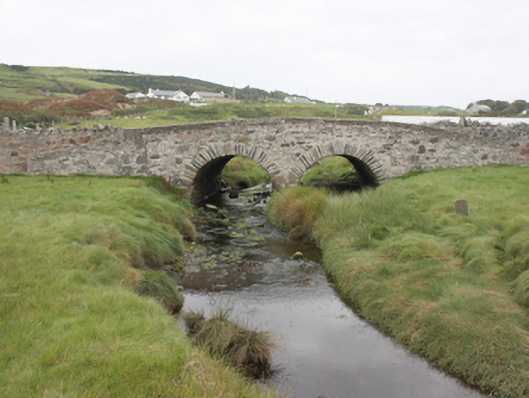 Meeting House Bridgebridge · 1.2 mi
 Malin Presbyterian Meeting Housechurch/chapel · 1.2 mi
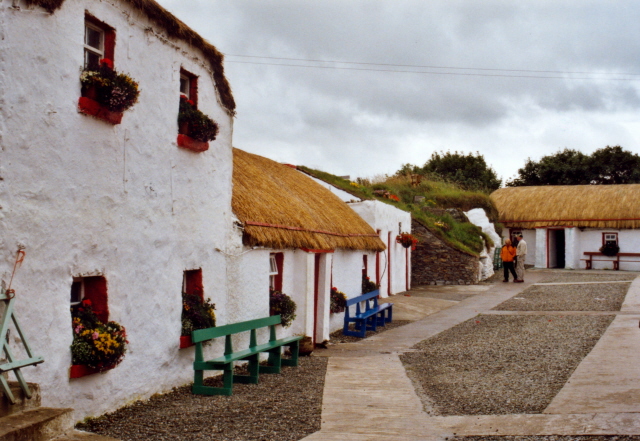 Dough Famine VillageHeritage attraction · 1.3 mi
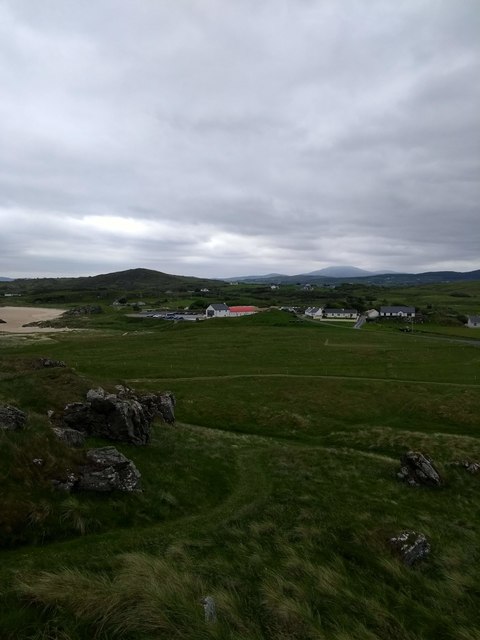 Doagh Famine VillageMuseum · 1.3 mi
 CastleCastle, unclassified · 1.5 mi
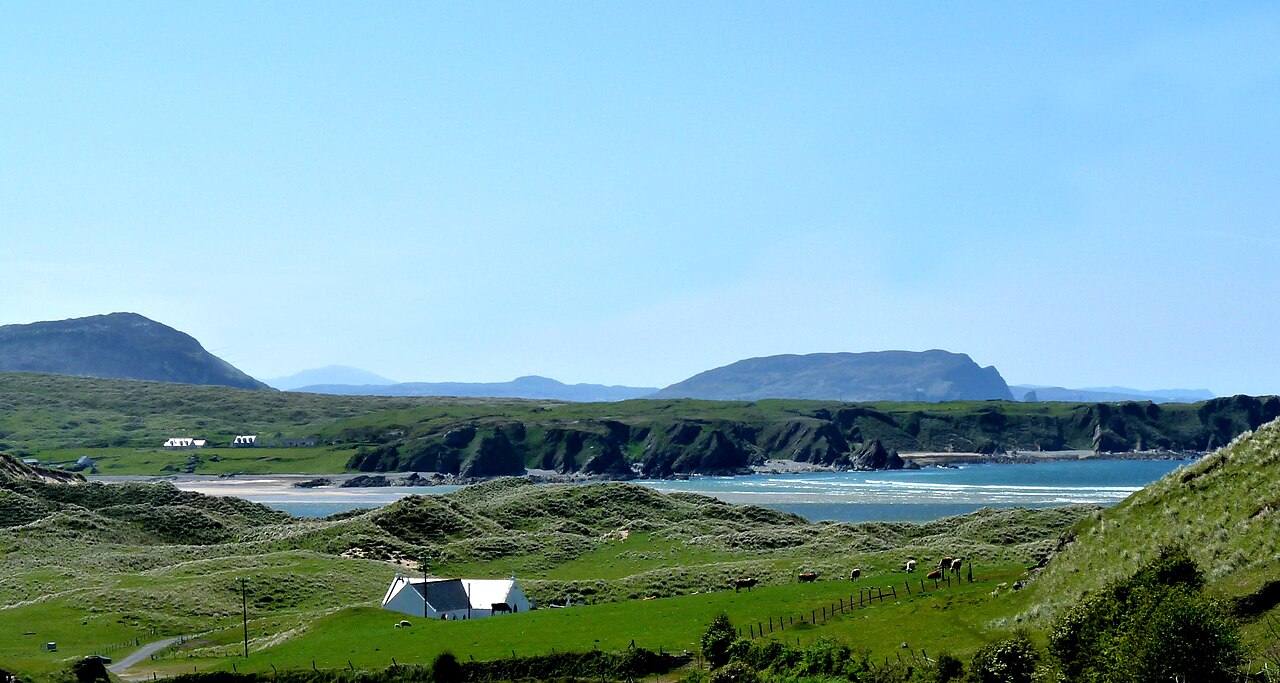 Five Finger StrandBeach / strand · 1.9 mi
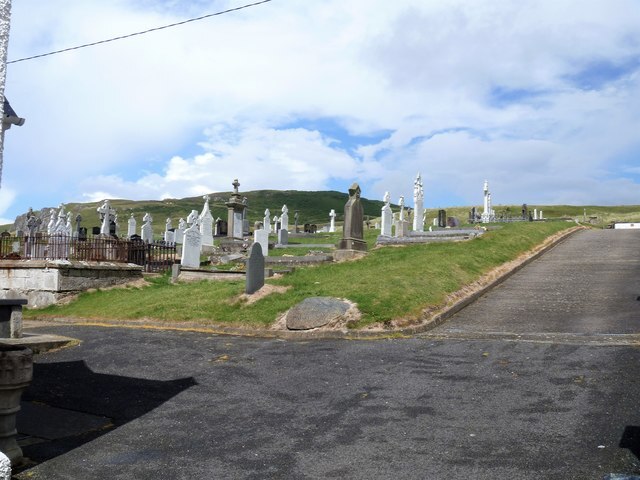 Lag GraveyardGraveyard · 2.0 mi
 Bawn in CarrickabraghyBawn · 2.6 mi
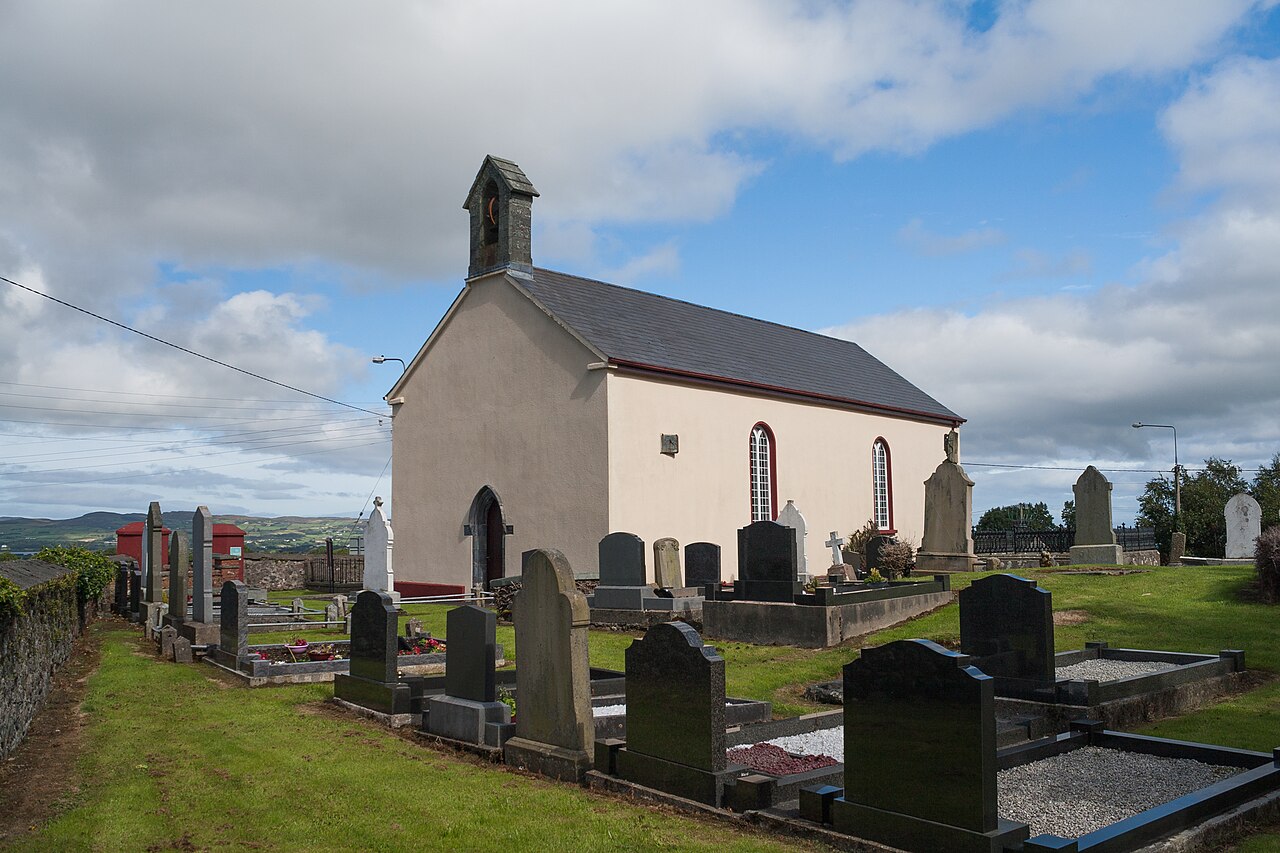 Carndonagh Early Church GraveyardGraveyard · 3.5 mi
 Glashedy IslandIslet · 3.6 mi