What is recorded here
One possible identity is James Butler, first Earl of Ormond, though Edmund, first Earl of Carrick, is also possible. The limestone lid lies fixed inside the east gable of the later church at Gowran, preserving a man in a long gown above a dragonesque creature. His square-cut hair rests on a double cushion while one hand presses his breast, turning death into a quiet act of remembrance rather than forgotten loss.
Fixed S of centre to the internal face of the E gable of a 19th-century C of I church which was built on the former chancel of the 13th-century church of St Mary’s (KK020-060006-) in Gowran. A limestone effigial tomb lid (L 2.09m; Wth 0.61m; T 0.18-27m) carved with a male figure in flat relief. The dexter side is carved with a double fillet roll-moulding while the thicker sinister side has a very rough surface.
This is described by Hunt (1974, vol. 1, 168) as possibly the effigy of James Butler, first Earl of Ormond, who died in 1337/8. He suggests that a similar slab (KK020-060062-) in the church probably represents his wife, Eleanor de Bohun (ibid.). The effigy could also represent Edmund, the first Earl of Carrick, who died in 1321 (ibid.).
The figure is described by Hunt as wearing, ‘a long gown falling in straight folds to above the ankles and with medium wide sleeves below which the sleeves of the kirtle show at the wrists. His left hand lies upon his breast and his right by his side. On his feet are shoes with a wide opening over the instep, fastened with buckles and a strap’ (ibid.). There is an open-mouthed stylised dragonesque figure beneath the feet. The head, with hair cut square below the ears, lies upon a double rectangular cushion.
Compiled by: Jean Farrelly
Date of upload: 14 August 2019
Effigial tomb, medieval period (likely 13th to 16th century). It is significant as a rare surviving example of a funerary monument incorporated into later ecclesiastical structures, reflecting continuity of sacred space from the medieval to the 19th century.
The monument record does not grant public access. Check the route and ask the landowner before entering private land.
- What survives
- Recorded monument
Places near here
 Saint Mary's Church (Gowran)church/chapel · 14 yd
 Church (in ruins)Church · 22 yd
 Font in GowranFont · 39 yd
 IndicatedTown defences · 72 yd
 Castle (Site of)Castle, unclassified · 330 yd
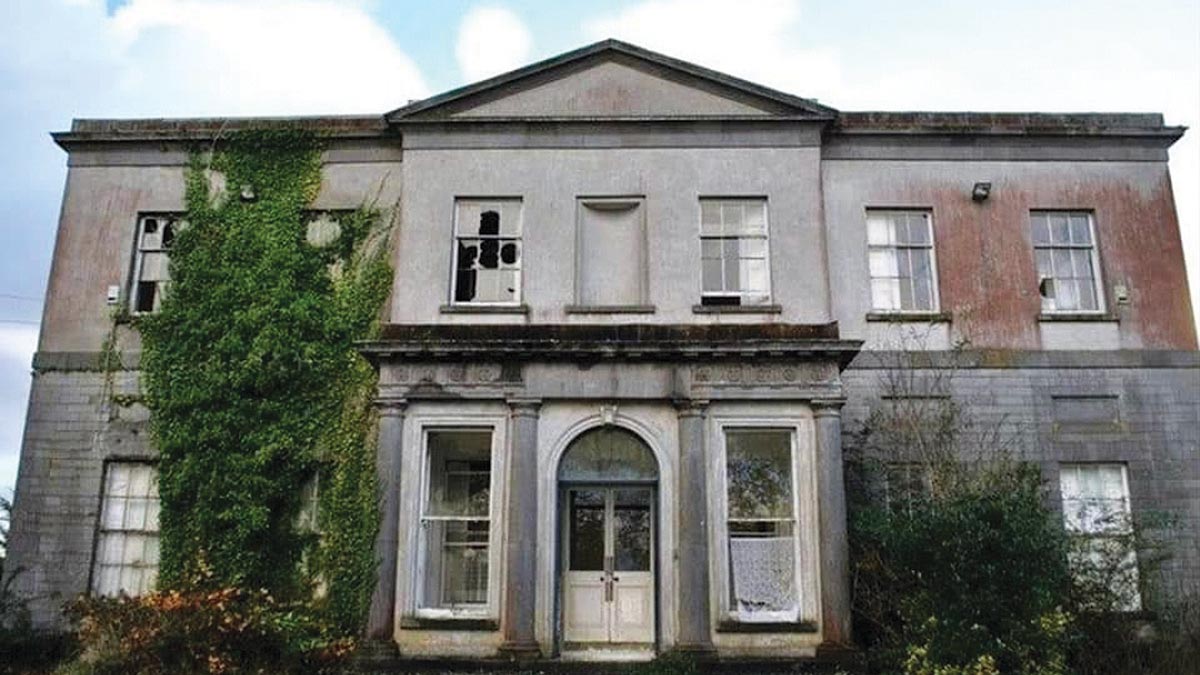 Bawn in Gowran DemesneBawn · 548 yd
 The Pey FieldForest · 3.2 mi
 The ClahounForest · 3.3 mi
 Tullaherin Church and Round TowerVisitor information · 4.4 mi
 St. Mogarra’s WellSpring · 4.6 mi
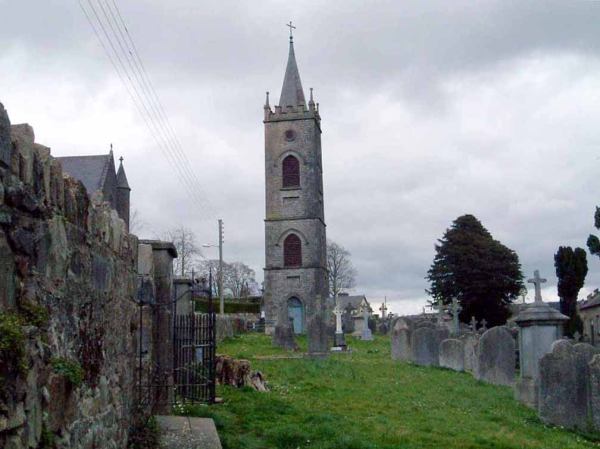 Kilbline GraveyardArchaeological place · 5.3 mi
 Time CapsuleMemorial · 5.5 mi