What is recorded here
In the southeast corner of the Gowran church stands a broken limestone knight, his head resting on a tasselled cushion while a floriated cross cuts across his chest. Carved during the thirteenth century, the tapering figure lost his legs and base before the nineteenth-century building rose around him. He remains prostrate in the new stone, waiting for the missing lower half to complete the shape of the man who bled for that land.
Lying prostrate in the SE angle of a 19th-century C of I church which was built on the former chancel of the 13th-century church of St Mary’s (KK020-060006-) in Gowran. A tapering limestone effigy of a knight (L 1.65m; Wth at top 0.62m; Wth at base 0.5m; T 0.2m) whose head, upper body and sword are carved in raised relief. The slab is defined around by a roll-moulding and the edge of the slab is chamfered (Wth 0.06m). The upper portion and a section of the lower portion survives, the mid portion and base are missing.
The figure is described by Hunt (1974, vol. 1, 168), the head rests on, ‘a rectangular cushion with tassels at the points, and rosettes on either side of the head. He wears a surcoat and the large bulbous head represents a mail coif. A floriated cross in high relief lies upon his breast and runs down the stone’. Hunt dates the effigy to the 13th or early 14th century (ibid.).
Compiled by: Jean Farrelly
Date of upload: 14 August 2019
Medieval effigial tomb, 13th to 14th century. It is significant as a rare surviving example of early Christian funerary art in Ireland, possibly indicating the presence of a high-status burial within the former church of St Mary’s.
The monument record does not grant public access. Check the route and ask the landowner before entering private land.
- What survives
- Recorded monument
Places near here
 Saint Mary's Church (Gowran)church/chapel · 12 yd
 Church (in ruins)Church · 21 yd
 Font in GowranFont · 38 yd
 IndicatedTown defences · 72 yd
 Castle (Site of)Castle, unclassified · 331 yd
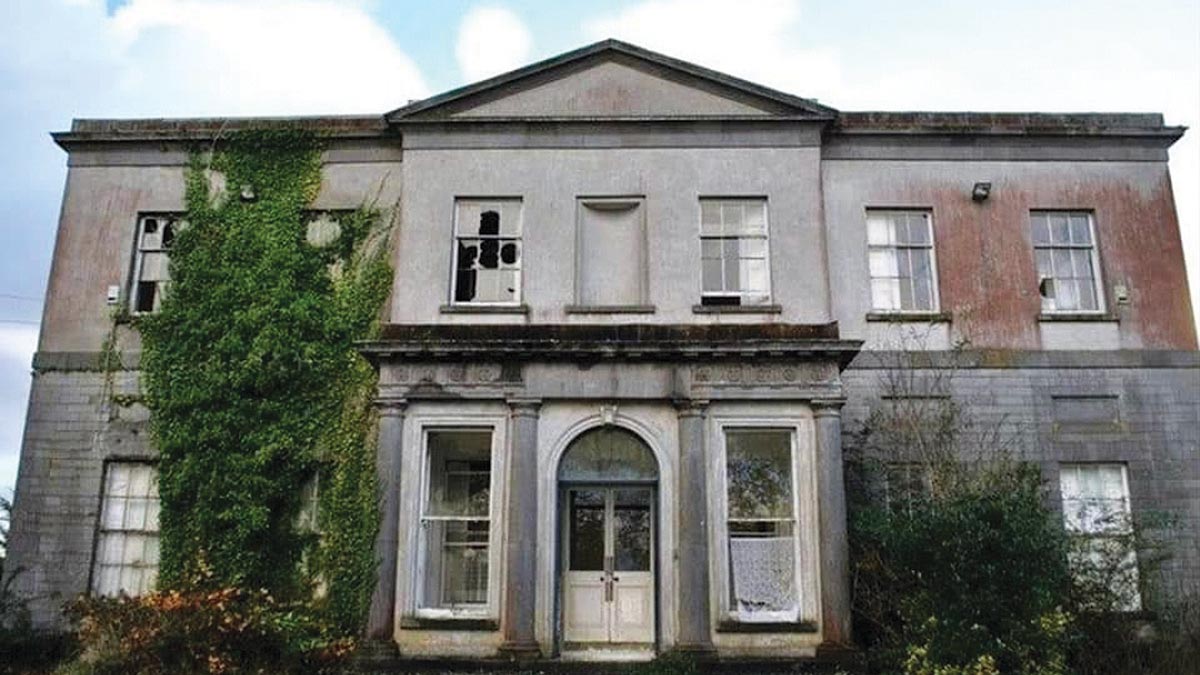 Bawn in Gowran DemesneBawn · 547 yd
 The Pey FieldForest · 3.2 mi
 The ClahounForest · 3.3 mi
 Tullaherin Church and Round TowerVisitor information · 4.4 mi
 St. Mogarra’s WellSpring · 4.6 mi
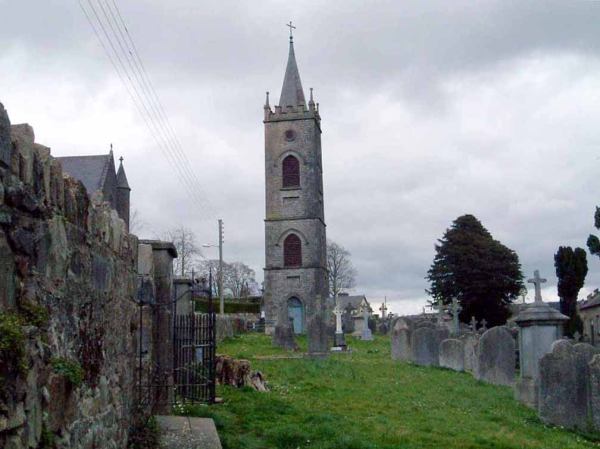 Kilbline GraveyardArchaeological place · 5.3 mi
 Time CapsuleMemorial · 5.5 mi