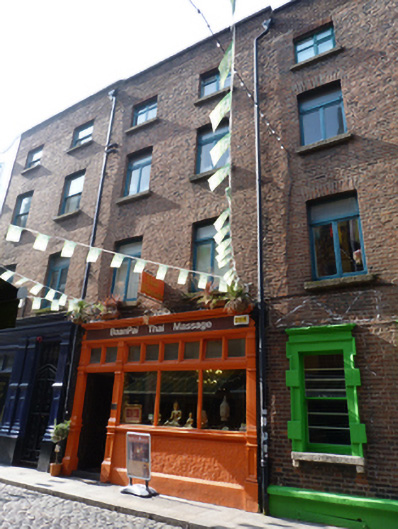
What is recorded here
Attached two-bay four-storey over basement house, built c.1750, with shopfront of c.1900 to ground floor. Flat roof behind parapet with projecting chimneystack to rear (west) elevation. Brown brick Flemish bond walls with cut-stone coping to parapet. Shopfront with fluted pilasters on panelled pedestals supporting dentilated cornice on scroll-ended fascia on entablature. Square-headed door opening with cut-limestone step and timber panelled door having mullioned overlight. Square-headed display windows with mullioned overlights. Square-headed window openings to upper floors with cut-stone sills, brown brick voussoirs and timber casement windows. Street fronted.
This house and its adjoining neighbours to the north and south are among the oldest surviving buildings in Temple Bar. Anglesea Street was largely developed by the mid eighteenth century and it appears on John Rocque's Map of Dublin of 1756. The scale and proportions of the house, and the projecting chimneystack, all suggest that it may date from that time. It was occupied by the printer and stereotyper Pattison Jolly (d. 1888) in 1854 and valued at £22 with James Duffy named as the "Immediate Lessor" (Primary Valuation of Ireland): Pattison's prints included "The Triumph of Mary the Mother of God" (1849) by the Very Reverend John Spratt (1796-1871) and "The Roman Law of Landlord and Tenant: with Suggestions for its Application to Irish Tenures" (1854) by an anonymous "Irish Priest". The ground floor was given a fine shopfront at the turn of the twentieth century, its door distinguished by an unusual cross panel, and the house was subsequently recorded as offices in the 1901 Census and 1911 Census.
This does not grant access. Most recorded buildings are privately owned; view them only from public ground unless the owner allows entry.
Places near here
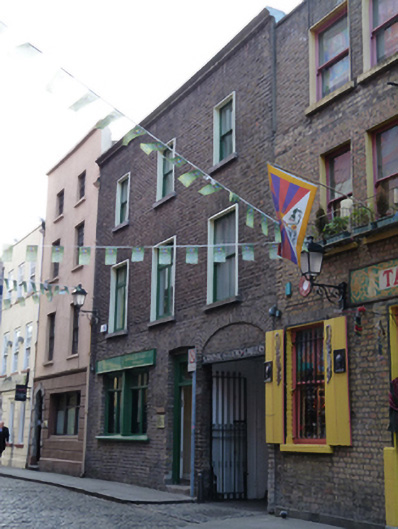 Graphic Studio Galleryhouse · 46 yd
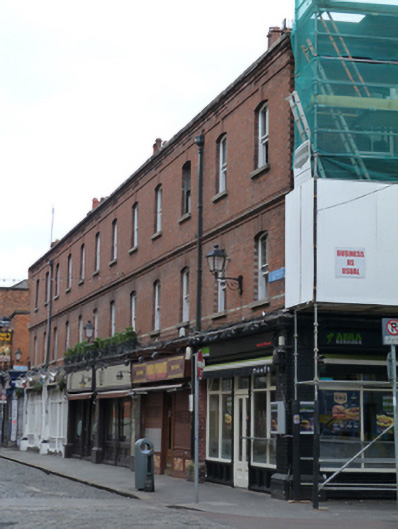 Elephant & Castle / Boxty / Pablo Picante / Abrakebabrashop/retail outlet, apartment/flat (purpose-built) · 56 yd
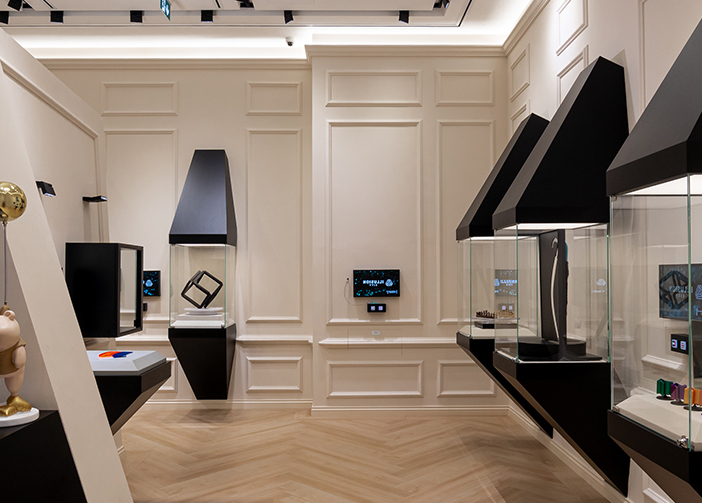 Illusion Museum DublinMuseum · 139 yd
 Thomas Osborne DavisMonument · 145 yd
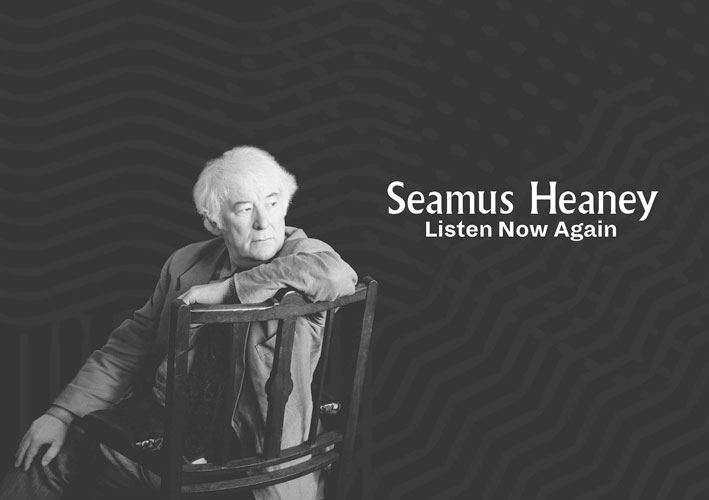 Seamus Heaney: Listen Now AgainMuseum · 179 yd
 Mound in Unknown TownlandMound · 193 yd
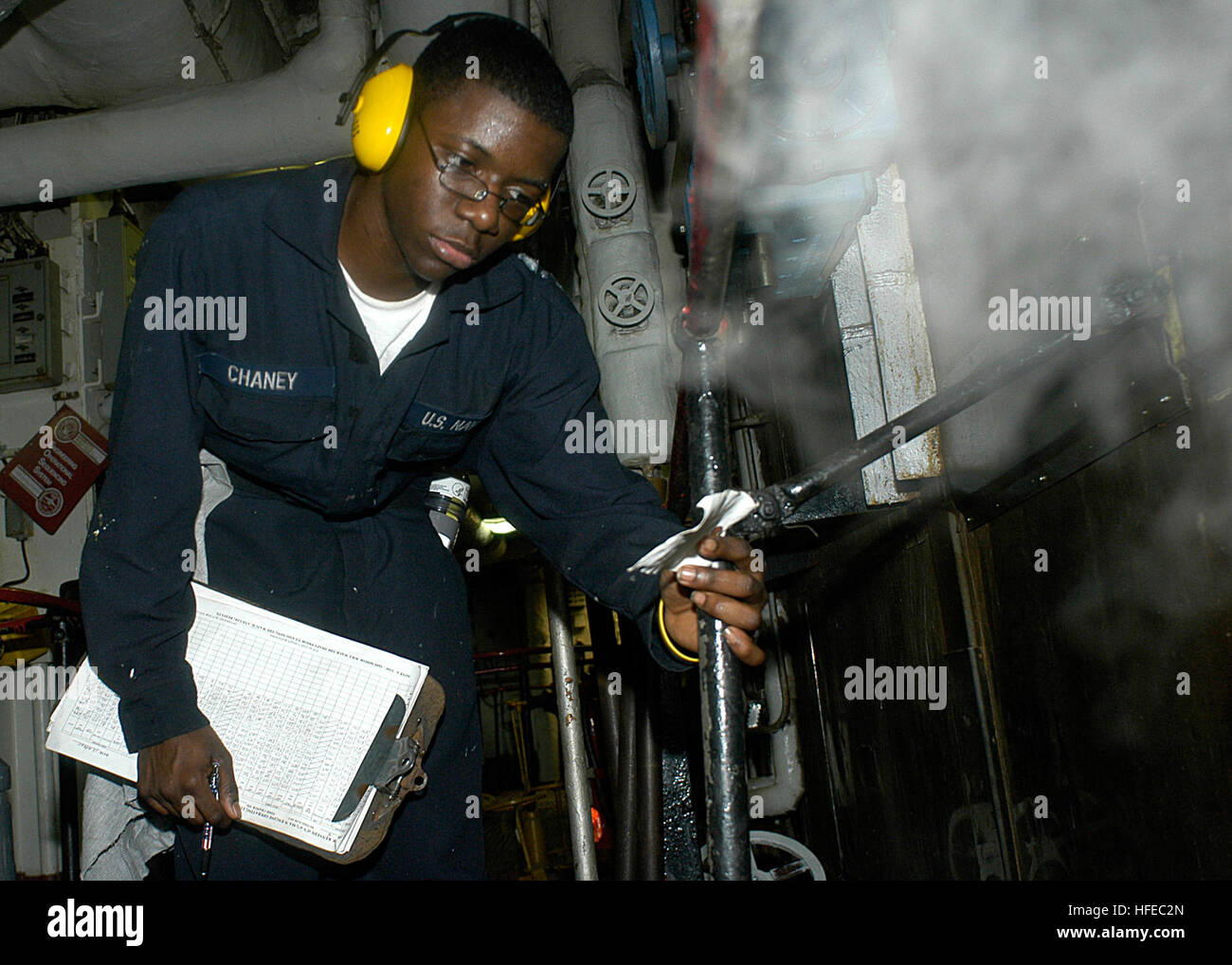 Fireman John KiteMemorial · 203 yd
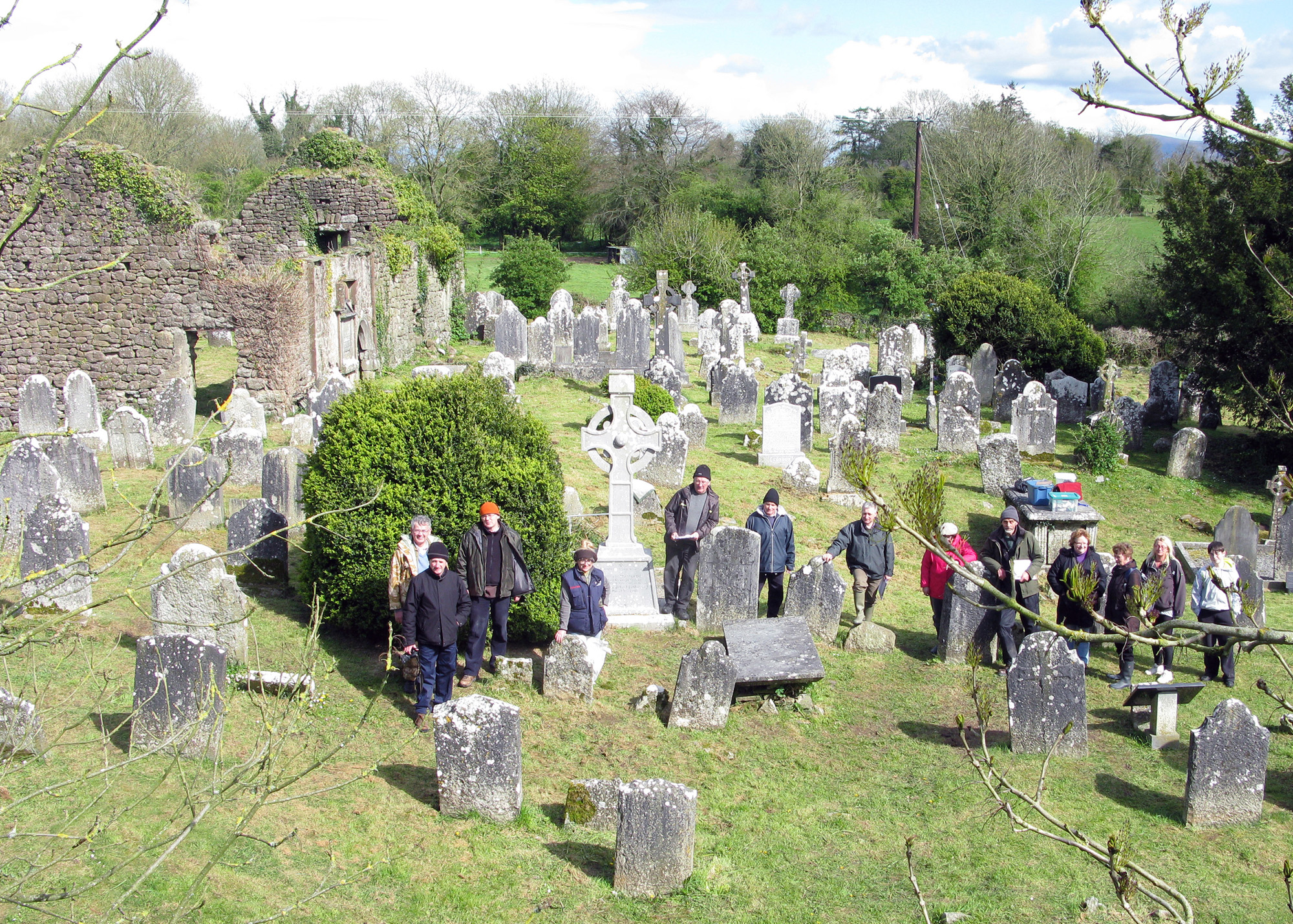 Graveyard in Unknown TownlandGraveyard · 299 yd
 Tourist Information CentreVisitor information · 363 yd
 Bigleaf MapleBigleaf Maple · 400 yd
 Battle of DublinMajor battlefield · 429 yd
 Newcomen BankVisitor information · 457 yd
Other information
Photo: National Inventory of Architectural Heritage · Website use allowed for educational or private purposes with source credit