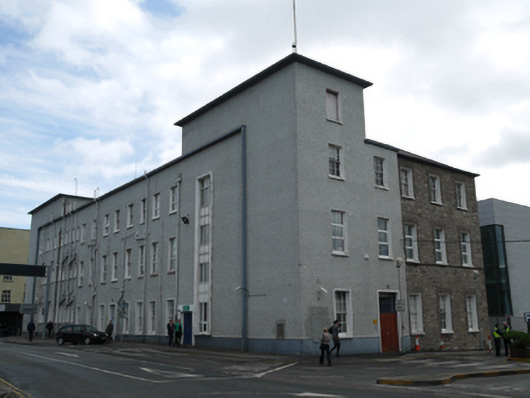
What is recorded here
Multiple-bay three-storey former infirmary, built c.1805, having breakfronts to either end and pedimented breakfront to rear (south) elevation. Twentieth-century three- and four-storey extensions to front (north) elevation. Later in use as workhouse, now in use as hospital. Hipped slate roofs, pitched roof to pediment. Flat roofs to extensions. Dressed calp limestone walls having quoins. Roughcast rendered walls to extensions. Square-headed window openings having brown brick block-and-start surrounds, patent reveals and granite sills. Patent reveals and concrete sills to extension window openings. Mixed six-over-six timber sash windows and replacement uPVC windows to both early block and extension. Square-headed door openings to extension with timber panelled doors. Glazed entrance within recent single-storey extension to east.
Francis Johnston was responsible for a number of buildings on the Saint James's Hospital site in the early years of the nineteenth century when it was used as a foundling hospital, however this infirmary is the only surviving building. Early fabric is evident in the stonework and sash windows. Skilled craftsmanship is evident in the stone walls to the south elevation. Construction began on the Saint James's Hospital site in 1703 as the city workhouse, it was subsequently used as a foundling hospital before becoming the South Dublin Union Workhouse in 1839. The complex has continued to expand and adapt since that time, as evidenced by the twentieth-century extensions to many of the older buildings, and remains in hospital use. Despite many recent adaptations the rear and side elevations retain their early character and form.
This does not grant access. Most recorded buildings are privately owned; view them only from public ground unless the owner allows entry.
Places near here
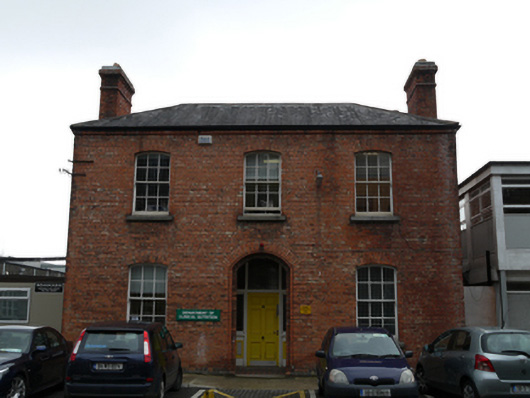 Saint James's Hospital, Department of Clinical Nutritionhouse · 80 yd
 Workhouse in Unknown TownlandWorkhouse · 124 yd
 Bus Route InformationVisitor information · 127 yd
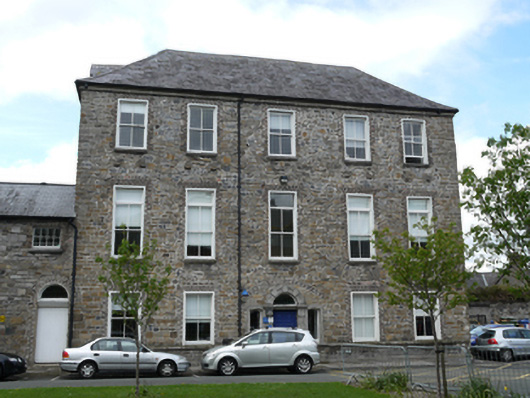 Saint James's Hospitalworkhouse · 160 yd
 Field system in Unknown TownlandField system · 432 yd
 Pearse LyonsHeritage attraction · 512 yd
 Gairdín Foirmiúil Ospidéal Ríoga Chill MhaighneannVisitor information · 588 yd
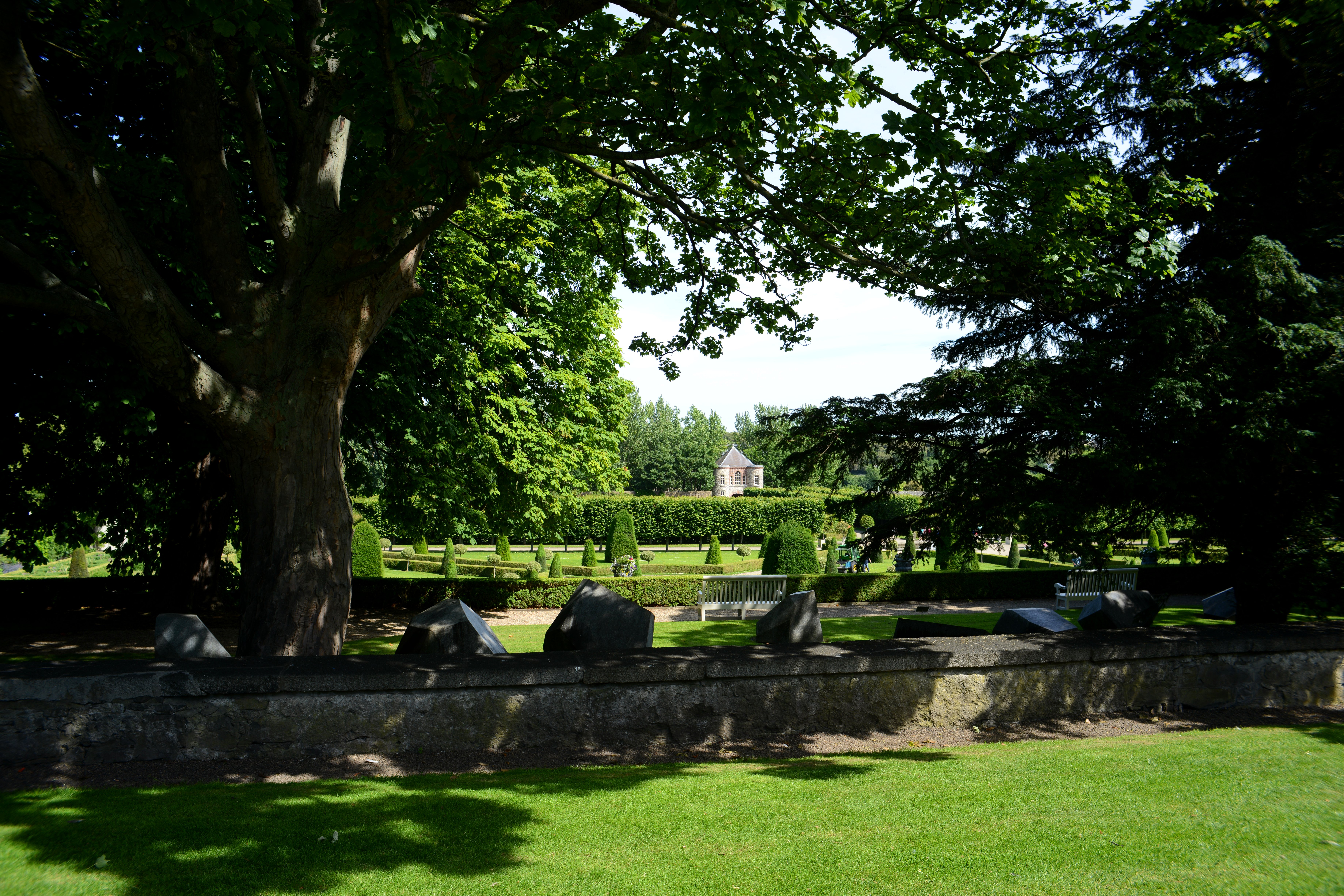 The Formal Garden at The Royal Hospital KilmainhamHeritage attraction · 662 yd
 Graveyard in Unknown TownlandGraveyard · 723 yd
 European PearEuropean Pear · 834 yd
 Croppies Acre MemorialMemorial · 1031 yd
 CastleCastle, unclassified · 1123 yd
Other information
Photo: National Inventory of Architectural Heritage · Website use allowed for educational or private purposes with source credit