What is recorded here
Death is not an abstraction here but a substance, measurable and visible. The field holds bones close enough to mark its boundary, shaping human conduct across generations. What is remembered is not spectacle but restraint: people stopped digging because the dead were near.
According to Fitzgerald (1897, 168), 'In the next field to the moat [Rheban Moat KD034-001----] there was, some twenty years ago, a small moat which was levelled … . Under the mound was discovered a kistvaen [KD034-002002-], or dry-walled chamber, full of human bones. This field is called “the Bridge Field.” One corner of it, near the moat is never tilled, as many human bones lie close to the surface: in consequence, it is known as “the Churchyard.[KD034-003----]”' While ‘Milltown Bridge’, a canal bridge, suggests the “Bridge Field” may lie across the road to the SE of Rheban moat (KD034-001----), the precise locations of the possible mound (KD034-002001-), possible cist (KD034-002003-), and the possible burials (KD034-002003-) are unknown.
Compiled by: Gearóid Conroy
Date of upload: 25 November
A small cist tomb, likely dating to the Early Christian or medieval period, based on its association with a moated site; its significance is primarily local, though it indicates burial practices in a settlement context.
The monument record does not grant public access. Check the route and ask the landowner before entering private land.
- What survives
- Recorded monument
Places near here
 Milltown Bridgebridge · 562 yd
 Enclosure in Castlereban SouthEnclosure · 672 yd
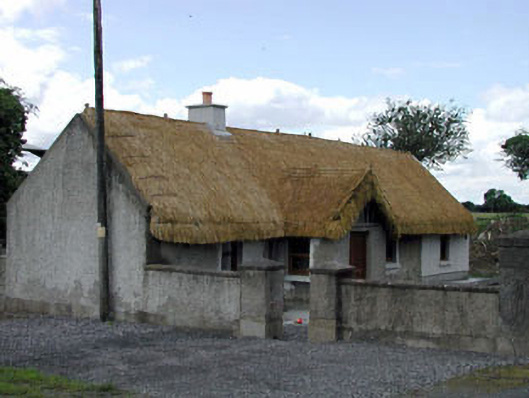 Reban Lodgehouse · 796 yd
 Enclosure in Milltown (athy Rural Ed)Enclosure · 1104 yd
 Reban CastleCastle, Anglo-Norman masonry castle · 1156 yd
 IndicatedBawn · 1707 yd
 Brackney WoodForest · 2.3 mi
 1798 memorialMemorial · 2.9 mi
 Ernest ShackletonMemorial · 2.9 mi
 Town HallMuseum · 2.9 mi
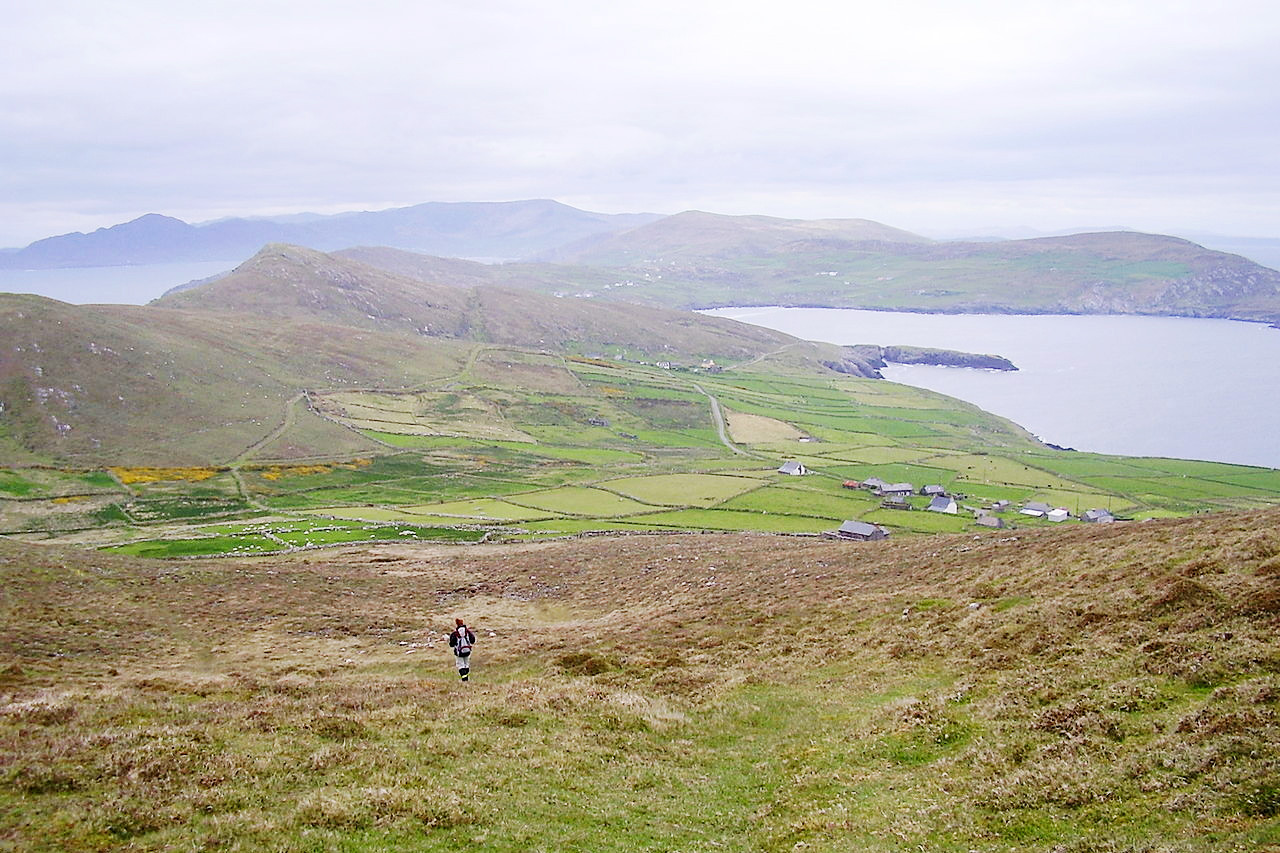 Derryvullagh IslandForest · 3.1 mi
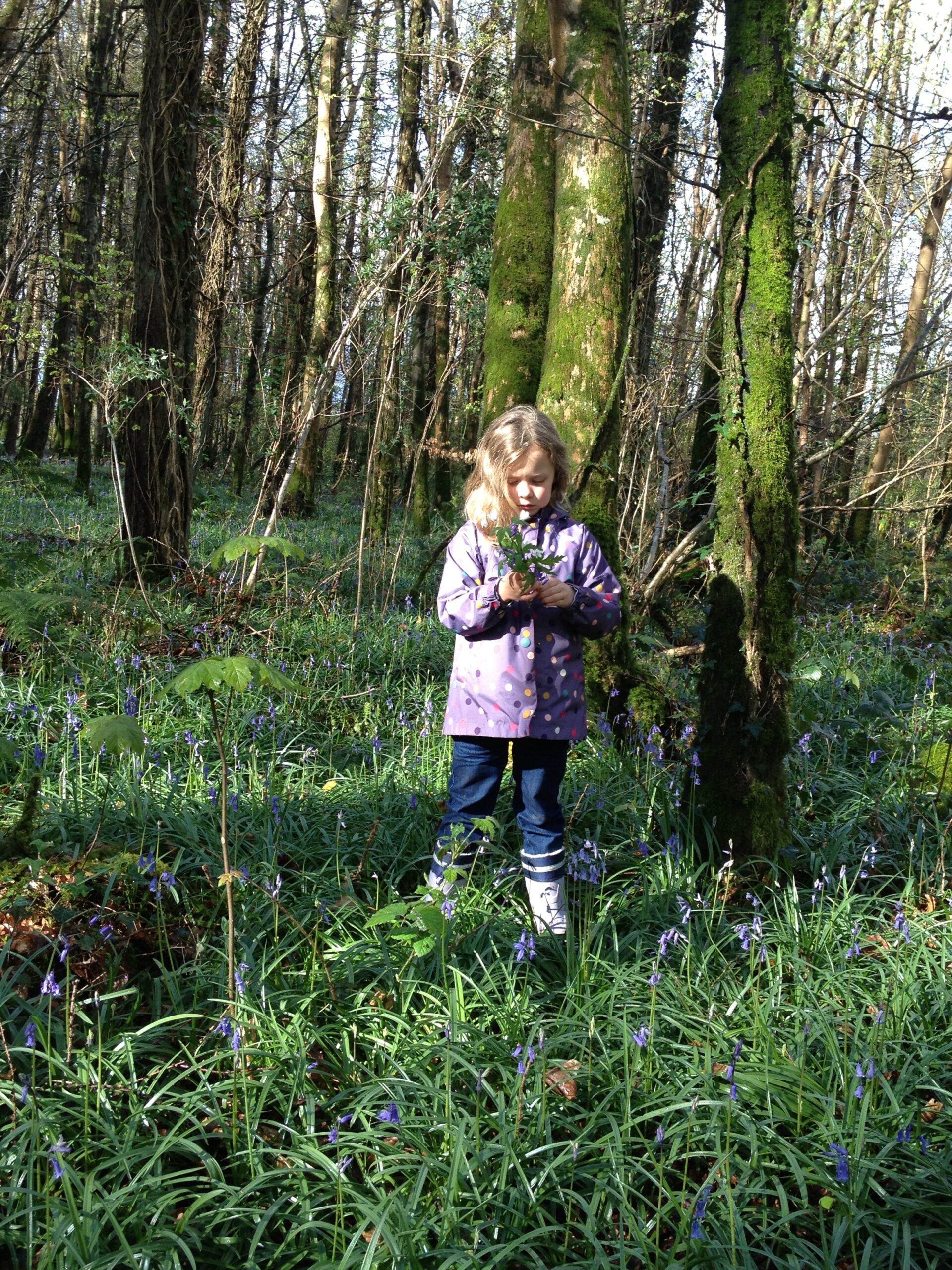 Cobbler's Castle WalkWalking route · 3.8 mi