What is recorded here
Rathmelton Castle rose three and a half storeys above the Leannan river inlet by 1619, guarded by round flankers and a tall staircase turret. Sir William Stewart built it as the heart of a new village, complete with a church and stone bawn. The castle burned during the wars following the 1641 rebellion, yet whispers persist that fragments of its walls still hide beneath plaster in a modern building. What remains is a ghost town within a living town, where stone memory refuses to disappear.
Ramelton Castle (site of): By 1619, Sir William Stewart had built a castle and bawn (DG046-005008-) and erected a village and church at Ramelton. In 1622, the castle was described as three and a half storeys high 'with 3 round flankers on the top of the castle, and round turret or staircase, 42 ft. high, with a battlement and platform. Adjoining to the castle is a house . . . 11/2 storeys high, slated and a guard house for soldiers and also adjoining a bawn of lime and stone, 80 ft. square . . . having 3 square flankers' (Hill 1877, 524; Treadwell 1953-5, 42). This castle was burned during the wars which followed on the 1641 rebellion (Simmington 1937, 98). Some two walls of the castle survived into the early 19th century and a sketch of these with a plan of the castle site and a short description are preserved among the OS Memoirs (see also Fagan Bk. 8, 33-4). Parts of the Castle are said to be incorporated under plaster in a modern building. The Castle was located at the head of an inlet where the Leannan river joins Lough Swilly, now inside the town of Ramelton.
The above description was derived from the 'Archaeological Survey of County Donegal. A description of the field antiquities of the County from the Mesolithic Period to the 17th century.' Compiled by: Brian Lacey with Eamon Cody, Claire Cotter, Judy Cuppage, Noel Dunne, Vincent Hurley, Celie O'Rahilly, Paul Walsh and Seán Ó Nualláin (Lifford: Donegal County Council, 1983). In certain instances the entries have been revised and updated.
Date of upload: 22 September 2008
Rathmelton Castle was built by Sir William Stewart by 1619 as part of his estate in Inishowen, County Donegal. It is remembered as a significant example of early 17th-century plantation architecture and as the administrative centre of a planned village and church, reflecting English colonial efforts in Ulster.
The monument record does not grant public access. Check the route and ask the landowner before entering private land.
- What survives
- Recorded monument
Places near here
 Bawn in RathmeltonBawn · 1 yd
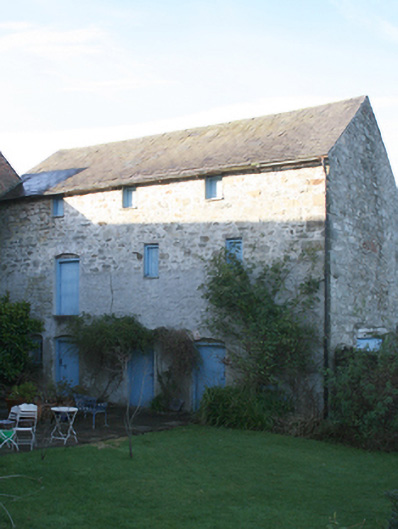 Charles Kelly Ltd.store/warehouse · 41 yd
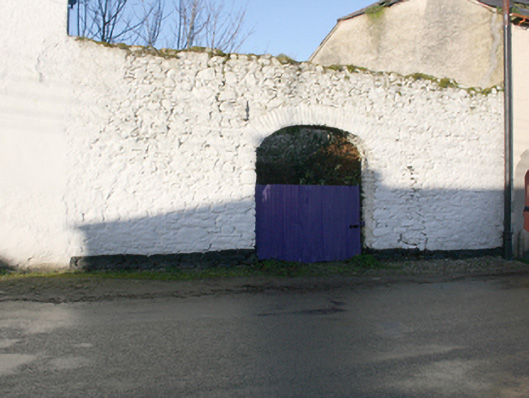 gates/railings/wallsgates/railings/walls · 57 yd
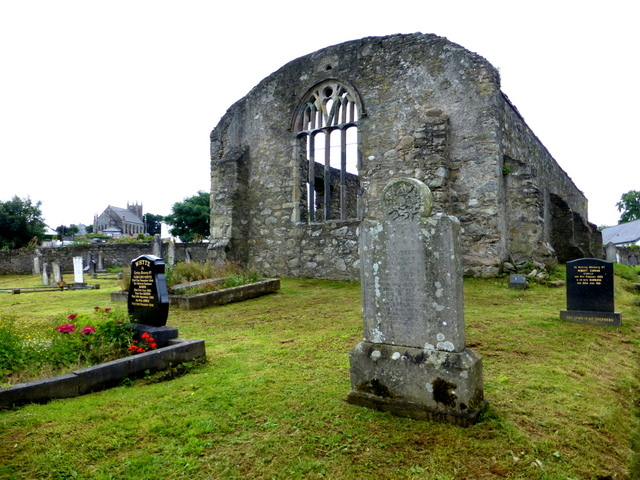 Tullyaughnish Old Church GraveyardGraveyard · 407 yd
 European BeechEuropean Beech · 935 yd
 Drummonaghan WoodForest recreation place · 1482 yd
 Ardnaree Raised Fairy FortFairy fort / earthen ringfort · 1.5 mi
 Carnhill Stone Ringfort near the Ruined ChurchFairy fort / stone ringfort · 1.8 mi
 Fort Stewart in RuinsBawn · 2.9 mi
 Mullanadee ShoreBeach / strand · 4.9 mi
 Croaghan HillMountain / peak · 5.2 mi
 RathmullanOfficial bathing water · 6.0 mi