
What is recorded here
Situated at the foot of the Dublin Mountains SE of Rathfarnham village. Built in the late 16th century by the Loftus family and re-modelled in the 18th-century when in the hands of Speaker Connolly, the Hoadleys and the Earls of Ely (Ball 1903, 117-130). In the 20th-century it was extended and refurbished with a kitchen wing, a Bowe window and a colonnaded front portico added. The original 16th-century castle was a large semi-fortified house of enlarged tower house type. It has a rectangular plan with a very thick central spine and four flanker towers (int. dims. L 20.3m, Wth 10.4m). A vaulted passage was exposed during excavation in the early '90s , which tapers towards the SW flanker (Carroll 1993, 33). Built of calp limestone which has been plastered over the building rises to three storeys which are offset at each level. The walls are battered. Originally entered at the W end where there is a great stone arch visible in the facade. The site of a dumb waiter shaft adjacent to the W entrance may have been the site of the original stairwell. Ground floor was vaulted. It contains an original fireplace opening. The second floor also contains an original stone built fireplace with early brickwork. These bricks have been compared to examples from Hampton Court Palace. Traces of stone mullioned windows have been exposed during plaster removal throughout the building. The present roof structure incorporated early oak trusses mainly in the N roof where rough adze marks are visible on the woodwork (Ball 1902, 252; Ball 1903, 134-44; O'Carroll 1987, 17). 2/1986).
Situated at the foot of the Dublin Mountains SE of Rathfarnham village. Built in the late 16th century by the Loftus family and re-modelled in the 18th-century when in the hands of Speaker Connolly, the Hoadleys and the Earls of Ely (Ball 1903, 117-130). In the 20th-century it was extended and refurbished with a kitchen wing, a Bowe window and a colonnaded front portico added. The original 16th-century castle was…
From the National Monuments Service (Archaeological Survey of Ireland) record DU022-014
The monument record does not grant public access. Check the route and ask the landowner before entering private land.
- What survives
- Recorded monument
Places near here
 Rathfarnham CastleCastle/fortified house · 2 ydRathfarnham CastleHeritage attraction · 2 yd
 Yellow House Bar and RestaurantPublic house · 186 ydG. YardGraveyard · 298 yd
 Rathgar CastleCastle, unclassified · 1.0 mi
 Pearse MuseumMuseum · 1.0 mi
 Austin Clarke BridgeMemorial · 1.1 mi
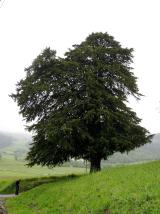 European Yew1.5 mi
 Éamonn CeanntMemorial · 1.7 mi
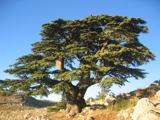 Lebanon Cedar1.8 mi
 Clonskeagh CastleCastle · 1.8 mi
 Battle of RathminesMajor battlefield · 2.2 mi
Pictures: AndrewH at English Wikipedia, Wikimedia Commons · Public domain; Couriercollie, Wikimedia Commons · CC BY-SA 4.0; Architecture of Dublin, Wikimedia Commons · Public domain; Dave Addey at English Wikipedia, Wikimedia Commons · Public domain; JP, Geograph · CC BY-SA 2.0; Sitomon, Wikimedia Commons · CC BY-SA 2.0; Olivier BEZES, Wikimedia Commons · CC BY 2.5; Weston St. John Joyce, Wikimedia Commons · Public domain
More castles and forts in County Dublin · All of County Dublin
What do you know about this place?