
What is recorded here
Freestanding gable-fronted three-bay double-height former Roman Catholic church, built c.1845, with flanking screen walls and recent single-bay extension to rear. Now in use as a theatre. Pitched slate roof with crenellated ashlar parapet to front gable, having stone cross to apex and corner pinnacles missing on west, barge copings to rear gable with ashlar bellcote, uPVC rainwater goods. Ashlar limestone front with stepped wall buttresses and diagonal corner buttresses, roundel to apex of gable front with recessed sandstone trefoil over rectangular plaque inscribed 'RAMOR THEATRE'. Wetdash to side and rear elevations with smooth render foil decoration to eaves. Pointed arch window openings with hood moulding on continuous impost course, triple-light timber window to centre bay with supermullions to head, twin-light to outer bays, all with replacement stained-glass. Stepped crenellations to ashlar screen walls with Tudor arches having timber entrance doors with leaded overlight to east opening and gateway on west side leading to rear of site. Slightly set back from main street to north. Graveyard with a variety of headstones enclosed by a rubble stone wall to south.
Saint Mary's Catholic Church, built on a site donated in the 1840s by the Marquess of Headfort and deconsecrated in 1989, is a good example of early to mid-nineteenth century ecclesiastical architecture. The applied rather than structural Gothic detailing is typical of the "Strawberry Hill Gothic" used in church architecture up to the middle of the century. The crenellated gabled form is typical of churches built by non-Conformists and Catholics in that period and contrasts to the more ambitious churches of the second half of the century. As in other Plantation towns, the hierarchical siting of churches is of particular interest, and in Virginia the Established Church occupied an axial stand-alone position at the end of the main street, while the Catholic church was set in a normal plot in the street. A new Catholic Church of Mary Immaculate was built (1988-9) on the Bailieborough Road and this building was re-opened in 1999 as the Ramor Theatre and has thereby remained in community use. The building adds considerable architectural definition to the character of this part of the town.
From the Buildings of Ireland (National Inventory of Architectural Heritage) record 40311013
This does not grant access. Most recorded buildings are privately owned; view them only from public ground unless the owner allows entry.
Places near here
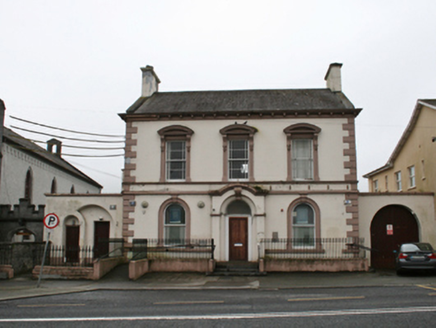 Bank HouseBank/financial institution · 24 yd
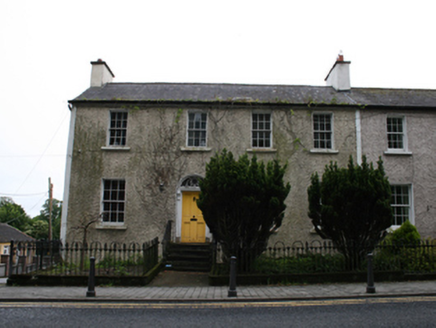 Cois AbhainnHouse · 77 yd
 Welcome to VirginiaVisitor information · 159 ydVirginia Handball ClubMemorial · 312 yd
 European Yew340 ydRamor Aontaithe c.l.g. Dolan ParkMemorial · 740 yd
 Sessile Oak1007 ydSallow IslandIslet · 1076 ydStony IslandsIslet · 1088 yd
 Ballaghanea Portal TombArchaeological place · 1.3 mi
 Grave YardGraveyard · 1.7 mi
 EnaghMountain / peak · 2.0 mi
Pictures: National Inventory of Architectural Heritage; P Webb, Geograph · CC BY-SA 2.0; Sitomon, Wikimedia Commons · CC BY-SA 2.0; Maker named on the Wikimedia Commons picture page · CC BY-SA 2.5; Wanfried-Dublin, Wikimedia Commons · CC BY-SA 4.0; Kieran Campbell, Geograph · Creative Commons Attribution-ShareAlike 2.0; Kieran Campbell, Geograph · CC BY-SA 2.0
More historic places in County Cavan · All of County Cavan
What do you know about this place?