Places near here
Photo credits
- National Inventory of Architectural Heritage
- William Murphy from Dublin, Ireland, Wikimedia Commons
- Lucarelli, Wikimedia Commons · CC BY-SA 3.0
- UtDicitur, Wikimedia Commons · CC BY-SA 3.0
- Ronnie Nijboer, Wikimedia Commons · CC0
- Hugh Frazer, Wikimedia Commons · Public domain
- JP, Geograph · CC BY-SA 2.0
- Raymond Okonski, Wikimedia Commons · CC BY-SA 2.0
- Phillip Perry, Geograph · CC BY-SA 2.0
- Raymond Okonski, Geograph · Creative Commons Attribution-ShareAlike 2.0
- Susan Pike, Geograph · CC BY-SA 2.0
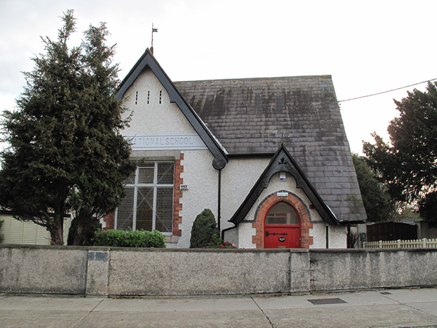 school122 yd
Explorer Tom School in Raheny North was built in 1875 and used to be a national school before becoming a pre-school. The gabled end bay looks like it’s ready for a bell to ring that hasn’t been heard in ages. Tell the bargeboards Tom says they’re doing a great job holding up the roof!
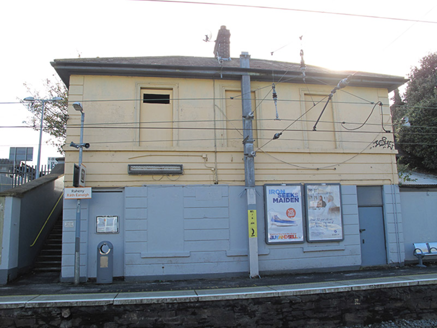 railway station166 yd
Explorer Tom Railway station in Edenmore is all dusty and disused since 1844, but Daniel O’Connell once rode past here! It’s got red brick chimneys that look ready to puff smoke. Take a peek at the neo-classical architraves if you’re passing.
 St Anne's ParkPark · 1322 yd
Explorer Tom Dublin gave this park a river, a pond and a thousand ways to get distracted. St Anne's Park has a little river with a name worth saying aloud: the Naniken runs through it, and a diversion feeds the duck pond. The Guinness family began assembling this land in 1835 and filled their estate with gardens and playful follies. Dublin bought a large part in 1939, turning the old private ground into a public park. A thousand tree varieties? I can reliably identify a Christmas tree, and even that depends on December. Look for the Millennium Arboretum, begun with a thousand tree varieties. I could probably identify twelve on a good day, and several of those by the labels. The former great house is gone, but the avenues, garden buildings and rose beds still show how much work once went into arranging the landscape. There is room here for a long walk without paying to enter, plus paths and playing fields for people with more energy than me. Follow the Naniken for a while; it is a better guide than my sense of direction.
 Holm Oak1369 yd
Explorer Tom Holm Oak in County Dublin is surrounded by seagulls who are constantly telling it bad jokes and stealing its acorns. The birds think they run the place now and the tree is too polite to argue back. Have a look and decide if I was lying about the bird invasion.
 St. Anns WellHoly well · 1463 yd
Explorer Tom St. Anns Well in County Dublin sits at the base of a ridge in St. Anne's Park. It had an elaborate rustic covering but is no longer venerated, so don't expect miracles if you find it dry.
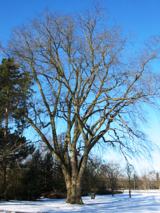 Wych Elm1.4 mi
Explorer Tom Wych Elm in County Dublin was planted by a builder who was probably thinking about lunch while he dug the hole. It’s got that rugged, old-school charm that makes it look like it’s been standing there since the invention of the wheel. Dare you to say hello to it out loud, but do it quietly so it doesn’t get embarrassed.
 Battle of ClontarfMajor battlefield · 1.5 mi
Explorer Tom Battle of Clontarf in County Dublin is where Brian Boru and the Vikings had their big noisy argument over a thousand years ago. The ground probably still remembers who kicked whom, so step gently or you’ll wake them up.
 Clontarf CastleCastle, Anglo-Norman masonry castle · 1.8 mi
Explorer Tom Clontarf Castle would take its lotto win and buy a real Norman keep because the current one is just a Tudor-Revival house with a mock tower attached, which feels like wearing a costume to a funeral for a castle that was originally built by Adam de Phephoe in the twelfth century. Best enjoyed with a bag of chips and no plans.
 Kilbarrack CemeteryCemetery · 1.8 mi
Explorer Tom Kilbarrack Cemetery is sitting by the sea, which means the wind is always trying to blow your hat off. I’d check if any of the headstones are wearing sunglasses; it gets pretty bright down there.
 Clontarf Castle HotelVisitor information · 1.8 mi
Explorer Tom Clontarf Castle Hotel has been around since 1936, so it's seen better days and definitely worse weather. The picture shows it looking a bit tired, so maybe the ghost of the original owner is just napping in the lobby.
 Graveyard in Kilbarrack LowerGraveyard · 1.8 mi
Explorer Tom Graveyard in Kilbarrack Lower was originally built right on the strand before they walled it off. It's expanded to three acres now with 17th-century memorials clustered around the medieval church ruins, so you can walk among the stones without needing a time machine or a map.
 Dollymount StrandBeach / strand · 1.9 mi
Explorer Tom Dollymount Strand in County Dublin is famous for the ridiculous smuggling story where someone tried to hide a whole van of cheese under the sand. It’s actually where most Dubliners learn to drive, which explains why half the city smells like burnt clutch and fear. Have a wander and a wonder, but keep an eye out for novices who are about to reverse into your foot.
More things to do in County Dublin · All of County Dublin

What do you know about this place?Tap to add a comment or ask a question