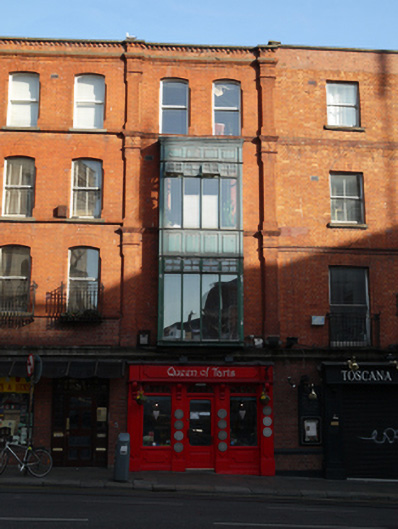
What is recorded here
Attached two-bay four-storey commercial and residential building, built c.1880, having two-storey box bay window to first and second floors and recent timber shopfront to front (south) elevation. Now in use as restaurant, with apartments above. Flat roof hidden behind red brick parapet having dentillated render coping. Render and moulded red brick cornice over red brick walls, laid in Flemish bond, with chamfered red brick pilasters and moulded string courses. Carved stone cornice to ground floor. Segmental-headed window openings to third floor having chamfered reveals, continuous moulded brick sill course and one-over-one pane timber sliding sash windows. Flat roof, timber panelling and timber casement windows to bay window. Square-headed door and window openings to shopfront having recent fittings and scrolled console brackets. Situated on north side and west end of Cork Hill.
This building retains much of its early fabric, seen particularly in the brickwork and windows, which adds to the character of the streetscape. Moulded red brick is used to good effect to articulate the facade. Built as a single structure with its neighbor to the west, it shares parapet height, fenestration, detailing and construction materials, lending a sense of continuity to the group. Cork Hill is a significant historic thoroughfare with some fine eighteenth-century buildings and stone paving. As the principle entrance to Dublin Castle, Cork Street has been the backdrop to many important historical events. It is at the centre of two major urban interventions, Dame Street which was laid out by the Wide Street Commissioners in 1778 and Lord Edward Street which was created in in 1886 to connect Cork Hill to Christ Church Cathedral.
This does not grant access. Most recorded buildings are privately owned; view them only from public ground unless the owner allows entry.
Places near here
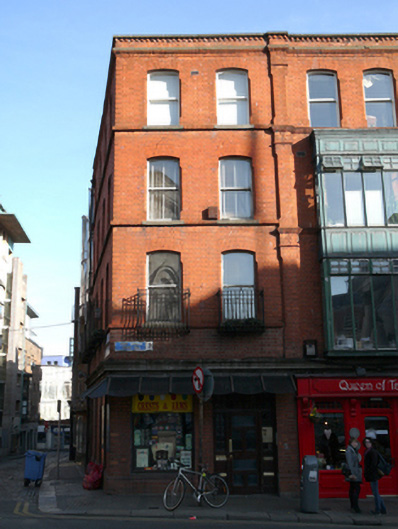 Crests and Armsapartment/flat (purpose-built) · 7 yd
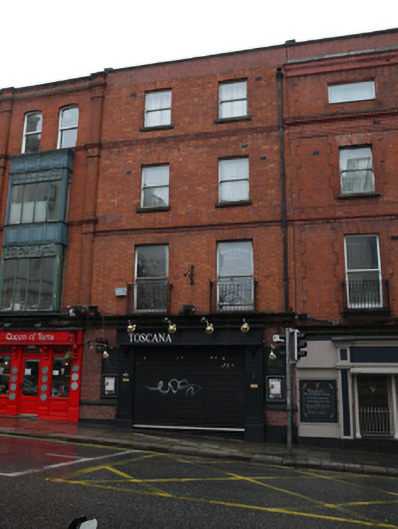 Toscanahouse · 8 yd
 Newcomen BankVisitor information · 30 yd
 Dublin City HallHeritage attraction · 51 yd
 Tourist Information CentreVisitor information · 89 yd
 CastleCastle, Anglo-Norman masonry castle · 127 yd
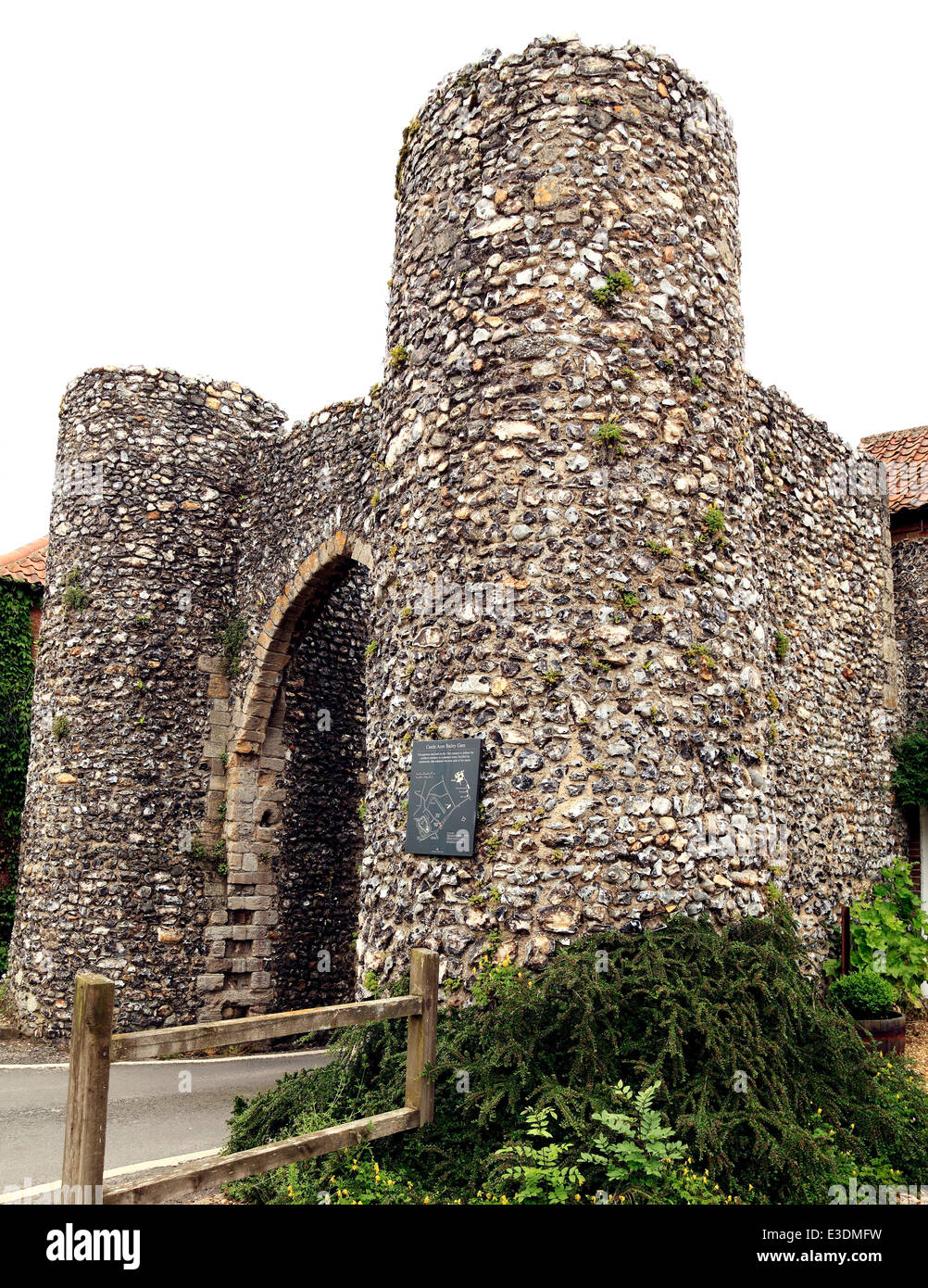 Town defences in Unknown TownlandTown defences · 127 yd
 Habitation site in Unknown TownlandHabitation site · 155 yd
 Dublin Castlegates/railings/walls · 168 yd
 Battle of DublinMajor battlefield · 202 yd
 John FieldMemorial · 218 yd
 Special Olympics MemorialMonument · 254 yd
Other information
Photo: National Inventory of Architectural Heritage · Website use allowed for educational or private purposes with source credit