
What is recorded here
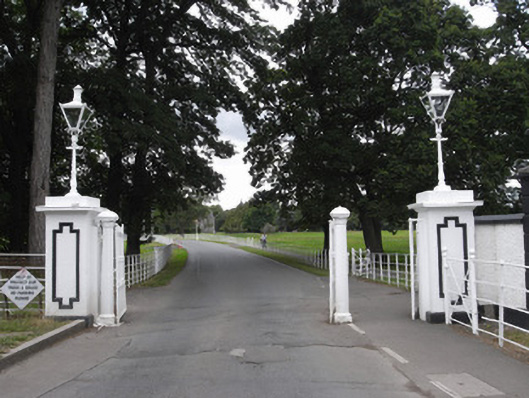
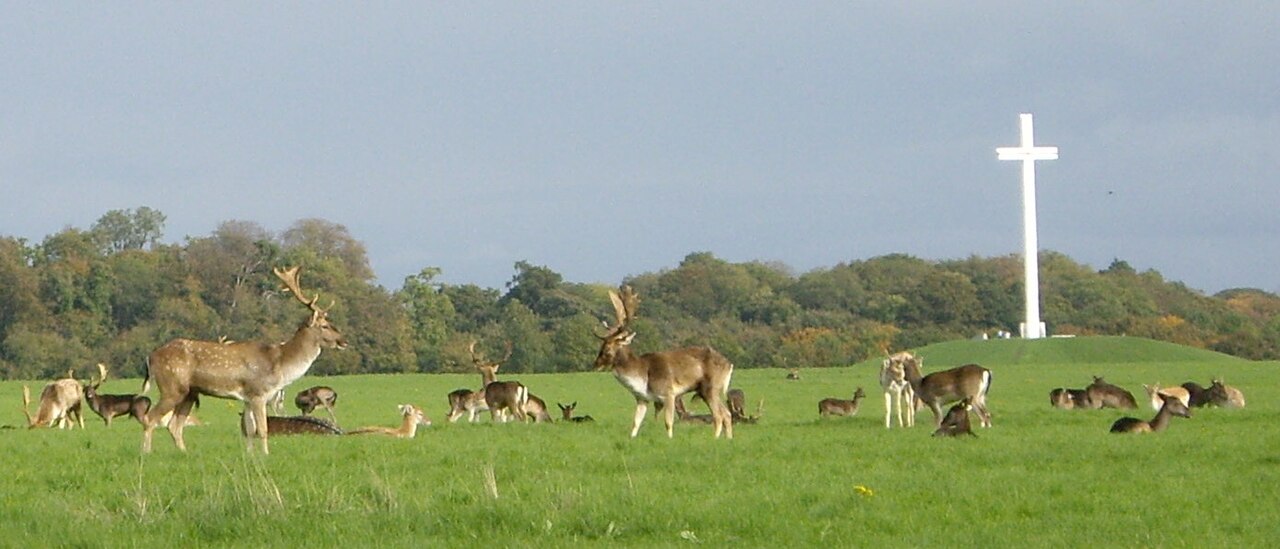
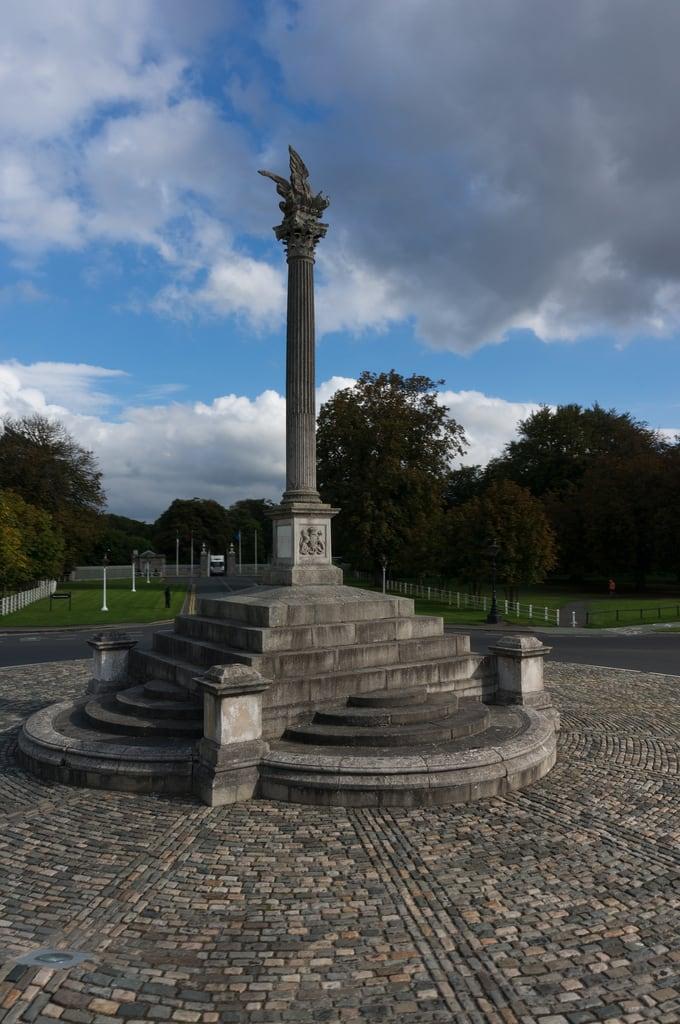
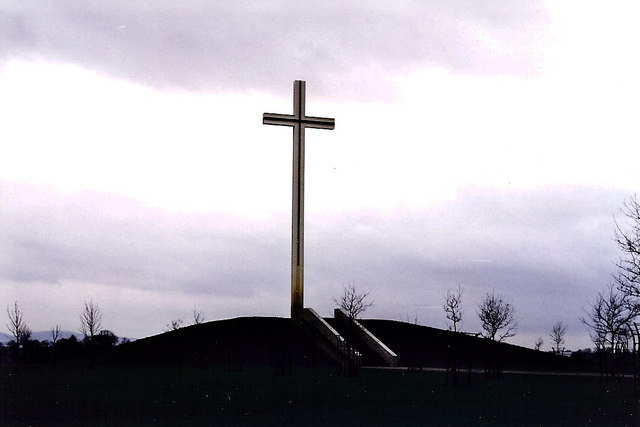
Park developed from 1662 as royal deer park. Formerly containing over 2,000 acres (800 hectares), reduced to 1,752 acres in 1680. Masonry boundary wall, approximately eleven kilometres in length and three metres high, erected after commissioning of park in 1644, likely rebuilt in eighteenth and nineteenth centuries, and having distinguished gateways and lodges at various points along periphery and to various buildings and groups of buildings within park. Substantial areas of open parkland, woodland and small lakes, with sports grounds in southeast quadrant. Main road through park, Chesterfield Avenue, realigned c.1840, having column at crossroads about half-way along, topped by sculpture of phoenix (although park likely named after well – fionn-uisce (Irish, meaning ‘bright water’). Interior of park has number of demesnes containing important groups of buildings, including Áras an Uachtaráin (formerly Viceregal Lodge), Garda Headquarters (formerly headquarters of Royal Irish Constabulary), Ordnance Survey Ireland (originally built as Mountjoy Barracks) and Dublin Zoo. Several smaller demesnes, including US Ambassador’s residence (formerly Chief Secretary’s Lodge), St Mary’s Hospital (formerly Royal Hibernian Military School), Director of Public Prosecutions (formerly Royal Military Infirmary), Ashtown Castle (late medieval tower house, extended to accommodate Under-Secretary’s Lodge, later Papal Nunciature), lodges associated with park officials (bailiff, keeper), and several other buildings. People’s Garden at southeast end of main road. To southwest of People’s Garden are Wellington Testimonial (Monument), Magazine Fort, and Papal Cross ( 1979. Megalithic single-burial tomb of Neolithic date at Knockmaree at south side, and traces of seventeenth-century star fort towards centre of park. Railway line, connecting Heuston and Connolly stations, runs under southeast end of park.
Phoenix Park, an important historic designed landscape, is reputedly Europe's largest enclosed urban park. It was laid out in the mid-late seventeenth century as a royal deer park, being commissioned by the viceroy James Butler, Duke of Ormonde. It was opened to the public, 1747, by Lord Chesterfield, making it Ireland's oldest public park. The many important groups of buildings, such as Áras an Uachtaráin and Dublin Zoo, each enclosed by their own boundaries and good planting, make it an ensemble of very considerable interest and importance. This is complemented by the presence of some significant isolated structures and monuments, such as the eighteenth-century Magazine Fort, nineteenth-century Wellington Testimonial, and twentieth-century Papal Cross. The varied landscapes within the park, ranging from open parkland to woodland and gardens, are of considerable value for recreation, and for fauna and flora. The extensive stone wall and the accompanying fine metal gates that enclose the park are an intrinsic part of its fabric.
This does not grant access. Most recorded buildings are privately owned; view them only from public ground unless the owner allows entry.
Places near here
 The Phoenix Monumentmonument · 1 yd
 Holy well in Unknown TownlandHoly well · 106 yd
 Phoenix Park Visitor Centredemesne walls/gates/railings · 372 yd
 Phoenix ParkPublic park · 382 yd
 IndicatedMound · 611 yd
 Oldtown WoodWood · 1013 yd
 Southern white rhinocerosHeritage attraction · 1127 yd
 Martin Savage Memorial MonumentMonument · 1512 yd
 Horse-chestnutHorse-chestnut · 1567 yd
 Islandbridge LodgeVisitor information · 1662 yd
 Graveyard in Unknown TownlandGraveyard · 1.0 mi
 The Papal Crossmonument · 483 yd
Other information
Photo: National Inventory of Architectural Heritage · Website use allowed for educational or private purposes with source credit