What is recorded here
Carrigafoyle (Carraig an Phoill) Castle (KE002-045----) was built in the late 15th, early 16th century by Connor Liath O'Connor Kerry, the son of John O'Connor Kerry who built the nearby Lislaughtin Abbey [KE003-016----]. It consists of a single tower of five storeys, which rises to a height of over 24.4m and is constructed of small stones neatly laid. It measures 9.5m x 17.8m externally and the walls are over 2m thick. Originally the castle formed an island and was fortified by two curtain walls. The inner one, which enclosed the castle, had rounded turrets, while the outer wall, which enclosed three sides to the N, S, and W had square towers at the corners. The area between the bawns was used as a dock for boats. The inner wall has completely disappeared, but the landward side of the outer wall can still be seen. It measures 21m long and 2m thick before extending into the square turret measuring 16m x 4m, which would appear to have been used as a dovecote (KE002-045002-).
The illustration in Pacata Hibernia (1633) shows this unique defence system of Carrigafoyle Castle. In 1580 John O'Connor fortified his castle against the Elizabethan forces under Sir William Pelham, with a garrison of 50 Irish and 19 Spaniards under the command of an Italian engineer named Julio. However, it was during this period that the castle saw the first effective use of artillery fire-power in Kerry. Pelham set up cannons on the mainland and on ships on the Shannon, and so bombarded the castle that it was stormed after only two days. All survivors were hanged or put to the sword. O'Connor surrendered it in 1600 to Lord President Carew, after which it was granted by the Crown to Sir Charles Wilmot. O'Connor Kerry was given land in Clare by the Earl of Thomond but in 1601, about the time of the Kinsale landing, he retook the castle, slaying the English garrison. O'Connor reoccupied the castle during the Cromwellian war and it was one of the last castles to fall. By 1649 the castle was finally destroyed by the Cromwellians. Carrigafoyle and much of the barony of Iraghticonnor were confirmed to the Provost and Fellows of Trinity College, Dublin, by letters patent dated 14 September 1666.
Castle described by Salter (2004,99) as follows; 'This fine tower partly standing 23m high lies on the shore of Ballylongford Bay. The tower is built of small stones neatly layered. It was surrounded by an inner bawn with round turrets, now destroyed, with a dock for boats between it and an outer bawn on the landward side, the loopholed 2m thick west wall of which survives, with a chamber in the chamfered-off NW corner. The tower is now only reached from the landward side because of the collapse of the upper parts at this end'.
Carrigafoyle Castle is a national monument in State care (no. 349).
See attached illustrations of Carrigafoyle Castle and bawn taken from Pacata Hibernia first published in 1633
Compiled by: Caimin O'Brien
Date of upload: 31 December 2021
Carrigafoyle Castle was built in the late 15th or early 16th century by Connor Liath O'Connor Kerry, a member of the influential O'Connor Kerry family. It is remembered as a significant medieval stronghold in the region and for its strategic role in the local Gaelic lordship.
This remains an important historical record, but the official description says the monument is no longer visible or has been destroyed. The monument record does not grant public access. Check the route and ask the landowner before entering private land.
- What survives
- No visible remains or recorded as destroyed
Places near here
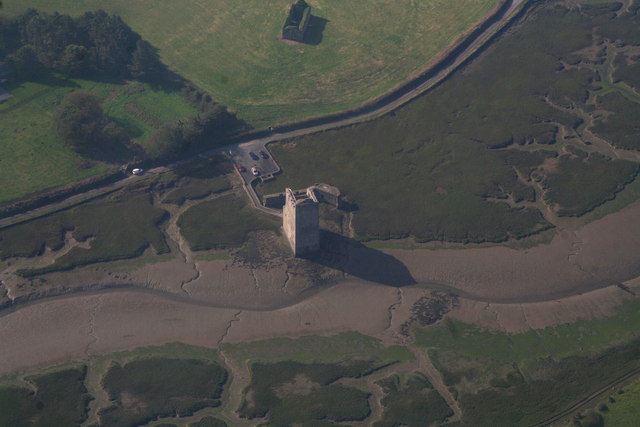 Carrigafoyle Cas. (in ruins)Castle, tower house · 19 yd
 Carrigafoyle CastleCastle · 22 yd
 Siege of Carrigafoyle Castlesiege · 125 yd
 Church (in ruins)Church · 139 yd
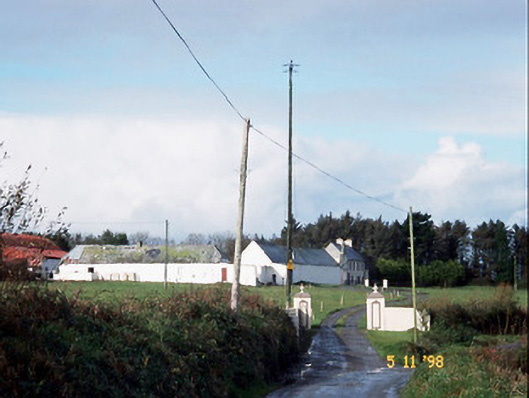 Kilelton Farm Yardfarmyard complex · 171 yd
 Causeway in Carrig IslandCauseway · 286 yd
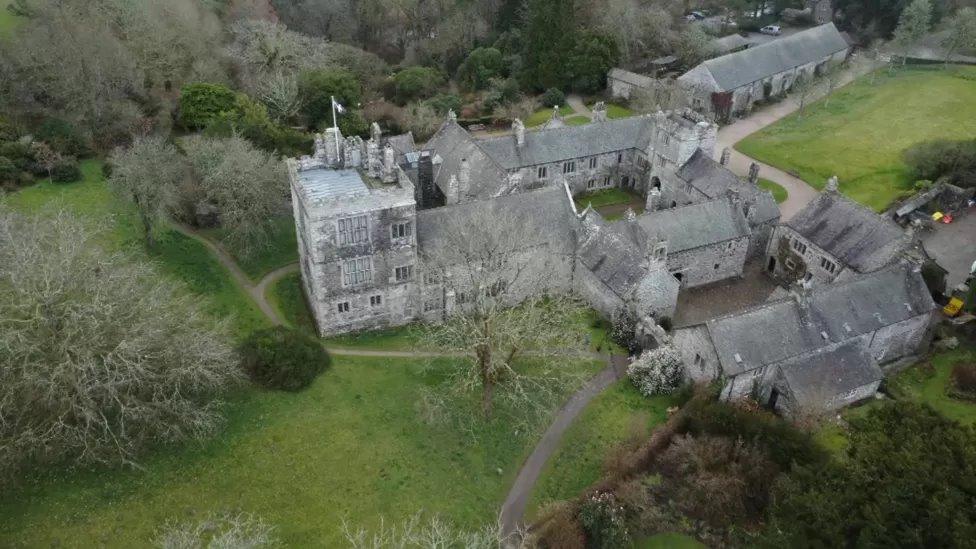 ToberscatteryHoly well · 545 yd
 Carrig IslandIsland · 587 yd
 Fawley's PointHeadland · 3.0 mi
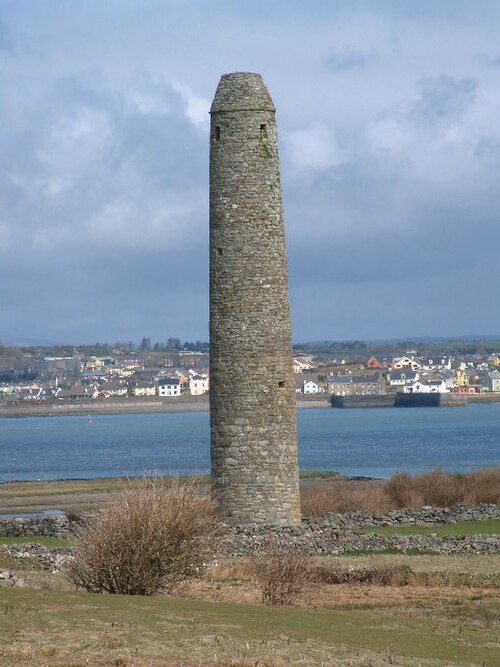 Scattery IslandIsland · 3.0 mi
 Scattery Island Visitor CentreVisitor information · 3.2 mi
 Mall PointHeadland · 3.4 mi