DDiscover AloneMapAbout

Oratory

Chapel

The monument record does not grant public access. Check the route and ask the landowner before entering private land.

What do you know about this place?Tap to add a comment or ask a question

What you write will be public.

What is recorded here

Annotated 'Oratory' on the Cassini ed. OSi 6-inch and depicted as a rectangular structure aligned NE-SW on the demesne of Lucan House which stands 365m to the NE and 25m S of the River Liffey. Known as St. John's Oratory this is an 18th century bath house (Daly 1957,18). The well was described by Lewis (1837) as;…

Read the whole record
Annotated 'Oratory' on the Cassini ed. OSi 6-inch and depicted as a rectangular structure aligned NE-SW on the demesne of Lucan House which stands 365m to the NE and 25m S of the River Liffey. Known as St. John's Oratory this is an 18th century bath house (Daly 1957,18). The well was described by Lewis (1837) as; 'within the grounds is a monument to one of the Sarsfield family, near which are an ancient oratory, dedicated to St. John, and thickly covered with ivy, and a holy well [DU017-020001-]'. In 1547 the Calendar of Patent and Close Rolls recorded the surrender, 'of the monastery or house of Saint Thomas the Martyr [DU018-020051-], near Dublin, commonly called "Saint Thomas is courte," of the Order of Saint Augustine, by Henry Duffe, Abbot' which included 'Chapell Midway Lucan [DU011-022001-], Saint Katherine's, near the Salmon Leap, and Tankardstown; and the advowsons of Kilsalghan and Lucan' (Cal. pat. rolls 38 Henry VIII, 134). This oratory may be the same building that was described as 'The old walls of a Chappell' listed in the 1680 survey of the lands of Lucan where it is recorded as standing on land parcel no. 52 (NLI MS 39/256/1). Described by Daly (1957, 18-19) as; 'we come to one of the of the 18th century sulphurous spas, that at Lucan. It was discovered in 1758 in the demesne of Agmondisham Vesey a mile from his residence, a little to the north of the chalybeate spring in the same neighbourhood, formerly of some repute but by then neglected. It is possible that this latter spring was that which supplied water to the bath house, which in Mrs. Delaney's was next to Mrs. Vesey's dairy; this bath house was thought to have been originally an oratory. There might also be here with the holy well, Tobernaclugg, which in time past had been dedicated to St. John. The Lucan well was almost 7 feet [2.1m] long, 2 feet [0.6m] broad and 15 inches deep, yielding a yielding a large supply of water. it was situated on the brink of the river Liffey, which in times of flood and winter months overflowed the well; this however Mr. Vesey, to a great extent, prevented by the erection of a wall. It was reported that the Lucan waters possessed virtues beneficial in cutaneous and other similar diseases; further, that the muddy substance applied in cases of chronic rheumatism and paralytic limbs, leprosy, herpes, impetigo, itch and ringworm proved successful. A story is told of a man who suffered from loose teeth and sore gums; he was told to wash out his mouth with the water and then drink some of it. He did all this and then declared that he was completely cured. It would appear that the water was introduced into Steeven's Hospital prior to 1766 for the cure. Rutty's opinion of the water was that "it tasted of a boiled egg and when strongest of a putrid one; it smelt like a solution of sulphur." This was only to be expected, seeing that it was a sulphur spa. The spa continued to be held in high esteem until about 1845, when that capricious jade, fashion, whose tastes can never be commanded, withdrew her favour and the attendance'. Rutty, J. 1757 The Mineral Waters of Ireland. Dublin. NLI MS 39/256/1 National Library of Ireland, An accompt of the survey of the lands of Lucan according to the meares and bounds showed Mr Abra[ham[ Carter. De Vesci Papers.

From the National Monuments Service (Archaeological Survey of Ireland) record DU017-020

Places near here

Photo credits
  • Maker not stated on source page, wiki2.org
  • Maker not stated on source page, en.wikipedia.org
  • National Inventory of Architectural Heritage
  • Ashnazgul, Wikimedia Commons · CC BY-SA 4.0
  • Knocko, Wikimedia Commons · CC BY-SA 4.0
  • Maker not stated on source page, www.merrionhotel.com
  • Maker not stated on source page, ie.polomap.com
  • Maker not stated on source page, tr.pinterest.com
  • jwd, Geograph · CC BY-SA 2.0
  • Maker not stated on source page, allthatsinteresting.com
Church (in Ruins)Castle, unclassified · 405 yd

Explorer Tom Lucan Demesne has a castle that is actually a church tower, which is either a mistake or a very bold architectural…

Castle & Church (in Ruins)Church · 514 yd

Explorer Tom Castle & Church in Lucan Demesne is basically a church with a residential tower, which is very practical if you’re…
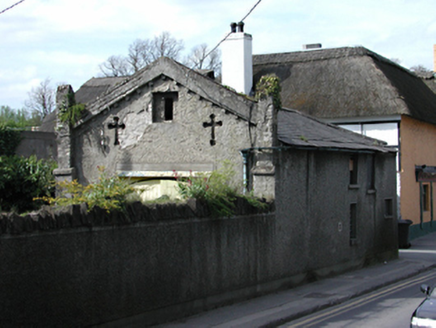
outbuilding567 yd

Explorer Tom Outbuilding in Lucan and Pettycanon is showing off its façade like it just won an award for character. It’s clearly…

bridge605 yd

Explorer Tom Lucan and Pettycanon bridge is so handsome that Saint Patrick himself might have stopped to tie his boots while…
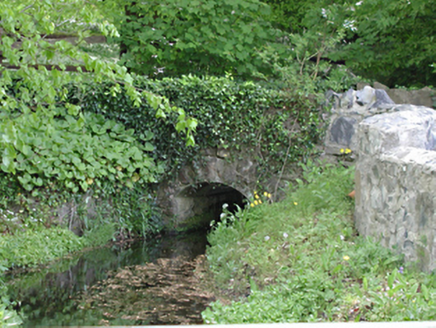
foot bridge608 yd

Explorer Tom Foot bridge in Lucan was built by someone who was definitely thinking about dinner while laying the stones. It adds…

Lucan Methodist ChurchChurch/chapel · 612 yd

Explorer Tom Lucan Methodist Church has a hidden message in its stones that says: 'Please stop singing off-key in the nave.' It’s…
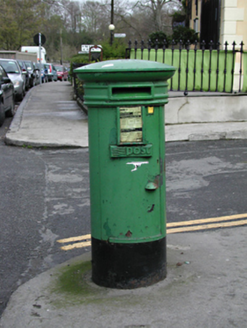
post box630 yd

Explorer Tom Post box in Lucan and Pettycanon is involved in a serious fairy dispute over parking rights with a very small, very…
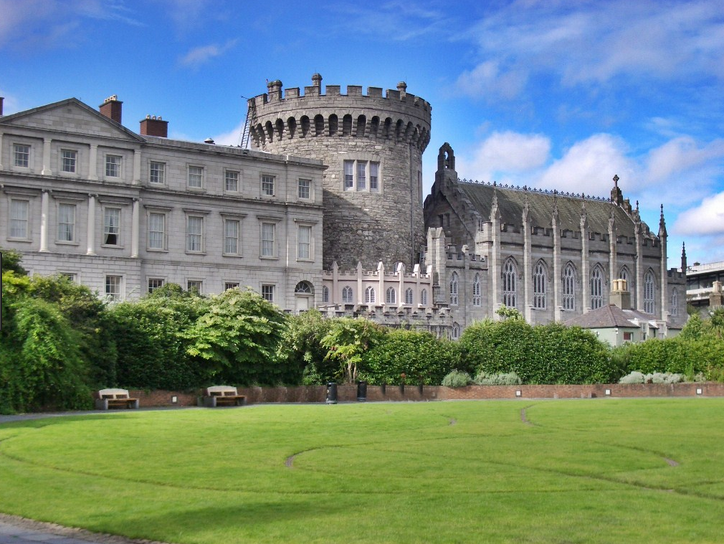
CastleCastle, unclassified · 635 yd

Explorer Tom Castle in Lucan AND Pettycanon would say in a job interview that it has excellent references and a very stable career…

New Esker CemeteryCemetery · 1079 yd

Explorer Tom New Esker Cemetery in County Dublin is entirely run by a very serious terrier who barks at anyone who doesn’t have a…

Fairy fort / earthen ringfort in ColdblowFairy fort / earthen ringfort · 1225 yd

Explorer Tom Fairy fort / earthen ringfort in Coldblow overlooks the River Liffey, which must give the fairies a lovely view of the…

Griffeen Valley WalkWalking route · 1.1 mi

Explorer Tom Griffeen Valley Walk in County Dublin has strict rules that say you must whisper because the trees are very shy and get…
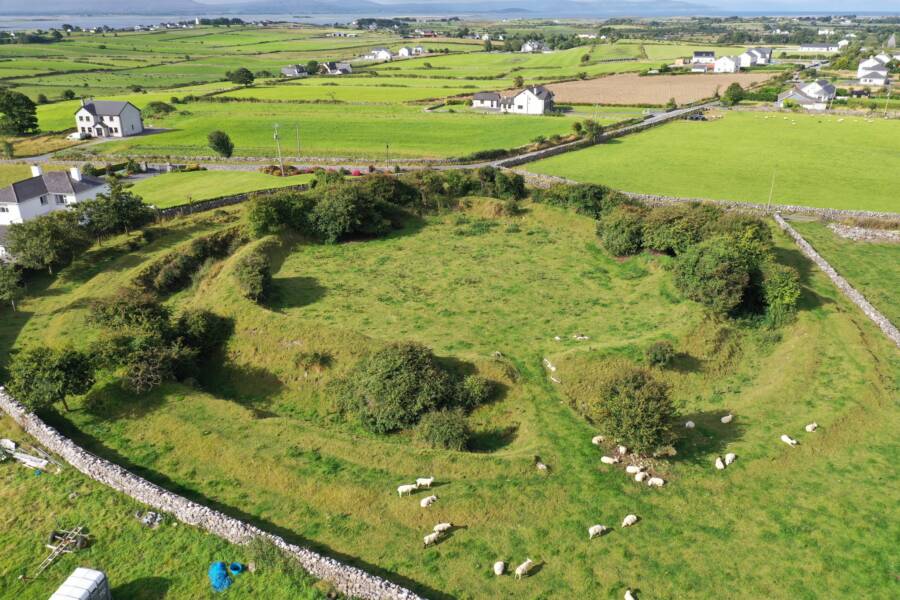
Fairy fort / earthen ringfort in TobermacluggFairy fort / earthen ringfort · 1.1 mi

Explorer Tom Fairy fort / earthen ringfort in Tobermaclugg: A road construction cut across the northeast quadrant of this cropmark…

More historic places in County Dublin · All of County Dublin

Add to this placeAdd a picture Add a detailed tip Add a story

Explore the map1,095,414 places to discover

Next place · or swipeChurch (in Ruins)