What is recorded here
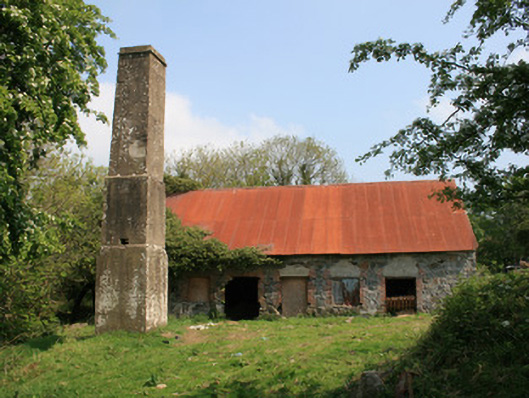
Detached water-powered flax mill, built c.1880, with associated detached concrete chimneystack built c. 1910. Now disused. Multiple-bay single-storey water-powered flax mill, having three bays to east elevation and five to west, aligned north-south on south bank of river. Pitched replacement corrugated-iron roof and coursed rubble limestone walls with concrete block repairs and some collapsed sections. Square-headed window and door openings, with brick block-and-start surrounds, some boarded up with plywood. Camber-headed door opening to centre of south elevation. Cast-iron waterwheel to north gable, having high breast-shot feed from concrete trough. Three-stage chimneystack situated west of flax mill, constructed of cement-rendered mass concrete. Flue hole in middle stage, on west face. Cast-iron scutching stock to north-east inscribed 'A & W Smith & Co/ Woodside Works/ Paisley'. Located south of early nineteenth-century corn and flax mill, mill race flowing from mill to north.
Although now gutted of plant and machinery, this late nineteenth-century flax mill survives as a reminder of the importance of the flax industry in County Monaghan. The northern province in general had enjoyed a strong linen trade from the late seventeenth century, serving the increasing demand for this product from England. The chimneystack indicates steam powered usage and was, according to the owner, originally enveloped by a corrugated-iron shed which contained a steam engine and boiler, no traces of which survive. This mill is primarily of technical interest owing to the survival of its water-wheel. It is also of historical interest as it clearly shows that scutching continued into the mid-twentieth century, albeit augmented with steam power. The combination of restrained low mill building with tall slightly tapered stack affords many interesting viewpoints and makes this an attractive and appealing site.
This does not grant access. Most recorded buildings are privately owned; view them only from public ground unless the owner allows entry.
Places near here
 mill (water)mill (water) · 354 yd
 bridgebridge · 1319 yd
 Crannog in MoneyvolanCrannog · 1700 yd
 Fulacht fia in GrigFulacht fia · 1.3 mi
 John Francis GreenMemorial · 1.8 mi
 Monaghan WayWalking route · 1.9 mi
 The CrescentMemorial · 2.2 mi
 Harper's IslandIslet · 2.5 mi
 Bawn in OnomyBawn · 2.6 mi
 Blaney CastleCastle · 2.6 mi
 Garmany's IslandIslet · 2.7 mi
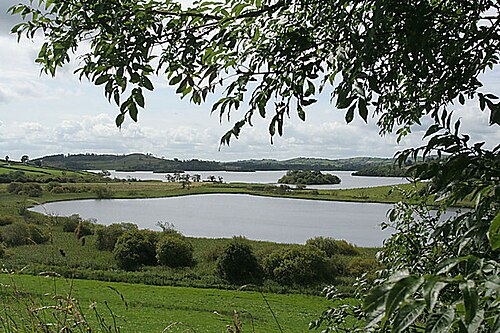 Lough MucknoLake and park landscape · 3.0 mi
Other information
Photo: National Inventory of Architectural Heritage · Website use allowed for educational or private purposes with source credit