What is recorded here
Clear water closed the seam, erased the mark, and refused every later attempt to cut through. That is the shape of the loss: not a forgotten room but a living boundary. I misread the request because i treated a visible place when the warning was about a hidden one. The chamber may still exist, but it will not tolerate being taken.
According to Harkin (1893), there was a 'Giant's Grave', 30 feet (c. 9.15m) long, on the island. Borlase (1897) was here in 1892, when two stones 'sunk in the ground' and 30 feet (c. 9.15m) apart were pointed out to him as representing the extremities of a 'Giant's Grave', no other trace of which remained. He described the location as a long area of sloping turf under the peak of a rocky eminence forming the seaward extremity of the island. On the rocky summit above this spot there was 'a small cavity or cist' known as 'Dermot and Granny's Bed', which Borlase considered may have been a natural feature.
Despite an extensive search it has not been possible to find these sites. Their nature remains uncertain.
Harkin 1893, 67; Borlase 1897, 238-9, Boylagh no. 1; Crozier 1957, 65 (island of Omey recte Owey).
The above description was published in the 'Survey of the Megalithic Tombs of Ireland. Volume VI, County Donegal.' Compiled by: Eamon Cody (Dublin: Stationery Office, 2002).
Date of upload: 22 September 2008
Megalithic tomb, likely a portal dolmen dating to the Neolithic or early Bronze Age. Its significance lies in its possible association with a 'Giant's Grave' tradition, reflecting early folklore and funerary practices in the region.
The monument record does not grant public access. Check the route and ask the landowner before entering private land.
- What survives
- Recorded monument
Places near here
 UaighIsland · 28 yd
 Cliffs of OweyPublicly named cliff or headland · 645 yd
 An ChruitIsland · 1.9 mi
 St. Bridgets WellsHoly well · 2.3 mi
 Rinnalea Point / Na Reanna LiathaHeadland · 2.4 mi
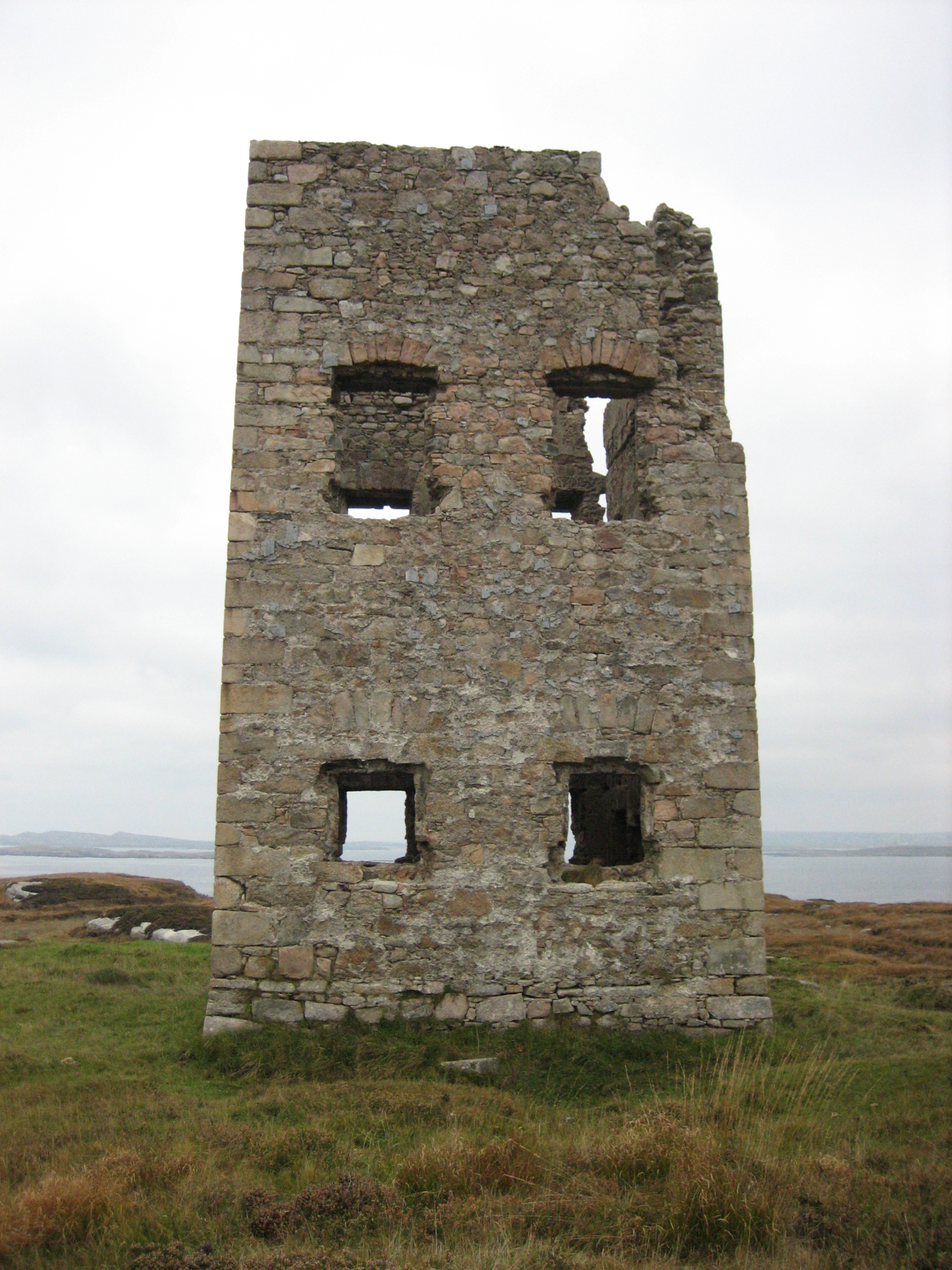 Mullaghderg Signal Towersignal tower · 2.7 mi
 Saint Mary's Catholic Churchchurch/chapel · 3.2 mi
 Altar (Site of)Penal Mass station · 3.5 mi
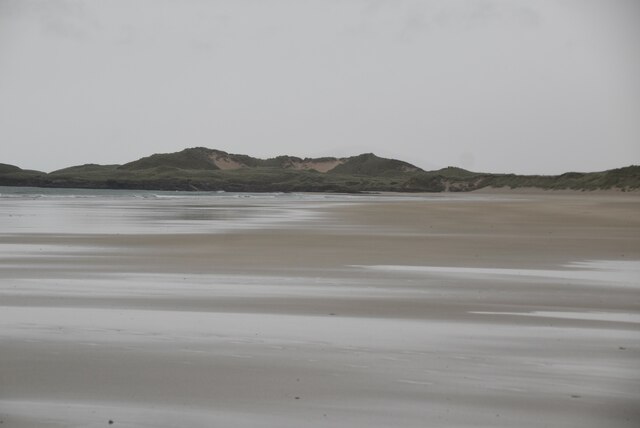 CarrickfinnOfficial bathing water · 4.1 mi
 Shipwreck beachBeach / strand · 4.4 mi
 Near beachBeach / strand · 4.7 mi
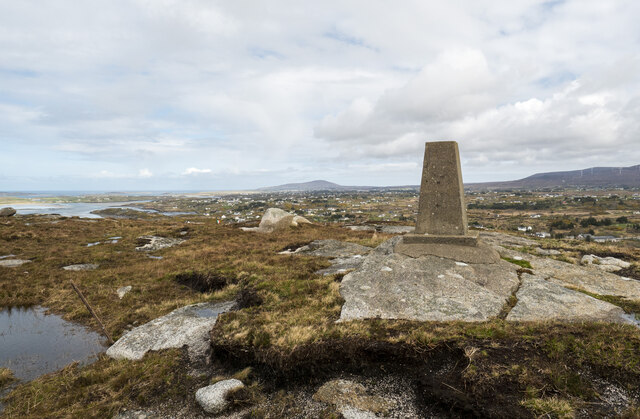 Annagary HillMountain / peak · 5.8 mi