What is recorded here
In the car park at the rear of the town hall in Killarney. A circular well (diam. 1.1m; D 2.03m) enclosed by a stone-built structure with a modern slate roof and an iron gate. Steps lead down c. 0.75m from the ground to the well water (D 0.1m). The base of the well is stepped-in to form a basin (diam. 0.95m; D 0.4m). Some small stones and coins have been thrown into the well. A commemorative plaque at the well reads: 'St. Mary's Well, a place of pilgrimage since 1302, reputed for baptisms and cures over long years'. The well is also known locally as 'Lady's Well'. The well was visited annually on the 25th day of March (the feast of the Annunciation) and the 15th day of August (the feast of the Assumption) (O'Sullivan 1969). A photograph, taken in the mid-1930s, shows pilgrims during 'rounds' at the well on August 15th (see Ó Luanaigh 2001, 26). This is one of three holy wells in Killarney (see KE066-067----, KE066-071----). Folklore collected from the Monastery School, Killarney, recorded the following tradition about this well; 'Saint Mary's well is situated behind the New Town Hall. It was called after the Catholic Church near it which is now a Protestant Church. It changed its source to the New Town Hall. It is there for five hundred years. It opens the 15th August. It is said there is no bottom to it. If anyone had a sore throat they would drink the water and become better. When the well is opened the people go in and say the rounds. There was once a man who was very wicked. He had a son who was very wicked too. One day the man went for the well. He said he would not pray. He saw a a fish below. He put his hand down to catch the fish. He slipped and fell in and his son saw him he jumped in t save his father but he could not and he fell in and he was drowned too. A long time ago there was a trout in the well. Anyone who saw the trout was cured from their illness. A man said he would catch the trout. He brought a net and when the trout appeared he caught him. When he was pulling up the net his hand fell dead to his side. When he tried to stand up, he could not, his legs and hand were paralysed. The trout changed into a stone, and remained a stone for ever. It can still be seen at the edge of the well' (The Schools’ Collection, Volume 0455, Pages 092-4;https://www.duchas.ie/en/cbes/4713250/4711344). See attached photographs of holy well courtesy of Amanda Clarke.
In the car park at the rear of the town hall in Killarney. A circular well (diam. 1.1m; D 2.03m) enclosed by a stone-built structure with a modern slate roof and an iron gate. Steps lead down c. 0.75m from the ground to the well water (D 0.1m). The base of the well is stepped-in to form a basin (diam. 0.95m; D 0.4m). Some small stones and coins have been thrown into the well. A commemorative plaque at the well…
From the National Monuments Service (Archaeological Survey of Ireland) record KE066-109
The monument record does not grant public access. Check the route and ask the landowner before entering private land.
- What survives
- Recorded monument
Places near here
Photo credits
- National Inventory of Architectural Heritage
- Marathon, Geograph · CC BY-SA 2.0
- EecherplazGinkgo06.jpg : Cayambe derivative work: Ginkgotree ( talk ), Wikimedia Commons · CC BY-SA 3.0
- Mike Murphy ( talk · contribs ), Wikimedia Commons · CC BY-SA 3.0
- Colin Park, Geograph · CC BY-SA 2.0
- Humphrey Bolton, Geograph · CC BY-SA 2.0
- Mike Searle, Wikimedia Commons · CC BY-SA 2.0
- Dumphasizer, Wikimedia Commons · CC BY-SA 2.0
- bdolicki, Wikimedia Commons · CC BY-SA 3.0
- Gillfoto, Wikimedia Commons · CC BY-SA 4.0
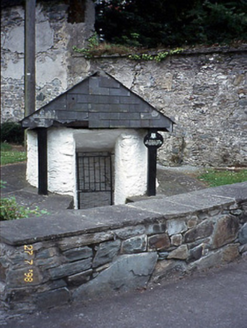 Saint Mary's WellHoly well · 17 yd
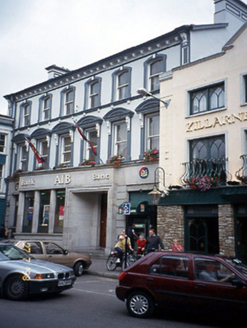 bank/financial institution47 yd
 Monsignor Hugh O'Flaherty MemorialMemorial · 135 yd
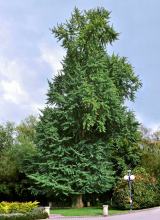 Ginkgo737 yd
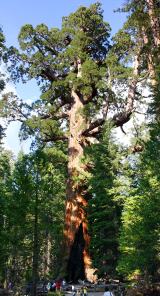 Giant Sequoia743 yd
 Circular WalkWalking route · 1465 yd
 River WalkWalking route · 1621 yd
 Flesk CastleCastle · 1.4 mi
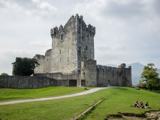 Ross CastleVisitor information · 1.4 mi
 Ross Castle (in ruins)Castle, tower house · 1.5 mi
 Ross CastleHeritage attraction · 1.5 mi
 Cherry IslandIsland · 1.6 mi
More archaeology and monuments in County Kerry · All of County Kerry
What do you know about this place?