
What is recorded here
Kiln in Cornarona helped turn black seaweed into the stuff used to bleach linen. Somewhere, a spotless tablecloth was receiving compliments while the seaweed that made it possible wouldn't have been allowed through the kitchen door.
Freestanding round-plan kelp kiln, built c.1860, now ruined. Coursed rubble granite walls with possible flue remaining to north-east. Second later rectangular kelp kiln to south-east situated on elevated bedrock and aligned east-west, having roughly dressed rubble granite walls with roughly dressed coping, and square-headed funnelled openings to short sides with roughly dressed granite lintels to side elevations, and paired square-headed openings to long sides.
Kelp kilns are a feature of Atlantic coasts, though they rarely survive intact. They would have been an important asset to the local community, providing valuable employment. Black seaweed was gathered and burnt in the kilns to produce kelp which was sold to agents and used in the bleaching of linen and the manufacture of glass. These kilns are well situated on an elevated area of bedrock and were located close to a small harbour to which the harvested seaweed would have been brought.
From the Buildings of Ireland (National Inventory of Architectural Heritage) record 30409109
This does not grant access. Most recorded buildings are privately owned; view them only from public ground unless the owner allows entry.
Places near here
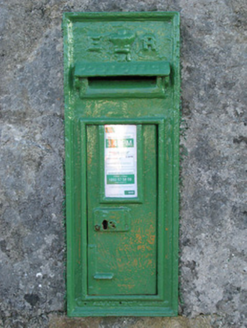 post box1.2 mi
 Coláiste CholmcilleSchool · 1.9 mi
 Tulach an LeathairMountain / peak · 2.3 mi
_-_geograph.org.uk_-_1290193.jpg/250px-An_Tr%C3%A1_Mh%C3%B3r,_An_Chathair_(Caher_beach)_-_geograph.org.uk_-_1290193.jpg "Photo: Graham Horn, Wikimedia Commons · CC BY-SA 2.0") An Trá MhórBeach / strand · 3.1 mi
An Trá MhórBeach / strand · 3.1 mi Máirtín Ó CadhainMemorial · 5.5 mi
_-_geograph.org.uk_-_1291076.jpg/250px-T%C3%B3in_an_Chnoic_(Tonacrick)_-_geograph.org.uk_-_1291076.jpg "Photo: Graham Horn, Wikimedia Commons · CC BY-SA 2.0") Ordnance TowerMartello tower · 5.5 mi
Ordnance TowerMartello tower · 5.5 mi Grave YardBurial ground · 6.1 mi
 Trá an Chaoráin MhóirBeach / strand · 6.2 mi
 Na Caoráin DubhaMountain / peak · 6.2 mi
 Trá an DóilínBeach / strand · 8.2 mi
 Black HeadHeadland · 8.9 mi
 Fanore BeachVisitor information · 10 mi
Pictures: National Inventory of Architectural Heritage; Graham Horn, Geograph · CC BY-SA 2.0; Graham Horn, Wikimedia Commons · CC BY-SA 2.0; Andrewmc, Wikimedia Commons · CC BY 4.0; Jonathan Wilkins, Wikimedia Commons · CC BY-SA 2.0; Gordon Hatton, Geograph · CC BY-SA 2.0; Suzanne Mischyshyn, Geograph · CC BY-SA 2.0; John M, Geograph · CC BY-SA 2.0
More historic places in County Galway · All of County Galway
What do you know about this place?