
Places near here
Photo credits
- Kenneth Allen, Geograph · CC BY-SA 2.0
- Kenneth Allen, Geograph · Creative Commons Attribution-ShareAlike 2.0
- Andreas F. Borchert, Wikimedia Commons · CC BY-SA 4.0
- Kenneth Allen, Wikimedia Commons · CC BY-SA 2.0
- Richard Webb, Wikimedia Commons · CC BY-SA 2.0
- Kmcnamee, Wikimedia Commons · CC BY-SA 4.0
 Mongorry HillMountain / peak · 987 yd
Explorer Tom Mongorry Hill swears by a superstition that says if you sneeze, you must buy a pint or it will rain all week. Locals…
 First Raphoe Presbyterian ChurchChurch/chapel · 1.1 mi
Explorer Tom The First Raphoe Presbyterian Church is showing off its fancy classical front with those weird engaged pilasters that…
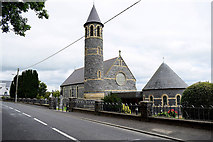 St. Eunan’s Catholic ChurchChurch/chapel · 1.1 mi
Explorer Tom St. Eunan’s Catholic Church is an 1877 Hiberno-Romanesque beauty that looks like a nod to the old monastic sites of the…
 Diamond BarPub · 1.2 mi
Explorer Tom Diamond Bar in Raphoe would tell a job interviewer it has excellent customer service and a slight smell issue. It sits…
 Cathedral1.2 mi
Explorer Tom St Eunan's Cathedral rises over Raphoe with a tower that seems determined to make sure nobody misses the town, however…
 Raphoe Cathedral Carved LintelStone sculpture · 1.2 mi
Explorer Tom Raphoe Cathedral Carved Lintel holds a ninth-century snapshot of the Arrest in the Garden, with St. Peter slashing an…
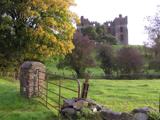 PalaceHouse, fortified house · 1.3 mi
Explorer Tom The Palace in Raphoe Demesne is a ghost with a very specific birth year of 1637. Bishop Leslie spent a fortune building…
 Battlefield in Tully (kincraigy Ed),glenmaquin Lower,roosky (castleforward Ed)Battlefield · 1.9 mi
Explorer Tom Tully, Glenmaquin Lower had a fox that took charge of the whole operation once, probably because it was smarter than…
 Oakfield ParkPark · 2.0 mi
Explorer Tom Oakfield Park in Donegal once had a resident matchmaker who knew every single heartbreak and happy ending happening…
Battle of GlenmaquinBattle · 2.2 miExplorer Tom Battle of Glenmaquin would tell its younger self to stop caring so much about the Crown victory and just enjoy the mud…
 Páirc Naomh Muire, St. Mary's GAA, ConvoyGAA ground · 2.8 mi
 Carnowen HillMountain / peak · 4.1 mi
Explorer Tom Carnowen Hill has a secret it would tell after a few pints, but it never gets drunk because it’s too busy watching the…
More historic places in County Donegal · All of County Donegal

What do you know about this place?Tap to add a comment or ask a question