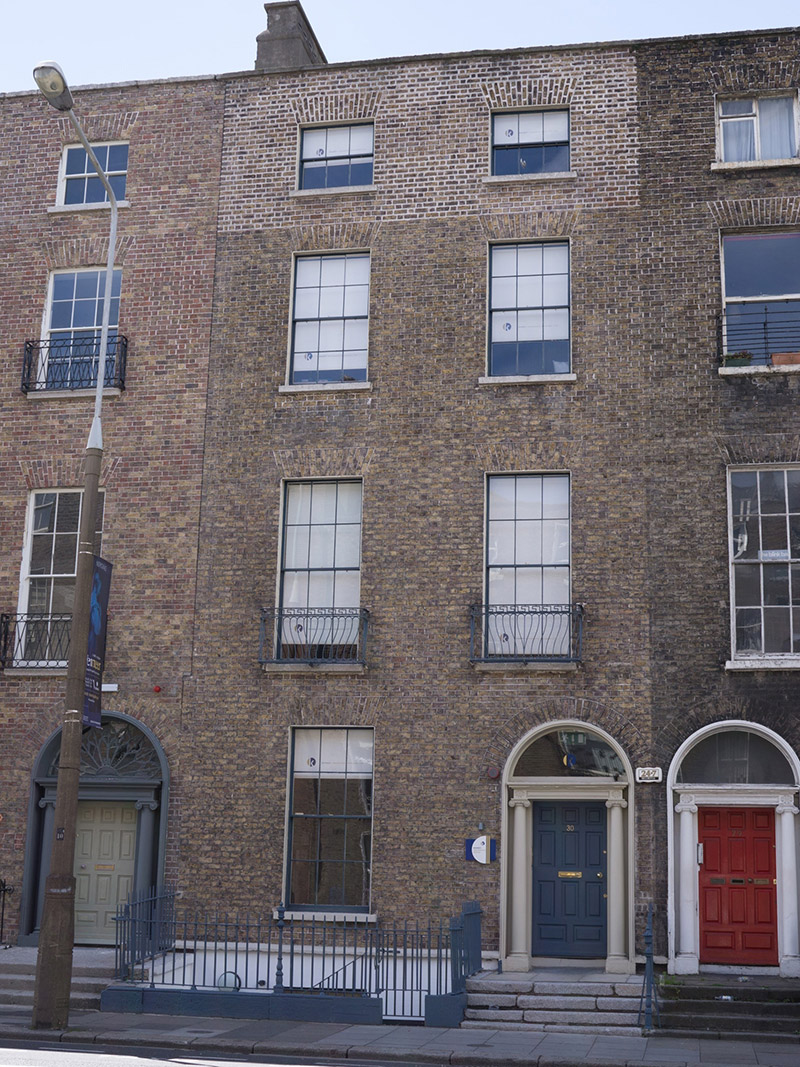
What is recorded here
Terraced two-bay four-storey former house over basement, built c. 1810, now in use as offices and apartments. M-profile hipped slate roof concealed behind brown brick parapet with granite coping. Brown brick chimneystacks having clay pots. Brown brick, laid in Flemish Bond, to walls, with repointed upper floor and cut granite plinth course over lined-and-ruled rendered walls to basement. Square-headed window openings having granite sills and rendered reveals, with three-over-three pane, six-over-six pane, and one-over-one pane timber sliding sash windows. Square-headed window opening having Wyatt window rear (west) elevation. Decorative wrought-iron balconettes to windows to first floor to front elevation. Some timber panelled shutters visible to interior. Round-headed door opening with moulded render surround. Doorcase comprising Ionic columns and entablature. Plain fanlight and timber panelled door. Wrought-iron boot-scrape. Granite and limestone platform approached by granite steps. Wrought-iron railings, having cast-iron corner posts with urn finials, set on carved granite plinth wall, to front.
No. 30 is a fine example of the brick townhouse characteristic of this area of Dublin. The restrained façade, which is typical of Georgian architecture, is enlivened by the finely detailed doorcase while the diminishing scale of fenestration enhances the perception of verticality in the front elevation. The retention of the Wyatt window to the rear is notable, at one time most houses on this row had such windows but it has become increasingly rare. Leeson Street Lower was an important thoroughfare leading from St. Stephens Green to Donnybrook. The street owes much of its character to townhouses built for Lord Dunboyne, the Duke of Ormonde.
This does not grant access. Most recorded buildings are privately owned; view them only from public ground unless the owner allows entry.
Places near here
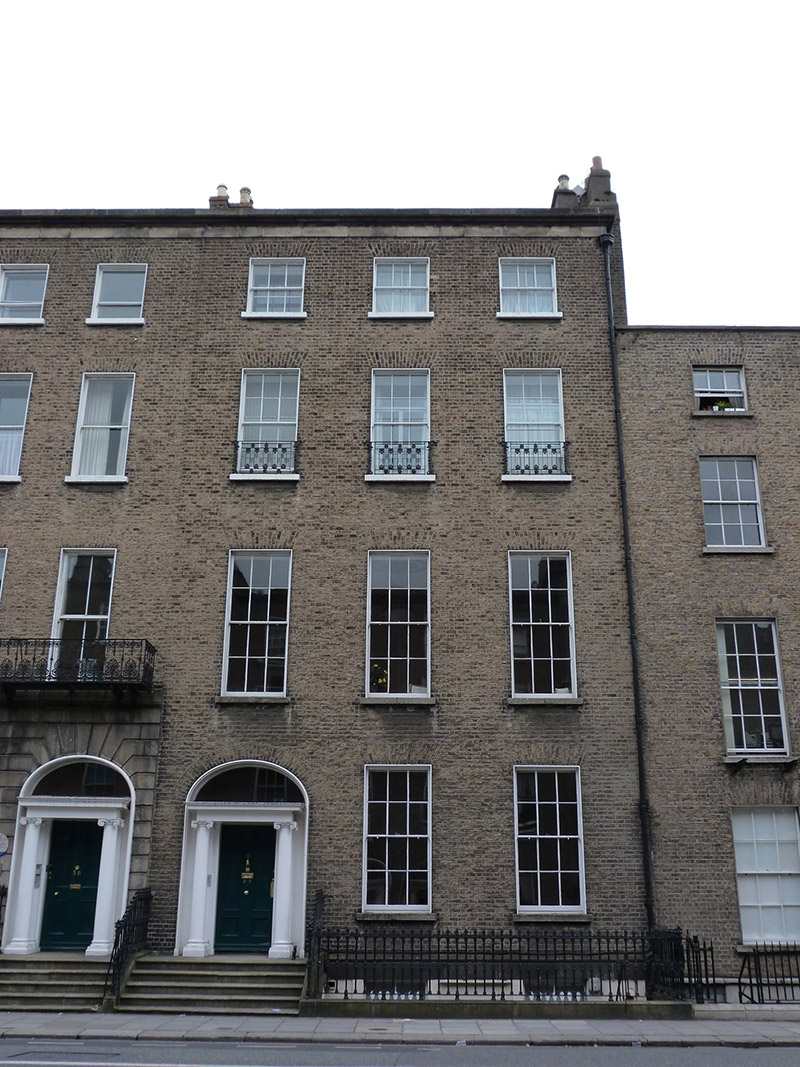 Jesuit Community Househouse · 43 yd
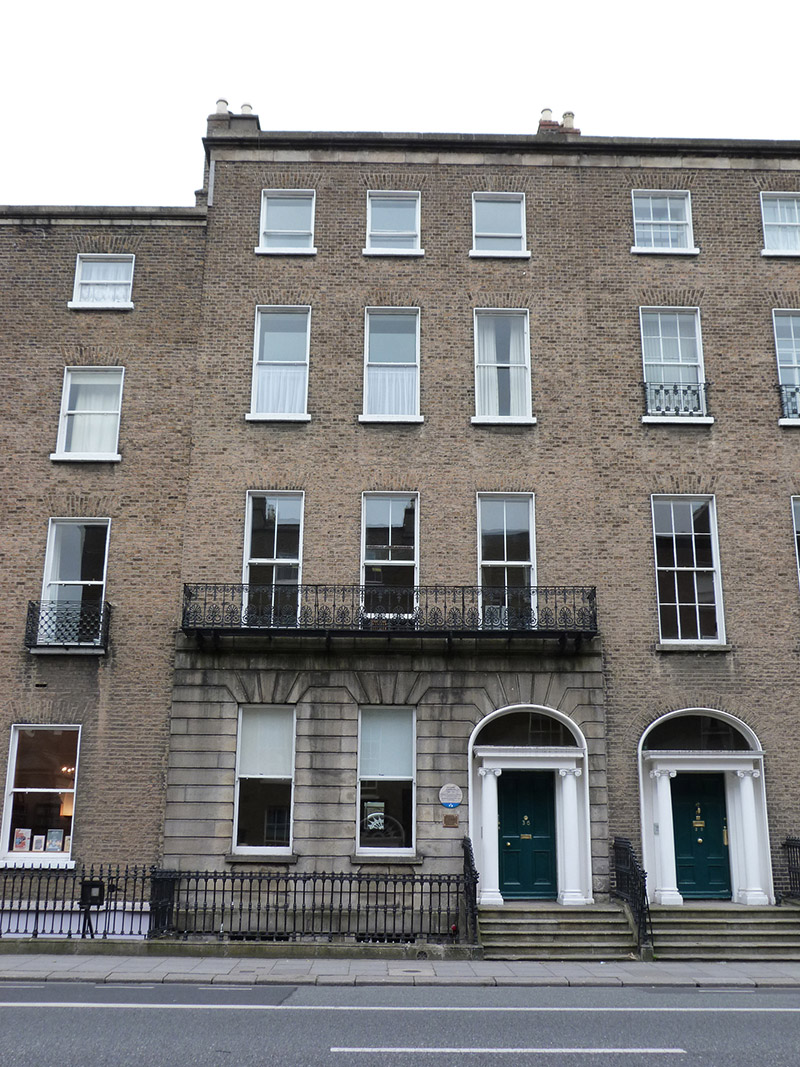 Irish Jesuit Archiveshouse · 53 yd
 Sarah H PurserMemorial · 374 yd
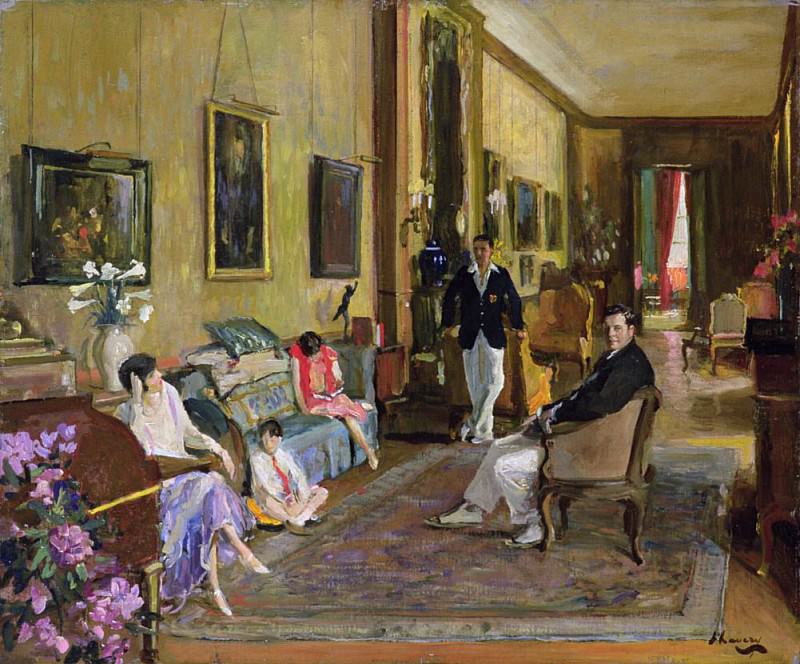 Count John McCormackMemorial · 379 yd
 Museum of Literature IrelandMuseum · 533 yd
 IndicatedPark · 613 yd
 Fusiliers' ArchMonument · 813 yd
 Battle of RathminesMajor battlefield · 1076 yd
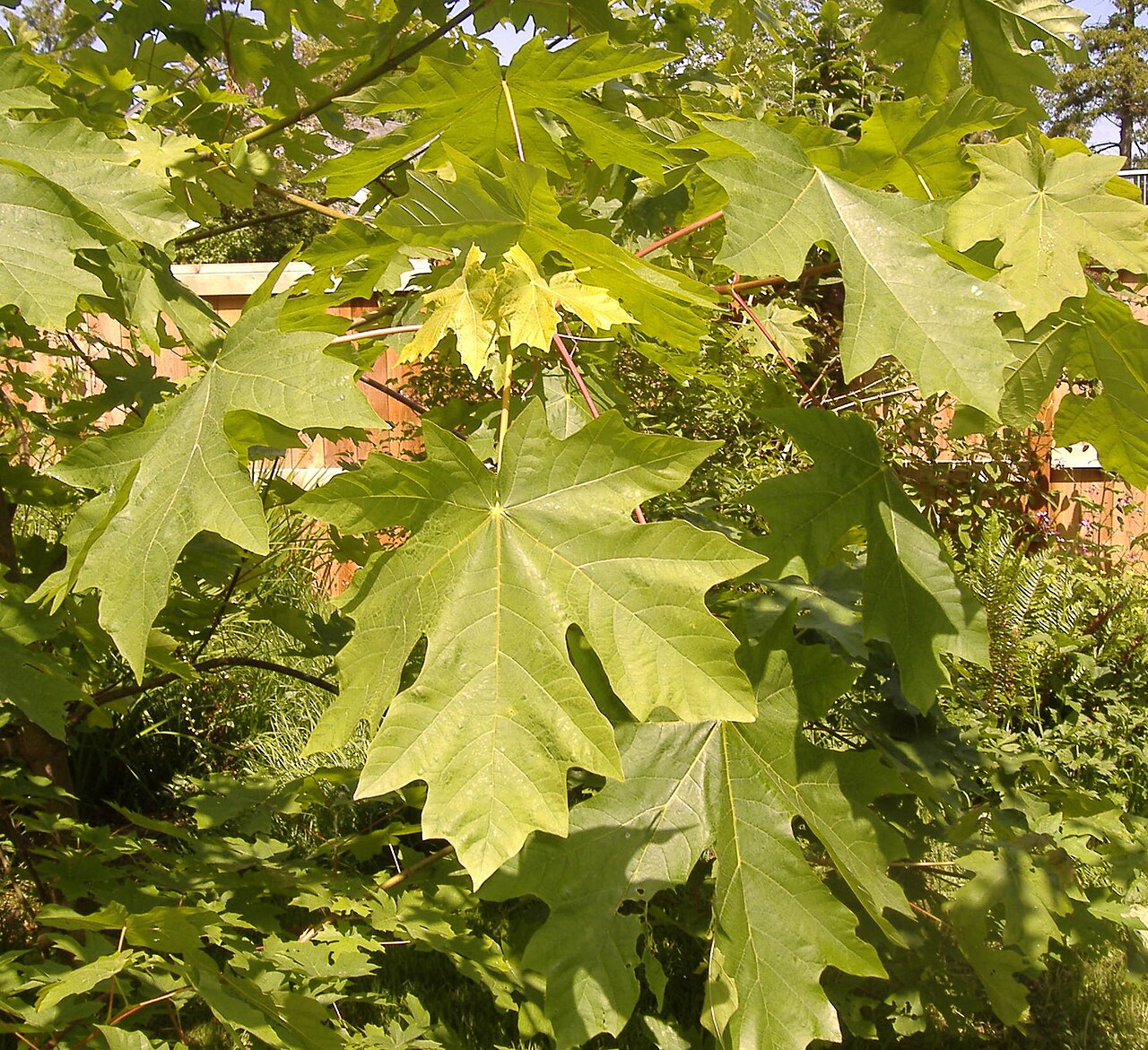 Bigleaf MapleBigleaf Maple · 1262 yd
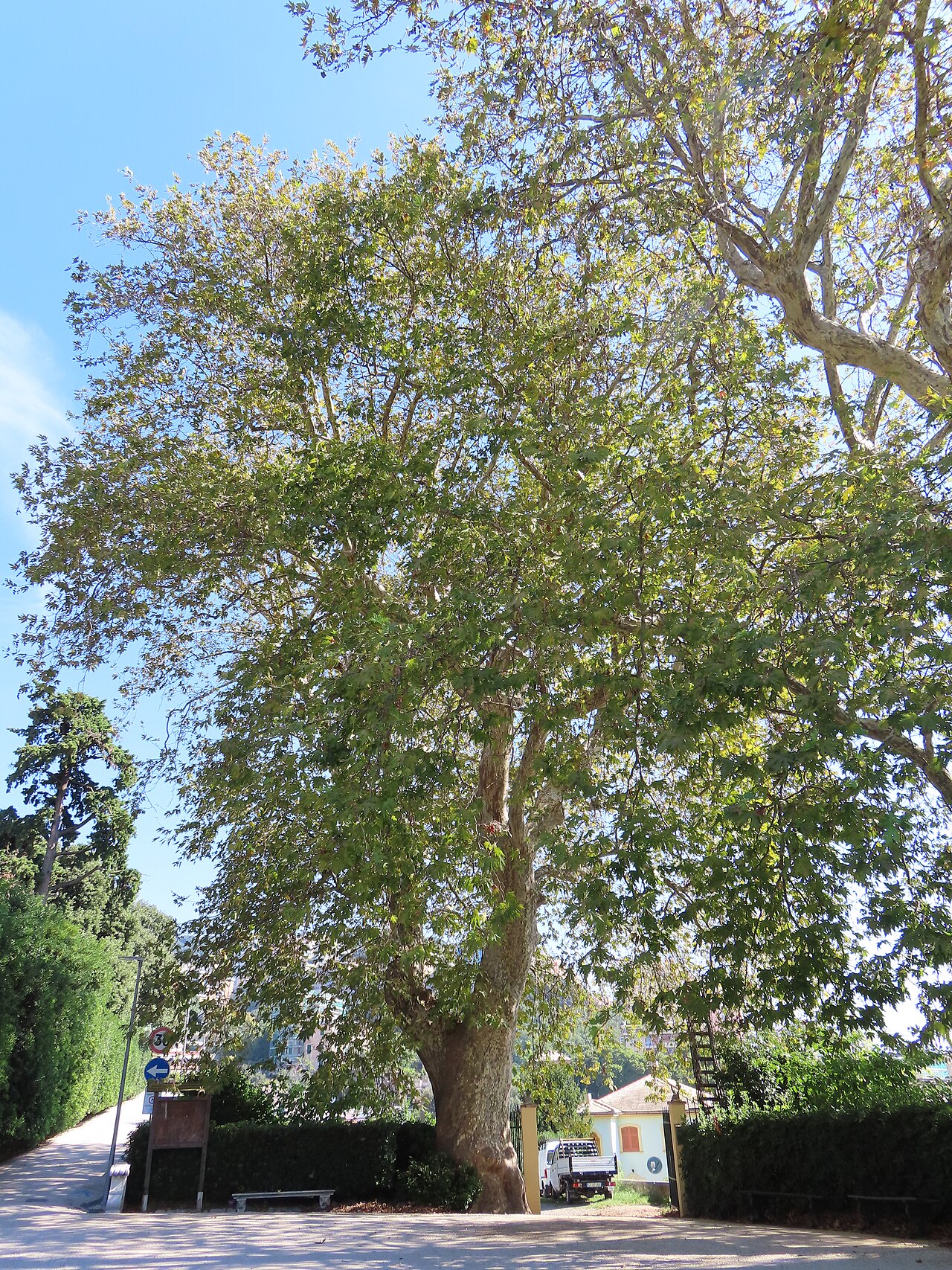 Oriental planeOriental plane · 1287 yd
 Dublin Castlegates/railings/walls · 1395 yd
 Burning of the Custom Housearmed conflict · 1.0 mi
Other information
Photo: National Inventory of Architectural Heritage · Website use allowed for educational or private purposes with source credit