What is recorded here
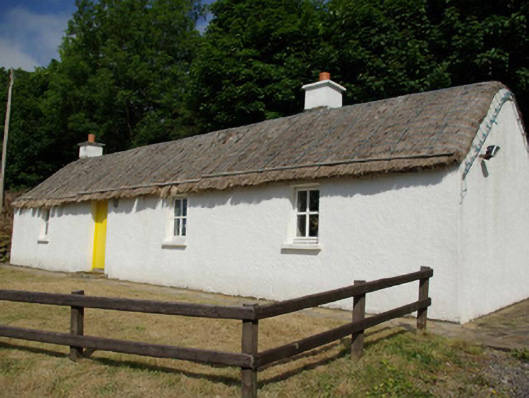
Detached four-bay single-storey vernacular house, built c. 1860. Still in use. Pitched roped thatched roof having two rendered chimneystacks (one to the west gable end and one offset to the east side of centre) and having metal rails to gable ends for securing ropes over thatch; timber stays to the front and rear pitches of roof at eaves level. Rendered walls. Square-headed window openings having replacement timber casement windows, and painted sills. Square-headed doorway, offset to the west side of centre, having replacement timber door. Set back from road in an elevated site with panoramic views over the Atlantic Ocean to the south. Located to the west of Killybegs. Gravel forecourt to front of site; gravel driveway to the south-east.
Despite some recent alterations, this appealing thatched vernacular house retains much of its early character and form, and is an attractive feature in the scenic landscape to the west of Killybegs. Modest in scale, it exhibits the simple and functional form of vernacular building in Ireland. Of particular interest in the survival of the thatch roof, although recently renewed, which is now sadly becoming increasingly rare in Donegal. The rounded roof is a typical feature of thatched houses located close to the sea in exposed areas in the north-west of Ireland, while the pegs to the eaves were used to tie ropes (and sometimes nets) over the roof to secure it against the prevailing winds, as is the case here at Gortnamuck. The loss of the original fittings to the openings, although regrettable, fails to detract substantially from its visual expression. The location of the chimneystacks suggests that this building is of the ‘direct entry’ type that is characteristic of the vernacular tradition in north-west Ireland. The location of the chimneystacks and the main doorway indicates that this building was extended to the east by a bay at some stage. This house represents an interesting surviving example of a once ubiquitous building type in the rural Irish countryside, and is a valuable addition to the vernacular heritage of County Donegal.
This does not grant access. Most recorded buildings are privately owned; view them only from public ground unless the owner allows entry.
Places near here
 Fintragh Stone-and-Earth Fairy FortFairy fort / earthen ringfort · 345 yd
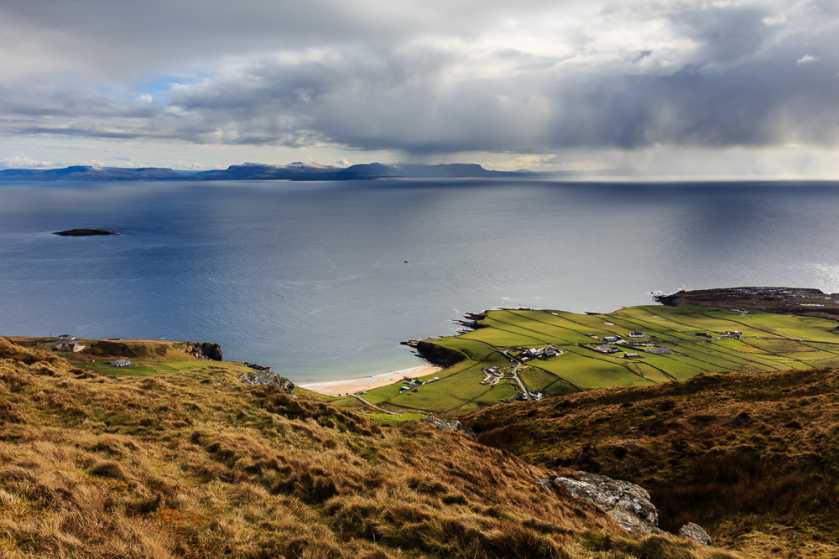 Largysillagh EnclosureEnclosure · 613 yd
 FintraOfficial bathing water · 749 yd
 Fintragh Bridgebridge · 1459 yd
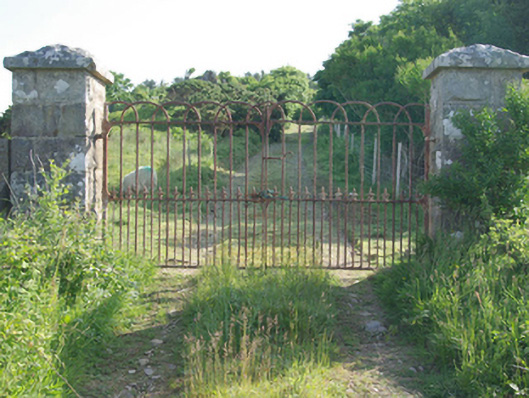 gates/railings/wallsgates/railings/walls · 1504 yd
 CrownaradMountain / peak · 1.1 mi
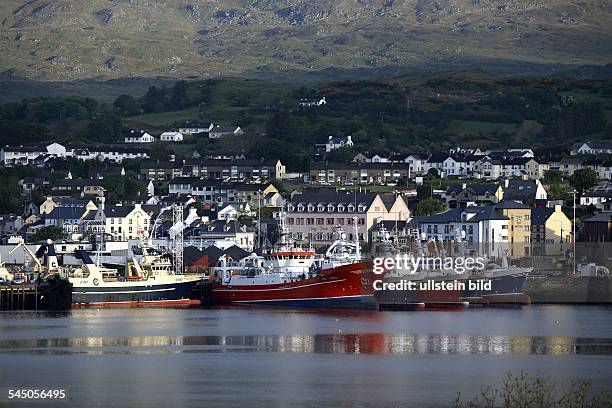 Bawn in KillybegsBawn · 2.2 mi
 CastleCastle, unclassified · 2.2 mi
 Drumanoo HeadHeadland · 2.4 mi
 Rashenny PointHeadland · 2.6 mi
 Rotten IslandIslet · 2.8 mi
 CroaghmuckrosMountain / peak · 3.6 mi
Other information
Photo: National Inventory of Architectural Heritage · Website use allowed for educational or private purposes with source credit