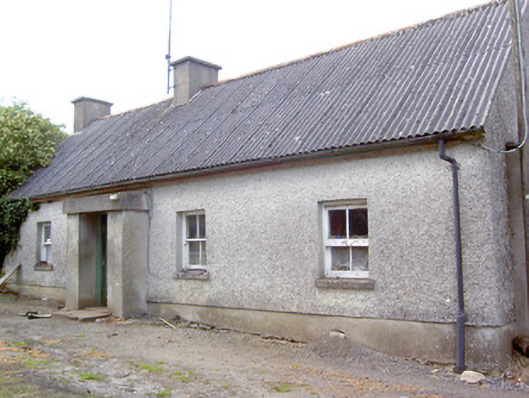
What is recorded here
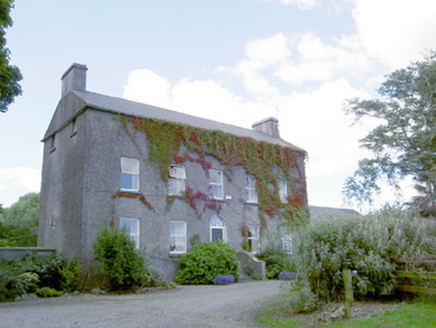
Detached four-bay single-storey vernacular house, built c. 1800, having windbreak porch to centre of the front elevation (southeast). Two-bay single-storey outbuilding attached to the northeast gable end. Now out of use. Pitched corrugated-asbestos roof with rendered chimneystacks. Flat-roof to windbreak. Pebbledashed…
Read the whole record
From the Buildings of Ireland (National Inventory of Architectural Heritage) record 13401914
Places near here
Photo credits
- National Inventory of Architectural Heritage
- Maker not stated on source page, oldeuropeanculture.blogspot.com
- Maker not stated on source page, www.pinterest.com
- Kmcnamee, Wikimedia Commons · CC BY-SA 4.0
- Maker not stated on source page, ru.pinterest.com
- Maker not stated on source page, www.flickr.com
- Maker not stated on source page, es.findagrave.com
- Maker not stated on source page, in.pinterest.com
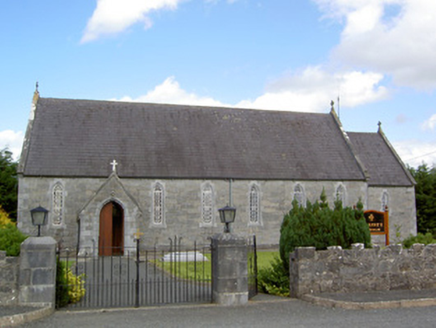 Saint Anne's Catholic ChurchChurch/chapel · 117 yd
Explorer Tom Saint Anne's Catholic Church in Ballycloghan hears every whispered gossip from the village through its limestone bones.…
 Bullaun stone in DrumingBullaun stone · 1655 yd
Explorer Tom Bullaun stone in Druming is hosting a fake royal visit that nobody can disprove. A local lord supposedly bowed to it…
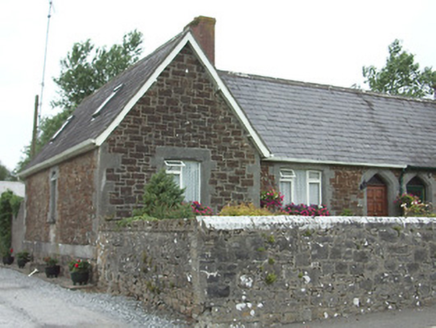 worker's house1.2 mi
Explorer Tom Worker's house in Ardagh Demesne is dressed up in red sandstone and gray limestone like it’s going to a formal dinner.…
 Fairy fort / earthen ringfort in MoorFairy fort / earthen ringfort · 1.3 mi
Explorer Tom Fairy fort / earthern ringfort in Moor nearly got famous when a tourist mistook it for a giant mushroom and tried to…
 The RectoryRectory/glebe/vicarage/curate's house · 1.3 mi
Explorer Tom The Rectory in Moor is massive for a vicarage, like a priest who bought a mansion on his first salary. It’s been out of…
 Keenan Park, Ardagh MoydowGAA ground · 1.3 mi
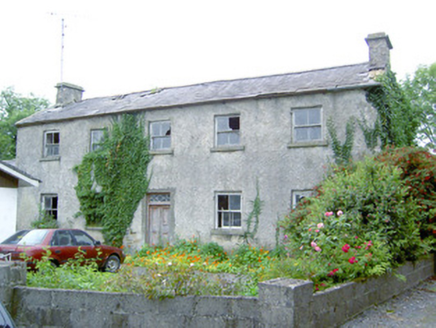 Keel HouseHouse · 1.4 mi
Explorer Tom Keel House in Keel is built from 'pudding stone', which sounds like a delicious snack but is actually just rock. Locals…
 Fairy fort / earthen ringfort in Moyra and FortmillFairy fort / earthen ringfort · 1.4 mi
Explorer Tom Fairy fort / earthen ringfort in Moyra And Fortmill has an imaginary fan club that meets on Tuesdays. It was levelled…
 Richmount HillHouse · 1.5 mi
Explorer Tom Richmount Hill is interviewing for a job as a ghost, claiming its narrow plan makes it mysterious. It thinks its…
 CastleCastle, unclassified · 2.2 mi
Explorer Tom Castle in Cloonscott is glaring at every postman who dares approach. An earl got treasoned here, so the castle now…
 Mapped graveyardGraveyard · 5.6 mi
Explorer Tom Mapped graveyard in County Longford insists you must remove your shoes, but only if they’re left-footed first. It has a…
 Ballymacormack CemeteryCemetery · 6.1 mi
Explorer Tom Ballymacormack Cemetery was once offered to a cow who wanted to expand her grazing area, which says everything about…
More historic places in County Longford · All of County Longford

What do you know about this place?Tap to add a comment or ask a question