What is recorded here
In grassland on an E-facing slope overlooking small stream to E with rising grassland to W, in upland region. Covered well located in overgrown bushes and trees which has been fenced off from the surrounding land which has resulted in the well becoming overgrown and difficult to examine. Well covered by a rectangular vaulted building (int. dims. 1.60m N-S; E-W 4.3m; wall T 1m; H 2m) roughly orientated E-W with a small window in the W gable. Unfortunately the building has been covered in a concrete pebble dash and the roof has been covered in concrete. Inside the building the underside of the vault has been partially covered in concrete. The interior is accessed via a doorway located at the W end of the N wall. Within there is a small water channel (Wth 0.7m; D 0.5m) running the length of the building. The roof of the chamber is barrel-vaulted with evidence of wicker centring on the underside of the vault. Immediately inside the doorway there is evidence of a cut stone with hammer-dressed surface contained within a drafted margin of 15th/16th century style. Known locally as Perry's Well named after the Perry family who lived in the area for many generations and possibly associated with an old abbey located in the area of which now there are no remains (Hassett 1990, 286-7, Hemphill 1912, 1912, 325-30). The well is supposed to have powers of curing and was once a place of pilgrimage for people to go for cures especially sores for their feet (ibid). According to Ó hÓgáin (1981, 71), cited in Ó Cearbhaill (2007, 76) of an account of the well in 1864, it states that 'the well is yet held sacred by the people, and there are several stone images inside the wall around it'. One of the stones at the well is decorated with three dancing figures in a folk art style.
On the right hand the window in the gable there was a carved figure of the Blessed Virgin and on the left had side there was an iron figure of an old man with bare legs and arms, eyes shut and flowing beard dressed in a tunic which below the belt was a kilt (Hemphill 1912, 325-30). No remains visible of iron figure in the vicinity of the well or the building. A carved stone pieta from a 16th-century altar-tomb (TS054-038002-) was found lying prostrate on ground to W of gable. According to Hemphill large crowds of pilgrims gathered in front of the W gable and kneeled down in prayer in front of the figures (Hemphill 1912, 325-6).
Compiled by: Jean Farrelly
Date of upload: 31 January 2023
Linked to Saint Buidhe, whose name is reflected in the townland of Kilboy (from "Cill Bhuide," meaning "Buidhe's church"), the well is traditionally associated with cures for skin ailments and general well-being. Locals historically made offerings of coins and ribbons, and the site was visited on Saint Buidhe’s feast day for healing rituals.
The monument record does not grant public access. Check the route and ask the landowner before entering private land.
- What survives
- Recorded monument
Places near here
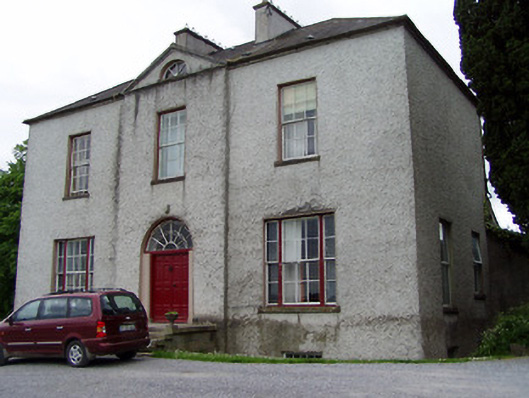 Helen Parkhouse · 432 yd
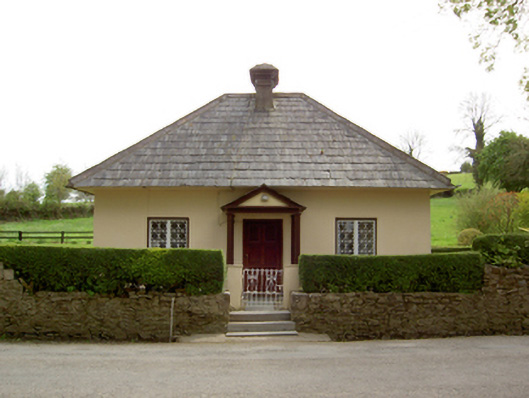 Springhill Housegate lodge · 804 yd
 Enclosure in Ballintogher (graystown Par.)Enclosure · 943 yd
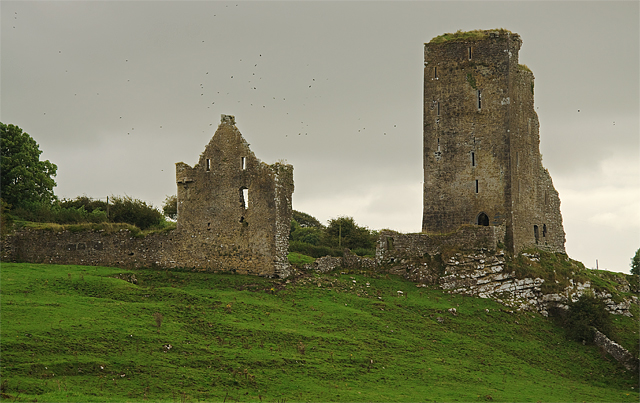 Bawn in GraystownBawn · 1127 yd
 Castle (in ruins)Castle, tower house · 1184 yd
 RathmooleyFairy fort / earthen ringfort · 1383 yd
 Slieveardagh Heritage CentreVisitor information · 1.2 mi
 Noan WoodWood · 2.4 mi
 Gobban Saer's GraveArchaeological place · 2.6 mi
 Derrynaflan TrailHeritage attraction · 3.2 mi
 Waterloo HillMountain / peak · 3.2 mi
 Taylor's WoodWood · 3.2 mi