What is recorded here
St. Michael’s well in Loughsallagh sits inside a graveyard on a slight rise, preserved as a rectangular drystone basin with a grassy mound around three sides. Devotions stopped around 1810, yet local memory claims it cured toothache and received pins as offerings. The water no longer draws crowds, but the shape remains clear enough to suggest that people once knelt there, asked for relief, and left small metal proofs behind.
Situated on a slight rise on a level landscape and within the graveyard (ME051-006001-). Cogan (1862-70, 1, 190) records that devotions at St. Michael’s well within the graveyard had been discontinued since c. 1810, but the well remains as a rectangular sunken area (dims 1.1m x 1.1m; D 1m) retained by drystone walling and with a grass-covered mound (Wth 1-1.5m; H 0.2-0.4m) around it on every side, except the W. There is no evidence of veneration, but traditionally it had a cure for toothache and the customary offerings were pins (IFC, Schools Collection, 689, 11, 24). (French 2012, 90-1)
Compiled by: Michael Moore
Date of revised upload: 24 April, 2019
The holy well is associated with St. Michael and was historically visited for devotional purposes, likely linked to local traditions of healing or protection. By the early 19th century, such devotions had fallen out of practice, though the site's earlier significance within the graveyard suggests it was once an important place of pilgrimage or ritual.
The monument record does not grant public access. Check the route and ask the landowner before entering private land.
- What survives
- Recorded monument
Places near here
 Enclosure in LoughsallaghEnclosure · 357 yd
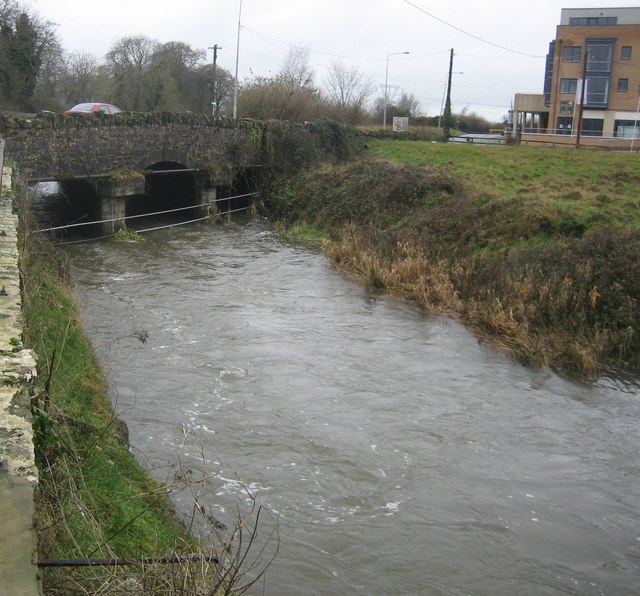 Clonee Bridgebridge · 773 yd
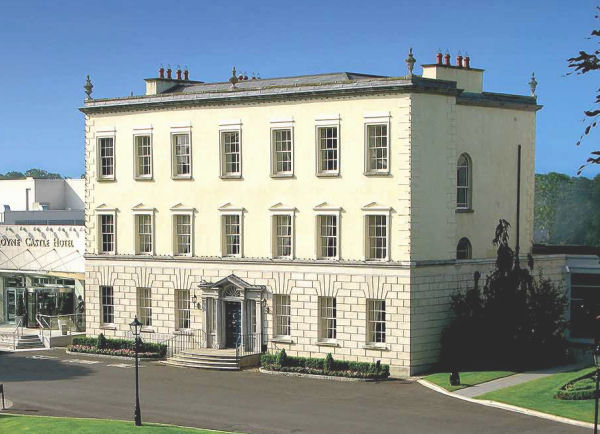 Enclosure in DunboyneEnclosure · 817 yd
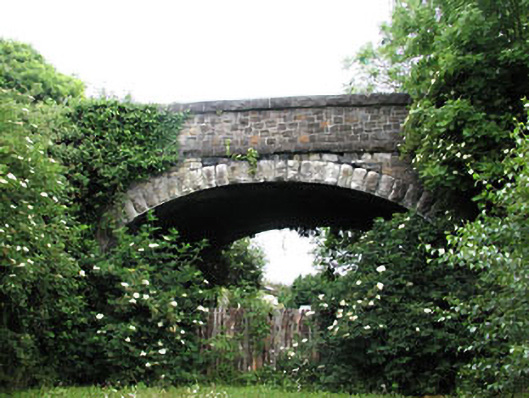 bridgebridge · 902 yd
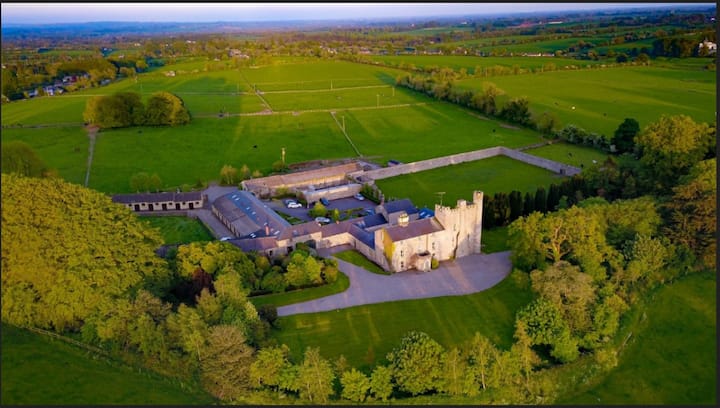 CastleCastle, ringwork · 1.0 mi
 TyrrelstownWood · 2.4 mi
 Church, GraveyardChurch · 2.5 mi
 Graveyard in BuzzardstownGraveyard · 2.6 mi
 Wesley's WoodsWood · 2.9 mi
 Blanchardstown Centre information deskVisitor information · 3.0 mi
 Luttrellstown CastleCastle · 3.0 mi
 Griffeen Valley WalkWalking route · 5.0 mi