DDiscover AloneMapAbout

Graveyard in Abbeyquarter North

Graveyard
Graveyard in Abbeyquarter North
Representative picture, exact place not confirmed
Photo: Maker not stated on source page, ru.pinterest.com · Report the wrong picture

The monument record does not grant public access. Check the route and ask the landowner before entering private land.

What do you know about this place?Tap to add a comment or ask a question

What you write will be public.

What is recorded here

At Sligo Dominican friary (SL014-065008-). A graveyard was an important element of the friary from its foundation: The Annals of Loch Cé for the year 1253 record that ‘A monastery was erected and a cemetery consecrated for the Friars Preachers at Sligech’ (Hennessy 1871, 403). The exact location and extent of the…

Read the whole record
At Sligo Dominican friary (SL014-065008-). A graveyard was an important element of the friary from its foundation: The Annals of Loch Cé for the year 1253 record that ‘A monastery was erected and a cemetery consecrated for the Friars Preachers at Sligech’ (Hennessy 1871, 403). The exact location and extent of the graveyard at this early stage is unknown. It would have been intended primarily for the friars themselves. However, it was common throughout the medieval period for members of wealthy and prominent families, many of whom were patrons of monasteries, to be buried within monastic graveyards, with the most powerful or generous benefactors often accorded the privilege of burial within the friary church itself. The Annals of Ulster record that in 1418 ‘Tigernan, son of Ualgarc Ua Ruairc, namely, king of Breifni, died this year… And he was buried in the monastery of Sligech.’, and the Annals of the Four Masters record that in 1454 ‘Brian Mac Donough, Chief of Tirerrill, died …after Unction and due Penance, and was interred in the monastery of Sligo.’ Following the Dissolution of the monasteries, O’Conor Sligo (Donal) petitioned Elizabeth I to preserved Sligo friary, including in his submission the extenuation that it was the burial place of his ancestors; his request was granted in 1568 (Cal. State Papers). Throughout the post-medieval period, as the friary fell into ruin, the graveyard remained the primary public burial ground for the Catholic population of Sligo town, as well as for many Protestant families. The graveyard’s current manicured condition bares little relation to the disorderly, overcrowded state into which it had deteriorated by the end of the 19th-century. The effects of centuries of burials within the confined space were compounded by the many deaths that resulted from the Cholera epidemic which ravaged Sligo town in 1832, and the Famine of 1845-49, and by the mid- to late 1800’s the graveyard was considered a danger to public health. To relieve the pressure, a municipal cemetery was opened in 1846 on the S edge of the town. The friary graveyard was finally closed for burials in 1895. A broad range of burial monuments can be seen in the graveyard, representative of various sculptural styles popular over its long period of use. None of the graves of the medieval Gaelic lordly families mentioned in the annals can now be identified. However, several medieval graveslabs -some fragmentary, and none in its original position- are on display in various parts of the church: on the N wall of the nave (SL014-065035-; SL014-065036-; SL014-065037-; SL014-065038-), on the N wall of the S chapel/transept (SL014-065039-), in a tomb recess in the N wall of the chancel (SL014-065032-; SL014-065033-; SL014-065034-), and in the sacristy (SL014-065040-; SL014-065041-; SL014-065042- ); they exhibit characteristics typical of that period, such as trapezoidal/coffin-shape, cross carved the length of the slab, and chamfered edges. A very finely sculpted, early 16th-century canopy tomb/wall monument (SL014-064027-), dedicated to the O’Crean family, is built into the N wall of the nave, an elaborate 17th-century wall monument (SL014-065028-), erected by Lady Elenor Butler, is set high in the S wall of the chancel, and three 17th-century wall monuments/armorial stones (SL014-065029-; SL014-065030-; SL014-065031-) are on display beneath the tower. Other graveslabs, headstones and box tombs visible throughout the ruins are of 18th- and 19th-century date.

From the National Monuments Service (Archaeological Survey of Ireland) record SL014-065046

Places near here

Photo credits
  • National Inventory of Architectural Heritage
  • Sheila1988, Wikimedia Commons
  • Malene Thyssen, Wikimedia Commons · CC BY-SA 3.0
  • Maker not stated on source page, en.wikipedia.org
  • Sligo GAA (publisher); individual photographer not stated, sligogaa.ie
  • Maker not stated on source page, www.flickr.com
Astoria HouseHouse · 822 yd

Explorer Tom Astoria House in Rathedmond started because two lads made a pub bet that they could build something grander than their…
Saint Joseph'sHouse · 824 yd

Explorer Tom Saint Joseph's in Knappagh Beg is holding its breath against the Sligo weather like it owes it money. It’s got original…
Wolfe Tone HouseHouse · 827 yd

Explorer Tom Wolfe Tone House in Knappagh Beg would cope on a reality show by refusing to move because it’s too comfortable. It’s…
AvilreaghHouse · 828 yd

Explorer Tom Avilreagh in Knappagh Beg sounds like a name you’d invent for a particularly stubborn cat, but it’s actually part of a…
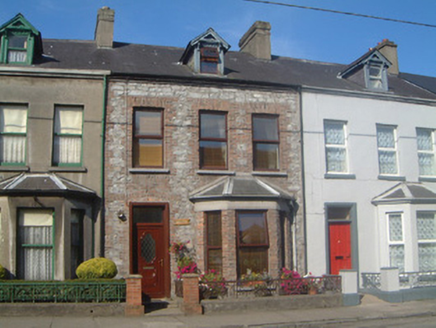
RosemalHouse · 830 yd

Explorer Tom Rosemal in Knappagh Beg would order a massive portion of chips with extra gravy and no peas, because it’s got big…
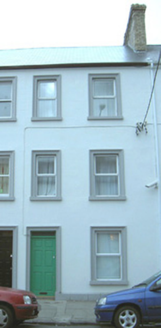
Sansheen HouseHouse · 836 yd

Explorer Tom Sansheen House has a long-standing grudge against the weather because it keeps shedding leaves right onto its doorstep…
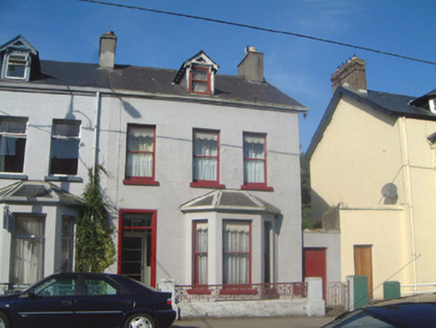
Breenagh HouseHouse · 837 yd

Explorer Tom Breenagh House would teach history by showing you how carved timber details on dormer windows actually make a street…

The ShowgroundsLeague of Ireland ground · 1205 yd

Explorer Tom The Showgrounds is Sligo Rovers' home, where the red stands make it clear whose side the ground is on. The club gives…

European Beech1364 yd

Explorer Tom European Beech in County Sligo was where a priest once lost a bet about which bird sang better. He now has to explain…

Ursuline Convent CemeteryCemetery · 1491 yd

Explorer Tom Ursuline Convent Cemetery has made a New Year's resolution to stop letting the ivy take over the north wall, though…

Markievicz ParkGAA ground · 1686 ydFairy fort / earthen ringfort in Cleaveragh DemesneFairy fort / earthen ringfort · 1.1 mi

Explorer Tom Cleaveragh Demesne has a hidden treasure that is definitely just an old biscuit tin buried under the bank, and I’m sure…

More memorials and graveyards in County Sligo · All of County Sligo

Add to this placeAdd a picture Add a detailed tip Add a story

Explore the map1,095,414 places to discover

Next place · or swipeAstoria House