DDiscover AloneMapAbout

Grattan Bridge

Bridge
Grattan Bridge
Photo: N Chadwick, Geograph · Creative Commons Attribution-ShareAlike 2.0 · Report the wrong picture

This does not grant access. Most recorded buildings are privately owned; view them only from public ground unless the owner allows entry.

What do you know about this place?Tap to add a comment or ask a question

What you write will be public.

What is recorded here

Five-arch bridge over river, rebuilt 1873-4, reusing piers and pilings of earlier bridge of 1753-5. Granite ashlar walls with granite ashlar triangular cutwaters supporting rusticated granite ashlar triangular piers. Series of three elliptical arches between pair of round arches with rusticated granite ashlar…

Read the whole record
Five-arch bridge over river, rebuilt 1873-4, reusing piers and pilings of earlier bridge of 1753-5. Granite ashlar walls with granite ashlar triangular cutwaters supporting rusticated granite ashlar triangular piers. Series of three elliptical arches between pair of round arches with rusticated granite ashlar voussoirs. Cantilevered deck including wrought iron girders supporting wrought iron lattice work parapets with hippocampus-detailed cast-iron lamp standards on panelled piers on rosette-detailed volute corbels on cut-granite panelled "Cavetto" corbels. Sited spanning River Liffey with granite ashlar retaining walls to river having "saddleback" coping.
Grattan Bridge, originally known as Essex Bridge, is one of several bridges over the River Liffey which help to define the character of this central artery as it winds its way to Dublin Port and the Irish Sea. The first bridge on the site was built (1676) by Humphrey Jervis (1630-1707) and was designed to connect the fashionable Capel Street on the north side of the city with Dublin Castle on the south side of the city. The narrow humpback bridge, prone to flooding and requiring constant repair, partially collapsed in 1751. The second bridge was designed by George Semple (c.1700-82) and, modelled after the Charles Labelye (1705-62)-designed Westminster Bridge (1739-50) in London, was built (1753-5) by Robert Mack at a cost of £20,661 11s. 4d.. The approach too steep, the deck too narrow, the bridge was rebuilt (1873-4) by William James Doherty (c.1834-98) to designs by Bindon Blood Stoney (1828-1909) of the Dublin Port and Docks Board with the designs calling for the retention and reuse of the piers and pilings of the Semple-designed bridge. The third bridge therefore married conventional and pioneering construction techniques with Classically-detailed arches of silver-grey granite giving way to a deck of engineered iron and utilitarian appearance: the effect was criticised in The Irish Builder (1st October 1874) whose correspondent condemned 'the footways – apparently an afterthought – supported upon the most primitive-looking and certainly the clumsiest attempts at corbelling ever beheld...no after decoration can by possibility remove [its] unsightly appearance. Ornament, certainly, seems to have been sacrificed to utility in this instance for which no amount of painting and gilding will compensate'. The cast-iron lamp standards with coupled hippocampi at the bases were installed at a later date and appear to have been produced by Kennan and Sons (established 1780) of nearby Fishamble Street; the pedestals carry the name of the Sirocco Foundries (established 1881) of Belfast. The bridge, originally named in honour of Arthur Capel (1631-83), first Earl of Essex and Lord Lieutenant of Ireland (appointed 1672), was renamed in honour of Henry Grattan (1746-1820) 'BY THE MUNICIPAL COUNCIL 1875'.

From the Buildings of Ireland (National Inventory of Architectural Heritage) record 50060361

Places near here

Photo credits
  • Maker not stated on source page, nl.pinterest.com
  • Oisín Ó Doinn, Wikimedia Commons · CC BY-SA 4.0
  • Maker not stated on source page, ru.pinterest.com
  • Maker not stated on source page, www.tripadvisor.ca
  • Maker not stated on source page, www.dreamstime.com
  • NateBergin, Wikimedia Commons · CC BY 4.0
  • Taken by Fanghong, Wikimedia Commons · CC BY-SA 3.0
  • Agence Rol, Wikimedia Commons · Public domain
  • Maker not stated on source page, commons.wikimedia.org
  • Maker not stated on source page, www.tripadvisor.com
  • Windmemories, Wikimedia Commons · CC BY-SA 4.0
  • Maker not stated on source page, ca.pinterest.com
Church in Unknown TownlandChurch · 233 yd

Explorer Tom St Olave's, named after a Norwegian king, is now completely gone from 41 Fishamble Street. Burials were found nearby…

Religious houseReligious house, Cistercian monks · 259 yd

Explorer Tom St Mary’s Abbey in Dublin would handle a nosey neighbour by simply closing its windows and pretending it doesn't hear…

Graveyard in Unknown TownlandGraveyard · 311 yd

Explorer Tom Graveyard in Dublin belonged to St John's medieval Parish Church and is marked 'Dis.' on old maps. Rocque's 1756 map…

St. Marys ChurchChurch · 334 yd

Explorer Tom St. Marys Church in County Dublin is one of the earliest galleried churches in Ireland, dating to the late 17th…

TombTomb, effigial (present location) · 356 yd

Explorer Tom Tomb in County Dublin has a hidden message in its stones about a man in full plate armour and his wife in pleated…

Cathedral366 yd

Explorer Tom Cathedral. Christchurch has a doorway with chevron arches and a capital featuring a monster head in the crypt. It is…
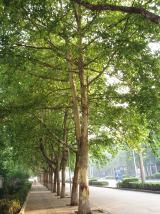
London Plane869 yd

Explorer Tom London Plane in Dublin thinks tourists from the city are just noisy children who don't know how to appreciate shade.…

Burning of the Custom HouseArmed conflict · 1114 yd

Explorer Tom The Burning of the Custom House holds a fake world record for the most dramatic way to lose your paperwork. It still…

CairnCairn, unclassified · 1443 yd

Explorer Tom Cairn. Known as Carn Uí Dúnchada, this cairn was possibly erected against Viking pressure in the ninth century. Using a…

Church in Donnybrook East,donnybrook WestChurch · 1443 yd

Explorer Tom Church in Donnybrook East is mentioned in a deed from 1748, which is quite specific for a ghost church. It was the…
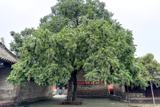
Chinese Toon1463 yd

Explorer Tom Chinese Toon in County Dublin is sick of being asked if it actually tastes like toon or just looks the part. It’s…

CastleCastle, motte · 2.0 mi

Explorer Tom Castle in County Dublin is a motte with a long list of names it’s forgotten, sitting high above the Tolka like a proud…

More historic places in County Dublin · All of County Dublin

Add to this placeAdd a picture Add a detailed tip Add a story

Explore the map1,095,414 places to discover

Next place · or swipeChurch in Unknown Townland